Blog
What Happens During a Roof Survey at Your Home?
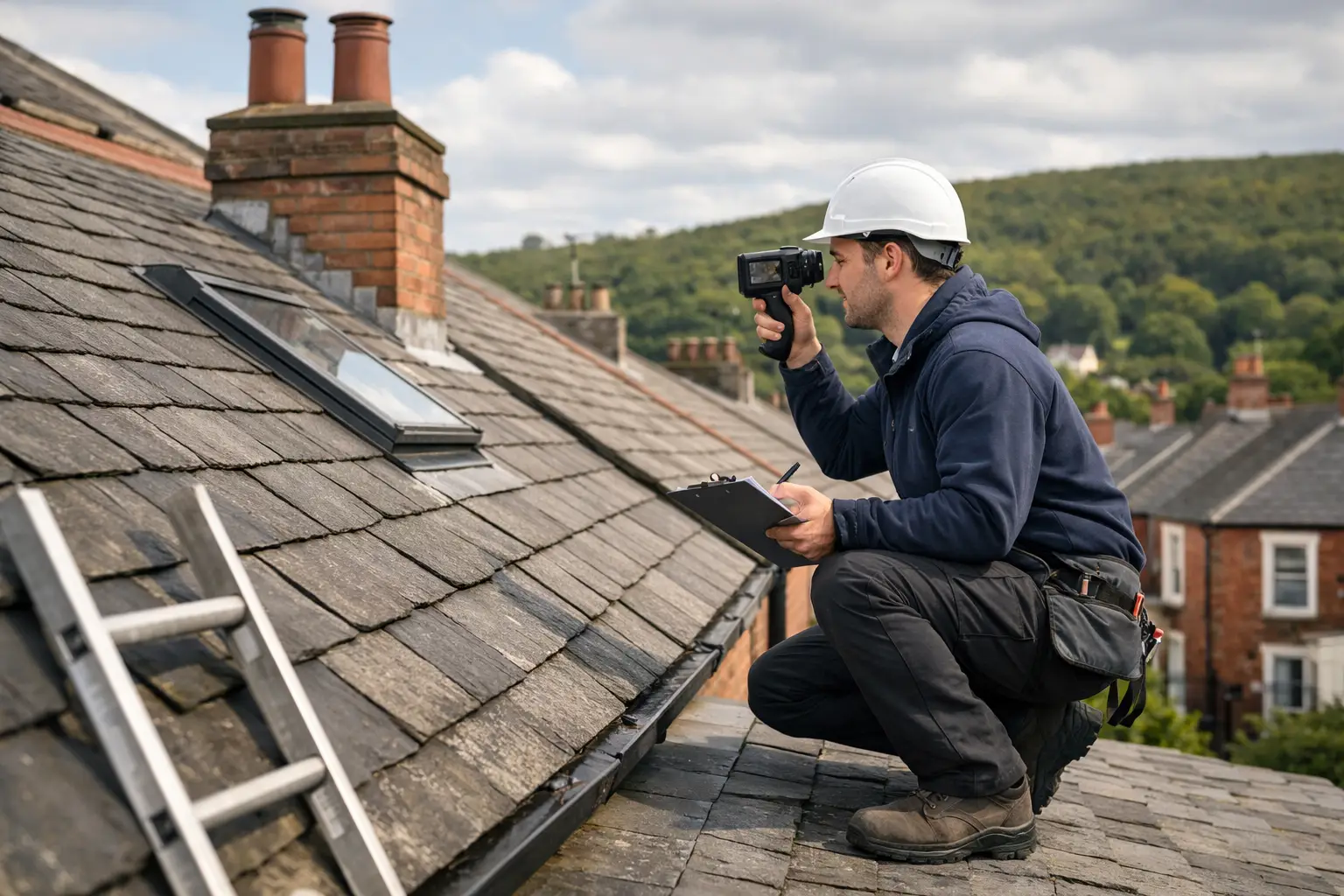
A roof problem is rarely as simple as the stain on the ceiling or the slipped tile visible from the garden. Water can travel beneath coverings, and a small defect can affect timbers, insulation or internal finishes before it becomes obvious. So, what happens during a roof survey? A professional roofer assesses the roof as a whole, identifies the likely source of any problem and explains what needs attention in clear, practical terms.
For homeowners and landlords, the purpose is straightforward: to understand the condition of the roof before agreeing to repairs or replacement work. A good survey should leave you knowing what has been found, how urgent it is and what the proposed work will involve.
What Happens During a Roof Survey?
The visit usually begins with a conversation about the issue you have noticed. This may be a leak after heavy rain, loose tiles following a storm, damp in a loft, a flat roof nearing the end of its life, or concerns raised during a property purchase. Explaining when the problem started and whether it appears only in certain weather can help narrow down the cause.
The roofer will then carry out an external inspection from ground level and, where it is safe and appropriate, at closer range. This is not simply a quick look at the most obvious damaged area. The aim is to check the roof covering, the details around it and the parts that direct rainwater away from the property.
Access depends on the height, pitch and condition of the roof. Some surveys can be completed safely from the ground, ladders or suitable access equipment. Others may require a closer inspection or additional access arrangements. A responsible contractor will not walk on a fragile roof, unstable surface or ageing flat roof if doing so could cause damage or create a safety risk.
Inspecting tiles, slates and ridge lines
On a pitched roof, the survey looks for cracked, slipped, missing or poorly fitted tiles and slates. The roofer will also check ridge and hip tiles, as these are particularly exposed to wind and driving rain. Loose mortar, damaged mechanical fixings and gaps around the ridge line can all allow water in or create a risk of tiles becoming dislodged.
The condition of the roof covering matters, but so does its overall alignment. A section that appears uneven, dipped or bowed may point to a problem beneath the tiles, such as weakened battens or timber movement. It does not automatically mean a full roof replacement is needed, but it should be investigated rather than covered over with a quick repair.
Checking flashings, valleys and roof junctions
Many leaks start where different materials meet. Flashing around chimneys, roof windows, soil pipes, valleys and abutments is therefore checked carefully. Leadwork that has lifted, split or been poorly repaired can let in a surprising amount of water.
Valleys also need close attention because they carry a concentrated flow of rainwater. Debris, cracked tiles, failing mortar or damaged valley lining can cause water to back up beneath the roof covering. Around chimneys, the survey may include checks for damaged pointing, failing flashing and defects in the chimney structure that could affect the roof below.
Assessing flat roof surfaces and edges
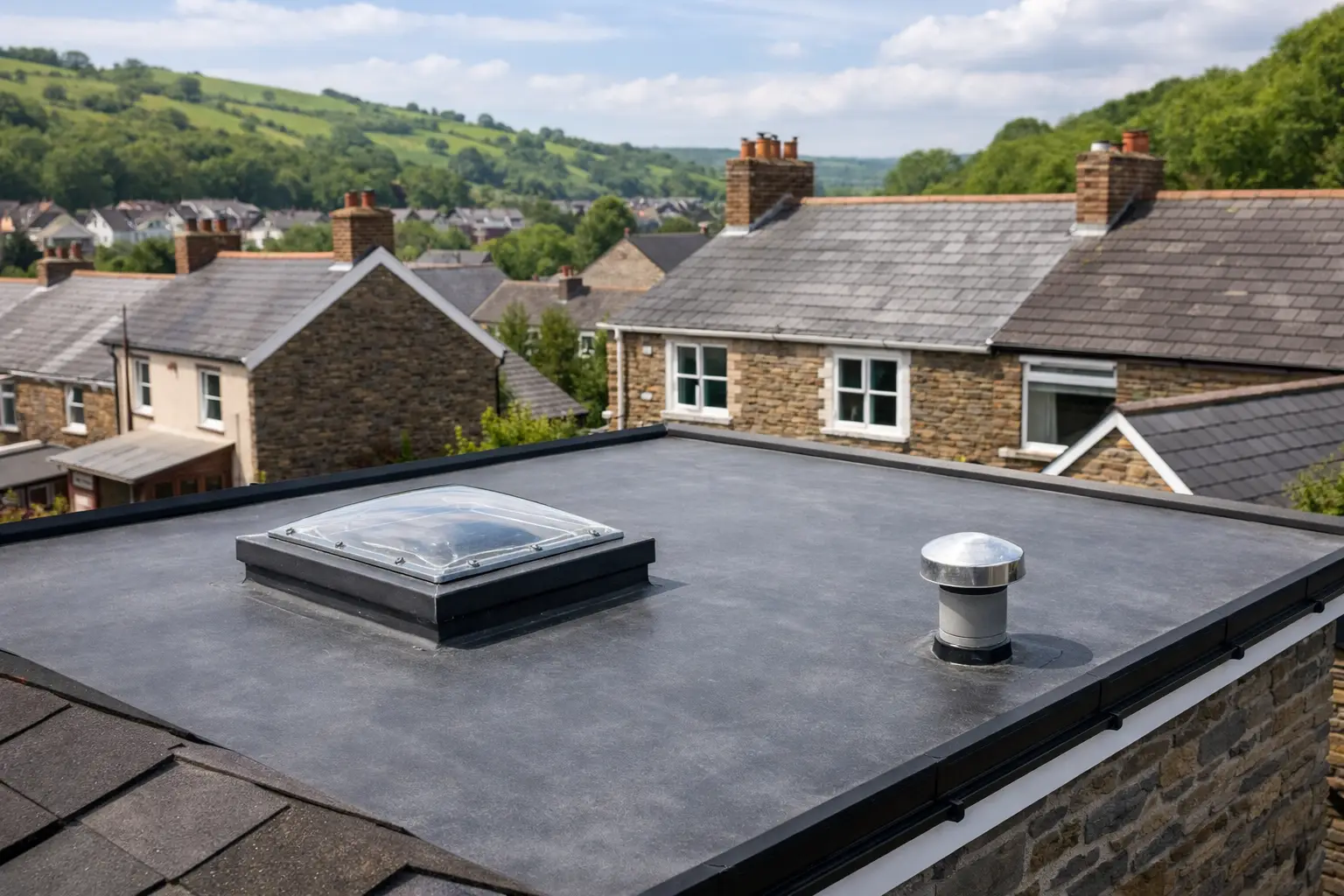
A flat roof survey follows a slightly different approach. The roofer will inspect the surface for splits, blisters, punctures, open seams, worn areas and signs of previous patch repairs. Standing water may suggest poor falls or blocked outlets, although it is worth remembering that a roof needs time to dry after rain before drainage can be judged fairly.
Edges, upstands, outlets and joins are just as important as the main surface. Water often enters at these weak points rather than through the middle of the roof. On garages, extensions and dormers, the inspection will also consider how the flat roof connects to adjoining walls, windows and pitched roof sections.
Looking Inside the Property Where Needed
An external inspection provides only part of the picture. If access is available, the survey may include the loft or top-floor ceilings. This can reveal water staining, damp insulation, mould, daylight coming through gaps, damaged felt and signs that moisture has been present for some time.
Fresh water marks can help confirm an active leak, while darker stains may be historic. A survey should make that distinction where possible. Replacing tiles because of an old stain, without checking whether the roof is currently letting in water, is not a sensible use of your money.
The roofer may also look for ventilation issues. Condensation in a loft can be mistaken for a roof leak, particularly during colder months. Poor ventilation, insufficient insulation clearance or moisture from inside the home can create damp conditions even where the roof covering is sound. The right solution depends on the cause, so this part of the inspection helps avoid unnecessary repairs.
Gutters, Fascias and Drainage Matter Too
Roof drainage is part of the survey because blocked, leaking or incorrectly pitched gutters can send water back towards the building. Overflowing gutters may soak fascias, masonry and roof edges, eventually causing rot or damp problems that look like a roofing fault.
The roofer will check whether gutters are securely fixed, whether downpipes are directing water away properly and whether there is visible damage to fascias, soffits or cladding. These items are often repairable alongside roof work, but they should be priced separately so you can see exactly what is being recommended.
Identifying What Is Urgent and What Can Wait
Not every defect requires immediate major work. A sound survey separates urgent weatherproofing or safety issues from maintenance that can be planned. For example, a missing tile above a bedroom, loose ridge tiles or an active leak should be dealt with promptly. Moss growth, cosmetic discolouration or a small area of ageing mortar may be less urgent, depending on its condition.
If the roof has suffered storm damage, the first priority may be making the property safe and preventing further water entry. Temporary protection can sometimes be needed before permanent repairs are completed, particularly during wet or windy conditions. A clear explanation of this sequence helps you make a practical decision without pressure.
There are also occasions when a repair is technically possible but not the best long-term value. If several areas of an ageing roof are failing, repeated patch repairs may cost more over time than a planned replacement. Equally, replacing an entire roof because of one localised fault would be excessive. The recommendation should be based on the condition of the roof, not a one-size-fits-all answer.
What You Should Receive After the Survey
Once the inspection is complete, you should receive a straightforward explanation of the findings and the proposed solution. For anything beyond a very small repair, an itemised written quote is the sensible next step. It should set out the scope of work, materials, labour and any related work such as replacement fascias, guttering or waste removal.
A reliable quote also makes clear whether access equipment, scaffolding or additional investigation is required. These costs can be necessary for safe work, especially on taller properties or where the roof is difficult to reach. They should not appear as an unexplained surprise once the job is under way.
Ask if the price covers making good affected areas, removing old materials and leaving the site tidy. You should also understand the expected timescale and whether the work is weather-dependent. Roofing cannot always be completed safely in heavy rain or high winds, but a dependable contractor will keep you informed if plans need to change.
How to Prepare for a Roof Survey
You do not need to do much before the roofer arrives. If possible, make sure there is clear access around the outside of the property and to the loft hatch if an internal check is likely. Move vehicles away from areas where ladders or access equipment may be needed, and keep pets safely inside.
It is useful to note where and when you have seen damp, drips or drafts. Photographs taken during bad weather can be particularly helpful, as leaks do not always show themselves on a dry day. There is no need to climb onto the roof or attempt a temporary repair yourself. Damaged roofs can be unsafe, and walking on tiles or flat roof membranes can make the problem worse.
A roof survey is the point at which guesswork should end. Whether you need a minor repair, urgent storm protection or a full new roof, the right inspection gives you a clear basis for the work ahead. If you are concerned about your roof in South Wales, arrange a professional survey early - it is usually simpler and less costly to address a fault before the next spell of severe weather finds it for you.
Other Articles