Blog
Fascia and Soffit Replacement Explained
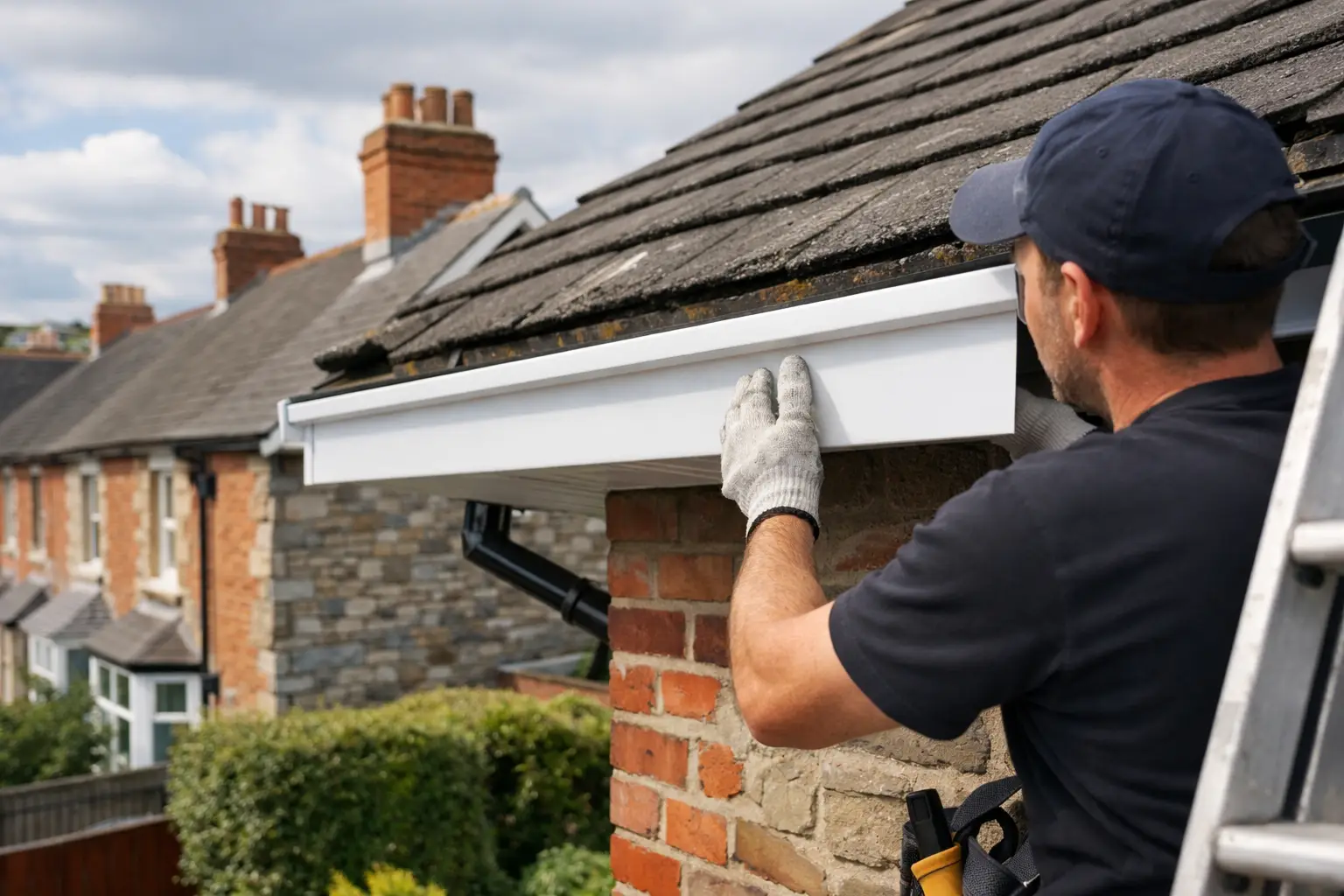
If your guttering is pulling away, paint is flaking from the roofline, or you have damp patches near the eaves, fascia and soffit replacement may be the right fix. These parts are easy to ignore because they sit at the edge of the roof, but when they fail, the damage can spread into rafters, felt, walls and ceilings.
For most homeowners, the question is not what fascia boards and soffits do in technical terms. It is whether they are still protecting the property properly, and whether a repair will do or a full replacement makes more financial sense. That is where a clear survey matters.
What fascia and soffits actually do
The fascia is the vertical board fixed along the lower edge of the roof. It supports the bottom row of tiles and usually carries the guttering. The soffit is the horizontal board underneath that overhang, closing the gap between the wall and the roof edge.
Together, they protect the roofline from wind, rain and nesting pests while helping the roof ventilate correctly. If either part starts to rot, crack or come loose, water can get behind the boards and into the roof structure. In exposed areas, that process can move quickly.
Signs you may need fascia and soffit replacement
Some roofline problems are obvious. Others only show up once the damage is already behind the surface. If you can see sagging gutter brackets, peeling paint, split timber or black staining, the roofline needs attention. You may also notice birds or insects getting into gaps around the eaves.
Inside the property, the warning signs can be less direct. Damp near the top of external walls, mould in upstairs corners, or poor loft ventilation can all point back to failing soffits or fascias. It does not always mean full replacement is needed, but it does mean the area should be checked properly.
When repairs are enough
If the problem is limited to a short section, and the surrounding boards are still sound, a local repair can be sensible. That might involve refixing a loose length, replacing a damaged section or securing guttering that has started to drop.
The key point is whether the existing material still has strength. Once timber fascias have softened with rot, or old boards have warped badly, patching them often becomes a short-term fix. You can spend money tidying up the surface while the real issue continues underneath.
When replacement is the better option
Full fascia and soffit replacement is usually the better route when there is widespread rot, repeated leaking, poor previous workmanship or ageing materials that have reached the end of their life. It is also worth considering during a roof replacement, as access is already in place and the whole edge detail can be rebuilt properly.
Many older properties have timber rooflines that have been capped over with plastic boards in the past. On the surface that can look tidy, but if the original timber underneath is failing, capping does not solve the structural problem. In those cases, stripping back and replacing with new boards is the more durable repair.
What happens during fascia and soffit replacement
A proper job starts with access and inspection, not just fitting new boards over old ones. The existing fascias, soffits and guttering are removed so the ends of the rafters can be checked. If there is any rot in the roof edge, that should be dealt with before the new roofline goes on.
New fascias and soffits are then fitted securely, with ventilation considered where needed, and the guttering is refixed or renewed so water drains away correctly. The finish should look neat, but appearance is only part of it. The main aim is to create a roofline that sheds water properly and stands up to bad weather.
For homes in South Wales, that matters. Wind-driven rain exposes weak points fast, especially around eaves and gutter lines. A roofline that is poorly fitted or already decaying rarely improves on its own.
Materials and finish - what to expect
Most modern replacements use low-maintenance uPVC. It is popular because it does not rot, does not need repainting and gives a clean, consistent finish. For many homeowners, that is the practical choice.
There are still cases where timber is preferred, particularly on certain period properties, but timber needs regular upkeep and is less forgiving if maintenance is missed. Aluminium can also be used in some settings, though it is less common on standard domestic work.
Colour choices are usually straightforward, with white, black, brown and grey being the most common. The right option often depends on the age and style of the property. A good installer should explain what suits the house rather than pushing the same finish on every job.
What affects the cost of fascia and soffit replacement
The size of the property is one obvious factor, but it is not the only one. The condition underneath the old boards makes a big difference. If the rafter feet are sound and access is simple, the work is more straightforward. If there is hidden rot, damaged felt, awkward access or chimney and extension details to work around, the labour and materials will increase.
Guttering also affects the price. Sometimes it can be refitted if it is still in good condition, but often it makes sense to replace it at the same time. Keeping worn guttering on a newly fitted roofline can be a false economy.
This is why itemised quotes matter. A clear quote should explain whether the price includes removal, disposal, replacement boards, ventilation, guttering and any associated repairs. If a price looks unusually cheap, it is worth checking whether the contractor is planning a full replacement or simply cladding over old material.
Why poor installation causes bigger problems later
Roofline work can look simple from the ground, but small mistakes lead to expensive trouble. If fascias are not fixed correctly, guttering can pull away under the weight of rainwater. If ventilation is missed, condensation can build in the loft. If joints are rushed, water can track back behind the boards.
This is why experience matters more than sales talk. A tidy finish is expected, but the more important part is what you do not see after the work is done - no drips, no movement, no damp patches and no call-back every time the weather turns.
Should fascia and soffit replacement be done with other roofing work?
Often, yes. If you are already replacing a pitched roof, renewing a flat roof edge, or dealing with recurring leaks at the eaves, it can be more efficient to complete the roofline at the same time. Access costs are already part of the job, and everything can be finished as one weatherproof system.
That said, it depends on the condition of the rest of the roof. If the tiles, underlay and roof structure are in good shape, there is no reason to force extra work. The right contractor will tell you what needs doing now and what can wait.
Choosing a contractor for fascia and soffit replacement
Most customers are not looking for a long technical lecture. They want someone to turn up on time, inspect the roofline properly, explain the options in plain English and leave the property tidy afterwards. That is exactly how it should be.
When comparing contractors, look at how they quote, how clearly they explain the job and whether they are checking the condition behind the existing boards. Reliability counts just as much as the materials being fitted. A well-run job causes less stress and usually gives a better result.
Roof Renovations Ltd carries out fascia and soffit replacement as part of wider roofline and roofing work, with the same focus on clear quotes, tidy workmanship and solid long-term performance. For homeowners and landlords, that practical approach is usually what makes the difference.
A sensible time to act
Roofline problems rarely stay small for long. Once water starts getting behind the boards, the repair bill can move from a straightforward external job to timber repairs, internal damp work and gutter replacement.
If your fascias or soffits are showing their age, the best next step is a proper inspection rather than another season of waiting. A clear answer early on usually costs less than dealing with the damage after another wet and windy winter.
Other Articles