Blog
How to Choose Flat Roofing for Your Home
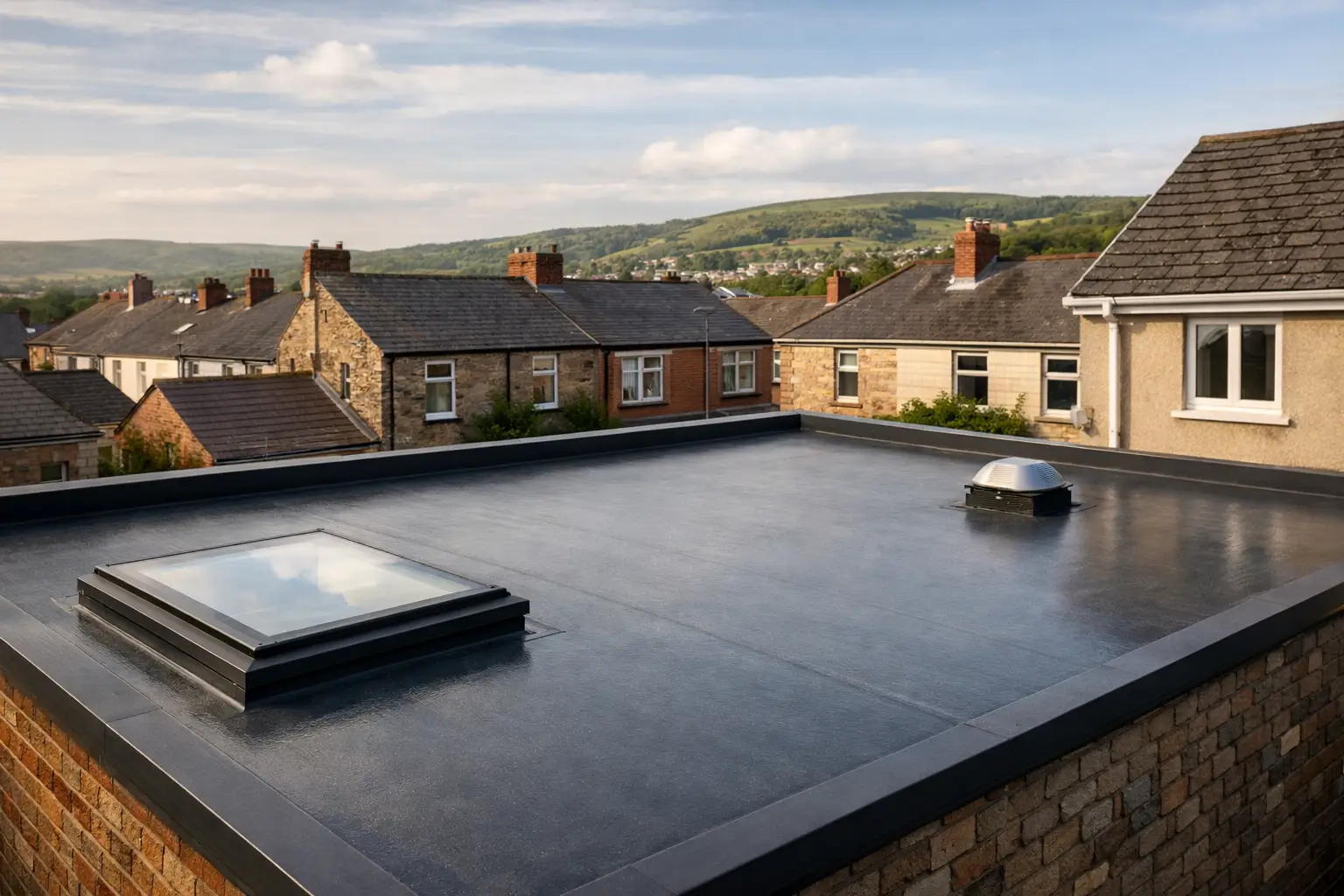
A flat roof can look straightforward from ground level, but the decisions beneath the surface determine whether it stays dry through years of Welsh rain and wind. If you are wondering how to choose flat roofing, start by looking beyond the finish. The right system must suit the roof’s use, its condition, its drainage and the standard of installation.
For a home extension, garage, porch or replacement roof, the cheapest quote is rarely the best measure of value. A properly specified flat roof should provide dependable weather protection, sensible maintenance requirements and a clear life expectancy - without unnecessary extras or confusing jargon.
Start with what the roof needs to do
The best flat roofing material depends on the building and how the roof will be used. A small detached garage has different requirements from a warm roof extension above a kitchen, and a roof that will be walked on needs a different finish again.
Think about access first. Is the roof only for maintenance, or will it support solar panels, an air-conditioning unit, a roof terrace or regular foot traffic? Most domestic flat roofs are not designed as walking surfaces unless this has been allowed for in the structure and finish. Tell your roofer about any planned use before work begins, not after the roof has been installed.
Also consider the roof shape. Flat roofs are not completely flat. They need a calculated fall so rainwater runs towards outlets, gutters or drainage points. Water that sits in shallow pools for long periods puts extra strain on the waterproof layer and can expose weak workmanship. A survey should identify whether the existing roof has enough fall or needs correcting as part of the project.
Choose a flat roof system, not just a covering
Homeowners will often hear several material names, but each is part of a full roofing system. The deck, insulation, vapour control layer, waterproof membrane, edge details and drainage all need to work together. Comparing materials alone can lead to an unfair comparison between quotes.
EPDM rubber roofing
EPDM is a single-ply rubber membrane commonly used on garages, extensions and smaller domestic roofs. It is valued for its clean appearance, flexibility and resistance to weathering. Where possible, it can be fitted in large sheets with few seams, reducing potential weak points.
It is a practical choice for many straightforward roofs, particularly where a durable, low-maintenance finish is wanted. However, details around rooflights, pipe penetrations, parapet walls and edges still matter greatly. A good membrane cannot compensate for poor preparation or rushed detailing.
GRP fibreglass roofing
GRP, often called fibreglass roofing, creates a tough, seamless surface. It is particularly suitable for roofs with more complex shapes and is often chosen where a neat, hard-wearing finish is required. It can also work well for certain balconies or areas with occasional foot traffic when specified correctly.
The main consideration is installation conditions. GRP work needs suitable dry weather and careful application, as the resin system must cure properly. It is not a material to apply hastily during poor weather simply to meet a deadline.
Felt roofing systems
Modern high-performance felt is very different from the older felt roofs many people remember. Multi-layer bitumen systems can be durable, reliable and well suited to domestic flat roofs, especially where a contractor has experience with the chosen product.
Felt systems have proven their worth over many years, but the quality of laps, joints and upstands is essential. Ask what system is being proposed, how many layers it includes and how the edges and joints will be finished.
Single-ply membranes and specialist finishes
For larger roofs or more specific projects, other single-ply membranes and specialist finishes may be appropriate. These can offer excellent performance, but the right choice depends on the roof design, budget and installer accreditation. There is no benefit in paying for a premium system if the roof does not need it, just as there is little value in choosing a basic covering for a demanding roof layout.
Do not overlook insulation and ventilation
A replacement flat roof is often the right time to improve insulation. For a heated extension or converted garage, a warm roof construction is usually the preferred approach. Insulation sits above the roof deck, helping keep the structure warmer and reducing the risk of condensation within the roof build-up.
A cold roof places insulation below the deck and relies on a ventilated void above it. It can be suitable in some situations, but it needs careful design. Inadequate ventilation or gaps in the vapour control layer can allow condensation to form out of sight, leading to damp timber and avoidable repair costs.
Your contractor should explain the proposed build-up in plain English. You should know where the insulation sits, whether the existing deck is sound, how moisture will be controlled and how the finished roof will meet current thermal requirements where applicable.
Drainage is where good flat roofs earn their keep
Most flat roof failures are not caused by one dramatic problem. They start with small issues: a blocked outlet, poor falls, loose edge trims or water repeatedly standing around a detail. South Wales weather can be hard on exposed roofs, so drainage needs proper attention from the first survey.
Check where water will go during heavy rain. A roof may drain into existing gutters, internal outlets or scuppers through parapet walls. These points need to be sized and positioned correctly, with a clear route for water once it leaves the roof. If the roof has a history of pooling water, ask whether the proposal addresses the cause rather than merely covering over the old surface.
Regular clearing of leaves and moss from gutters and outlets is still part of owning a flat roof. Even the best installation cannot drain properly through a blocked outlet.
Compare quotes on scope, not just the final figure
When deciding how to choose flat roofing, a detailed quote is one of the clearest signs of a professional contractor. It should set out what is included, rather than leaving you to guess why one price is lower than another.
A useful quotation should clarify the roof area, chosen system, insulation specification, removal of existing materials, deck repairs if required, drainage work, edge trims, waste disposal and access arrangements. It should also state whether any timber repairs are provisional, as these can only be confirmed once old coverings have been removed.
Be wary of vague descriptions such as “flat roof repair” or “new felt roof” without further detail. They make it difficult to compare workmanship, materials and guarantees. A transparent quote protects both the homeowner and the contractor because the expected work is clear before the job starts.
Assess the installer as carefully as the material
A flat roof is only as reliable as its preparation and detailing. Before appointing anyone, ask how they will inspect the existing roof, deal with rotten decking, form falls and weatherproof joints around walls, rooflights and pipework. Clear answers are more reassuring than broad promises.
Look for a contractor who turns up when arranged, carries out a proper survey and explains any risks openly. Tidy working matters too. Roof replacement can involve dust, old materials and access equipment, but a professional team should protect the property, keep the site organised and remove waste once the work is complete.
For planned work, do not feel pressured into a same-day decision. Take time to compare like-for-like specifications and ask questions. For an active leak or storm damage, the priority may be a prompt temporary repair to make the property safe, followed by a permanent solution once the roof can be fully assessed.
Ask about guarantees and realistic lifespan
A guarantee is useful only when you understand what it covers. Ask whether there is a manufacturer-backed product guarantee, an installation guarantee or both. Check what maintenance is expected and whether damage from blocked drainage, storm debris or third-party work is excluded.
Lifespan figures should be treated as guidance rather than a promise. Exposure, maintenance, roof design and installation quality all affect how long a roof lasts. A well-installed system with proper drainage is a better investment than a longer stated lifespan on paper with poor detailing underneath.
Make the decision after a proper survey
The most dependable route is a site survey that considers the whole roof, not simply the visible leak or damaged patch. Roof Renovations Ltd can assess domestic flat roofs across South Wales, explain the practical options and provide an itemised quote so you know what work is proposed and why.
Choose the system that fits your roof’s condition, use and budget, then choose a contractor prepared to stand behind the details. A flat roof should give you peace of mind when the weather turns, not another reason to watch the ceiling for drips.
Other Articles