Blog
Flat Roof Installation for Extension Projects
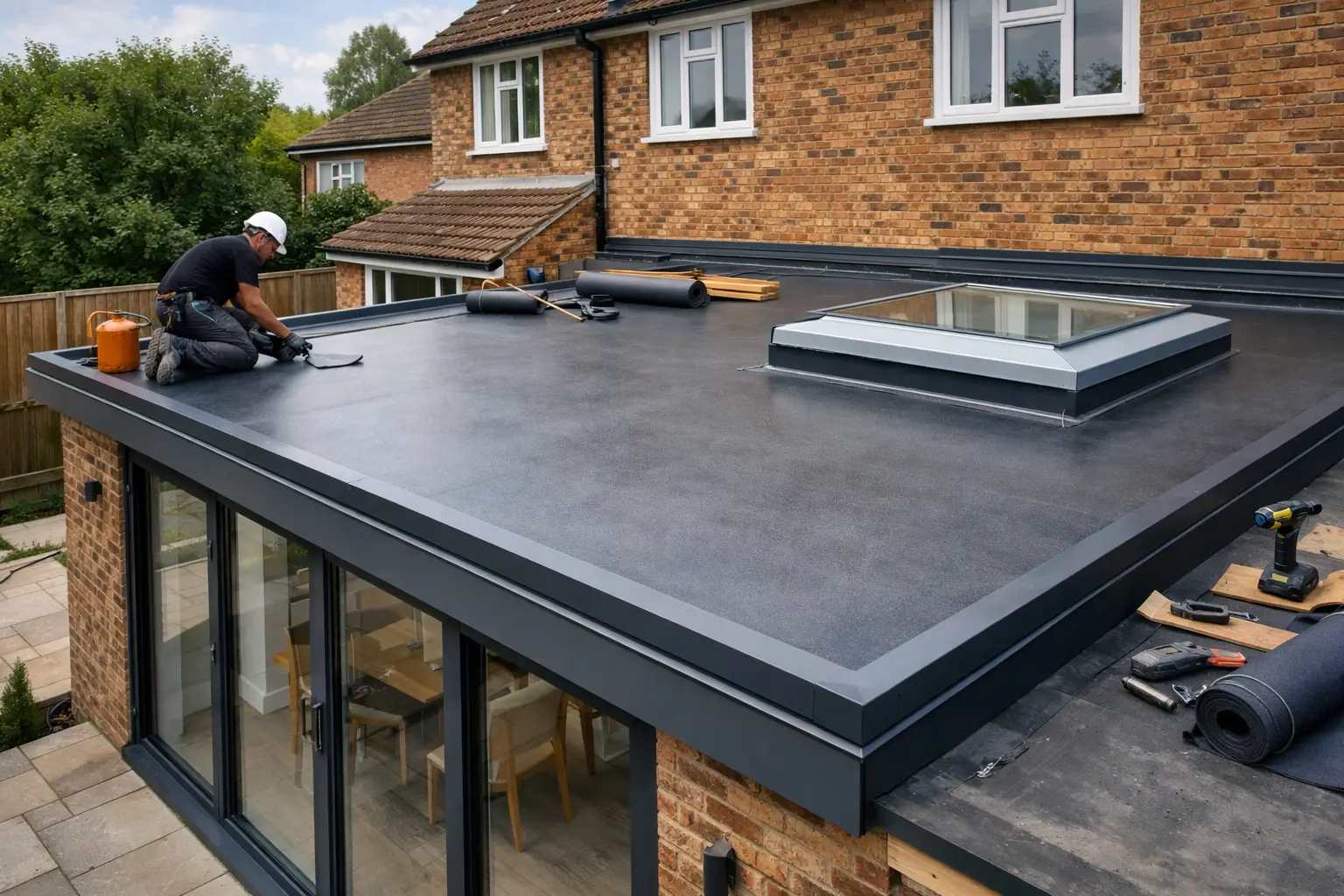
A rear extension can add valuable space to a home, but the roof is the part that decides whether that new room stays warm, dry and easy to live with. Flat roof installation for extension work needs to be planned properly from the start, not treated as the final item on the job list. Get it right and you have a neat, durable roof that suits modern extensions well. Get it wrong and you can end up chasing leaks, ponding water and avoidable repair costs.
For many homes across South Wales, a flat roof is the practical choice for an extension. It usually suits the shape of the build, keeps the overall height manageable and can work well with doors, windows and neighbouring properties. It also gives a clean finish that looks right on both modern and traditional homes, provided the detailing is handled properly.
Why flat roof installation for extension work needs care
A flat roof is never truly flat. It needs a designed fall so rainwater moves towards outlets instead of sitting on the surface. That sounds simple, but this is where plenty of problems begin. If the roof deck, insulation and drainage are not set out correctly, water can pool, edges can weaken and the roof covering can wear faster than it should.
An extension roof also has to tie into the existing property properly. That junction matters as much as the roof covering itself. Leadwork, abutments, upstands and trims all need to be fitted neatly and securely so wind-driven rain cannot find a way in. In South Wales, where wet weather and strong winds are part of the job, that level of detailing matters even more.
There is also the question of how the extension will be used. A kitchen extension, home office or year-round family room needs a roof build-up that supports good thermal performance and long-term comfort. Homeowners are not just paying for something waterproof. They are paying for a room that works properly in winter and summer.
Choosing the right flat roof system
Not every flat roof system is the same, and the best option depends on the size of the extension, the structure below and the finish you want. The right answer is often the one that gives the best balance between lifespan, cost and suitability for the property.
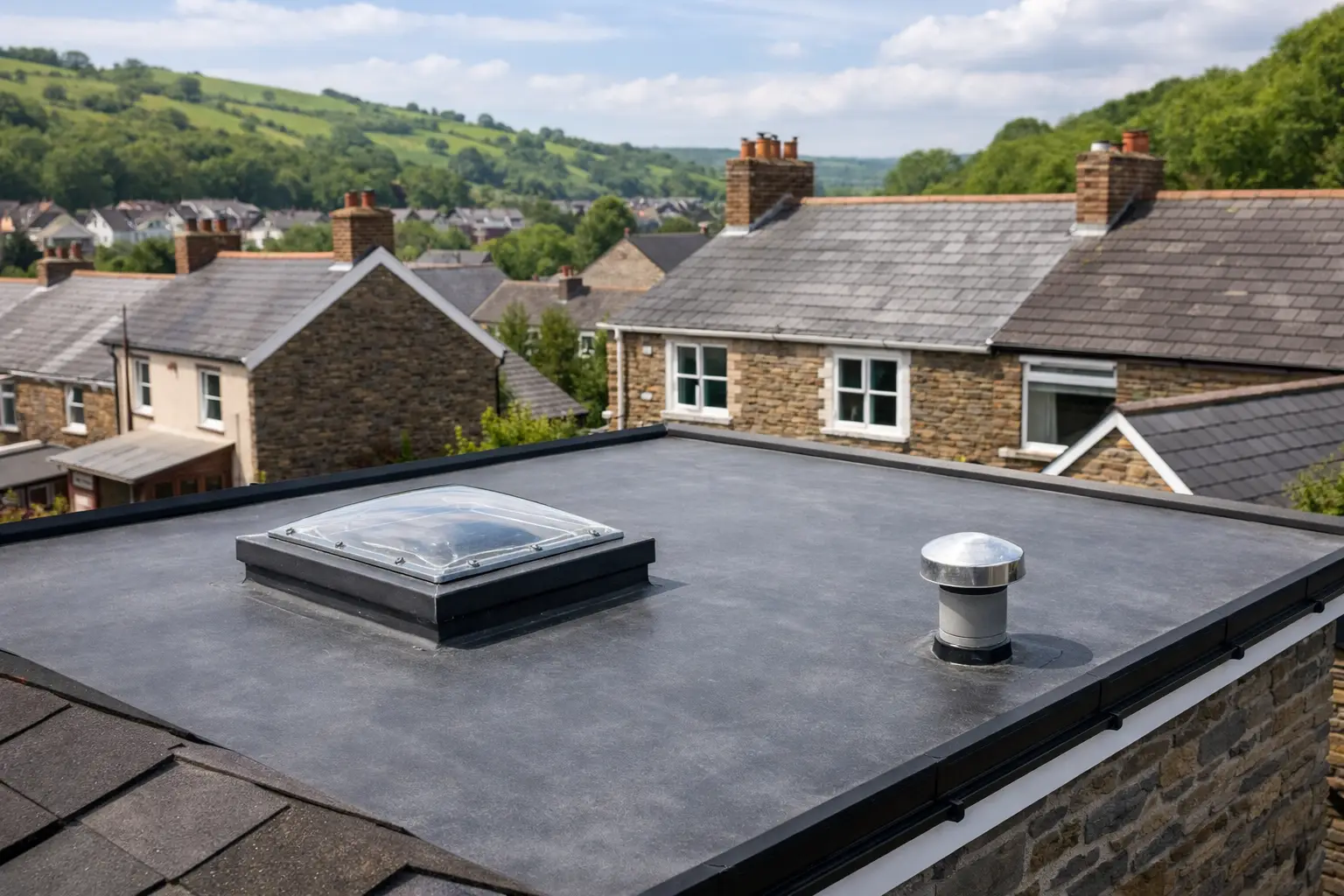
EPDM rubber roofing is a popular choice for domestic extensions because it is tidy, durable and well suited to straightforward roof shapes. It can offer a clean finish with fewer seams than some traditional systems, which helps reduce weak points. It is often a sensible option where homeowners want reliable weatherproofing without unnecessary complication.
GRP fibreglass roofing can work well on extensions too, especially where a hard, uniform finish is preferred. It is often chosen for roofs with edge detail that needs a crisp appearance. The installation conditions do matter, though, because timing and weather can affect the process.
High-performance felt systems are still used and can be a solid choice when installed correctly. Modern felt roofing is not the same as the poor-quality systems many people remember from older outbuildings. A well-fitted system can perform well, but workmanship remains the deciding factor.
The material matters, but the fitting matters more. Even a good product will not rescue poor preparation, weak detailing or rushed workmanship.
What a proper extension roof build-up includes
Most homeowners are not looking for a lesson in roofing theory, but it helps to know what sits beneath the finished surface. A flat roof installation for extension projects usually includes the structural deck, vapour control layer where required, insulation, waterproof covering, edge trims and drainage outlets. Each part has a job to do.
Insulation is a major part of the build because it affects comfort, running costs and compliance with current standards. Warm roof construction is commonly used on extensions because it places insulation above the deck, helping reduce condensation risk and improve thermal performance. In many cases, that is the preferred route for a new extension rather than trying to work around older cold roof methods.
The deck itself also needs to be sound, correctly fixed and suitable for the chosen roof system. If the structure below has movement issues, poor falls or weak support, those problems will carry through to the finished roof. That is why proper surveying and measuring should happen before work begins, not halfway through the installation.
Drainage is where good roofs earn their keep
One of the biggest mistakes with extension roofs is underestimating drainage. A flat roof should be designed to move water efficiently. That means creating the right fall, placing outlets sensibly and making sure gutters and downpipes can cope with the volume of rain.
On some properties, the available layout makes this easy. On others, especially where the extension meets existing walls, doors or boundary limits, drainage has to be thought through carefully. You may need internal outlets, external gutters or tapered insulation to form the right slope. There is no one-size-fits-all answer.
In South Wales, heavy rain can expose weak design quickly. A roof that appears acceptable during dry weather can show its faults after one poor spell. That is why experienced installers pay close attention to falls, outlets and edge detailing before the covering goes down.
How the installation process should run
A well-managed project feels organised from the first visit. The roof should be measured properly, the condition of the supporting structure checked and the specification explained in plain terms. Homeowners should know what system is being used, why it suits the extension and what the finished result will include.
Once work starts, preparation is everything. The deck and structure need to be set out correctly, falls formed, and all junctions made ready before the waterproof layer is installed. Rushing this stage is where shortcuts happen, and shortcuts on flat roofs usually come back as leaks.
After the covering is fitted, the finishing details need the same level of care. Trims, flashings, outlets and seals should all be completed neatly. A good contractor also leaves the site tidy and makes sure waste is cleared properly rather than leaving the customer to deal with the mess.
That may sound basic, but it matters. Most homeowners judge a roofing company on reliability as much as technical skill. Turning up when agreed, keeping the job orderly and explaining the work clearly are part of professional installation, not extras.
Cost, lifespan and where cheap quotes go wrong
Extension roofs vary in price depending on size, access, material choice and how much structural work is involved. If an existing roof is being replaced, costs can also rise if rotten decking, poor insulation or bad detailing is uncovered once the old system is removed.
Cheap quotes often look attractive because the roof area seems small compared with the rest of the extension. The problem is that low prices are usually achieved by cutting corners on build-up, insulation, drainage or finishing details. On paper, two quotes may look similar. In practice, one may include a complete warm roof system with proper trims and abutment work, while the other allows for a much thinner specification.
A flat extension roof should be judged on long-term value, not just initial outlay. Paying for correct materials and careful fitting usually costs less than dealing with recurring repairs, damaged plasterwork or heat loss later on.
Questions worth asking before work begins
Before agreeing to any extension roof installation, it is worth asking what system is being proposed, how the falls will be formed and how the roof will drain. You should also ask what happens at the point where the new roof meets the house, because that junction is often the most vulnerable area.
It is also sensible to ask who is managing the work and whether the quote is itemised clearly. A proper quote should tell you what is included, not leave key items vague. Clear communication at this stage usually means fewer surprises once the job is under way.
For homeowners and landlords who want a dependable result, the safest choice is usually an experienced local contractor who understands the demands of the area and treats the property with respect. That is the kind of straightforward approach Roof Renovations Ltd is known for across South Wales.
A flat roof should look simple when it is done well
The finished roof on an extension ought to feel like part of the house, not an awkward add-on. It should shed water properly, hold up well in bad weather and give the room below the warmth and protection it needs. Most of all, it should not become a source of constant maintenance.
If you are planning an extension, the roof is one of the places where doing the job properly really pays off. A neat-looking finish is good, but a well-built roof earns its value every time the weather turns.
Other Articles