Blog
Roof Repair Versus Reroof Decision Made Clear
A slipped tile after a windy night may need a straightforward repair. A roof that leaks in three different places, has failing underfelt and is nearing the end of its working life is a different matter entirely. Making a roof repair versus reroof decision comes down to the condition of the whole roof, not simply the most visible problem.
For homeowners and landlords, the temptation is often to choose the lowest immediate cost. That can be the right call where the damage is isolated. However, repeatedly repairing an ageing roof can become more expensive and more disruptive than planning a full reroof at the right time. A proper survey gives you the facts needed to make a sensible choice.
When roof repair is the sensible option
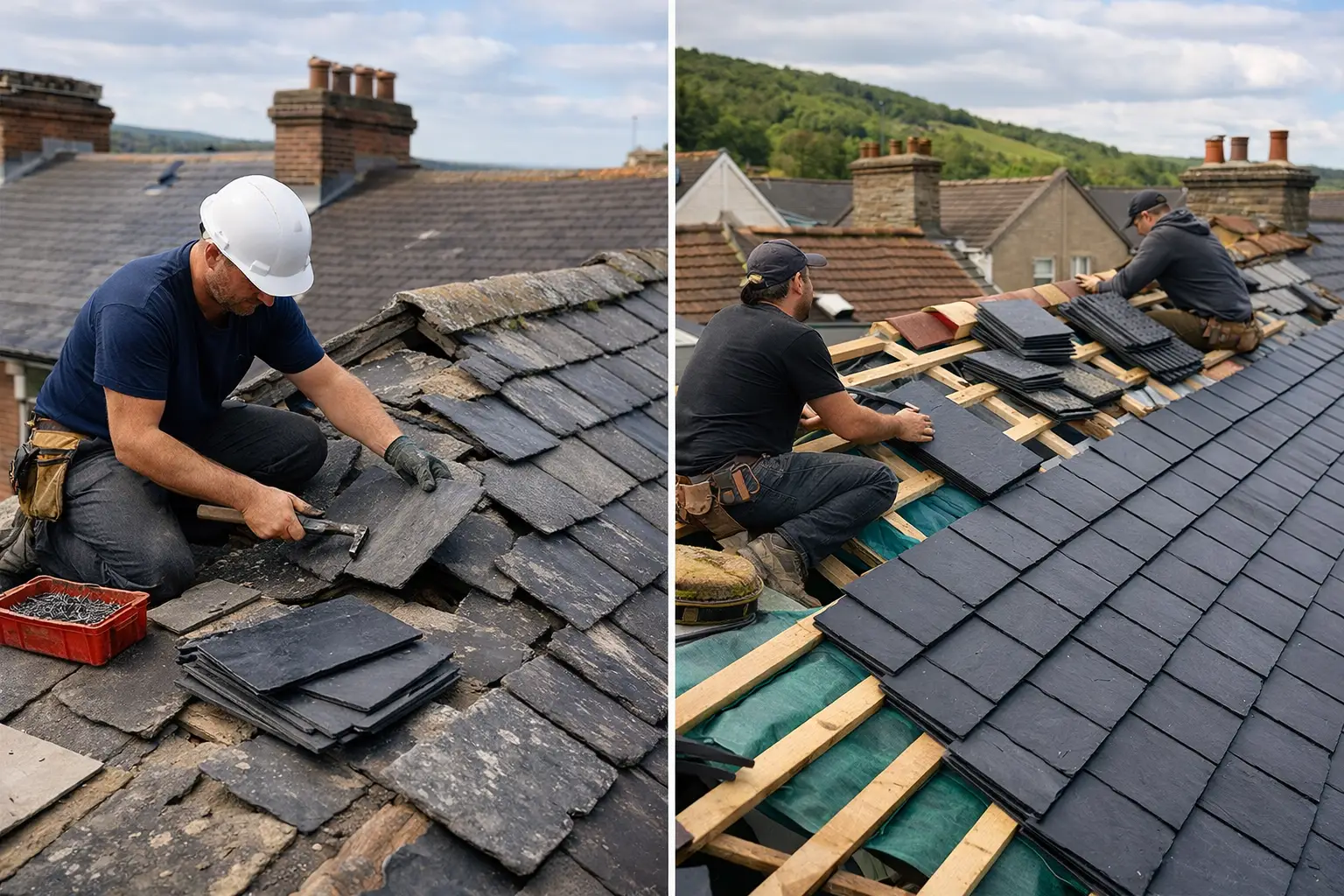
Roof repairs are often the best value where the roof is otherwise sound and the fault has a clear, localised cause. Storm damage, cracked tiles, loose ridge tiles, damaged leadwork, failing flashing around a chimney or a small flat-roof split can usually be addressed without replacing the entire covering.
A repair is more likely to be suitable when most of the tiles or slates remain in good condition, the roofline is straight, and there is no widespread evidence of water damage in the loft. The roof should also have a reasonable amount of life left in it. Replacing a handful of damaged tiles on a well-maintained roof is practical maintenance, not a temporary fix.
Fast action matters. A small leak can wet insulation, stain ceilings, damage timbers and encourage mould if it is left through wet weather. Securing the area and repairing the cause promptly is normally far less costly than waiting for the damage to spread.
Emergency repairs also have their place after strong winds or heavy rain. A contractor can make the property safe, prevent further water entry and explain whether a permanent repair will be enough once the area is inspected properly. Do not assume storm damage automatically means a reroof is needed.
Signs that a full reroof may be better value
A reroof is a larger investment, but it provides a fresh roofing system rather than another repair to an already tired one. It is usually worth considering where faults are widespread, the roof covering is heavily weathered, or repairs have become a regular occurrence.
Look out for recurring leaks in different areas, multiple missing or cracked tiles, crumbling mortar, sagging sections of roof, daylight visible from the loft, and deteriorated felt or membrane beneath the tiles. These signs do not always mean the full roof must be replaced, but they do show that the issue may go beyond the surface.
The age of the roof is relevant too. A roof does not fail simply because it reaches a particular age, as material quality, installation standards and maintenance all vary. Still, if an older roof needs significant work in several places, paying for a series of repairs may not represent good long-term value.
A full reroof also gives the opportunity to deal with problems that are difficult to resolve one patch at a time. This may include renewing battens and breathable membrane, improving ventilation, replacing worn leadwork, correcting poor detailing and fitting suitable new tiles or slates. The result is a consistent system designed to protect the property for years ahead.
Roof repair versus reroof decision: the key factors
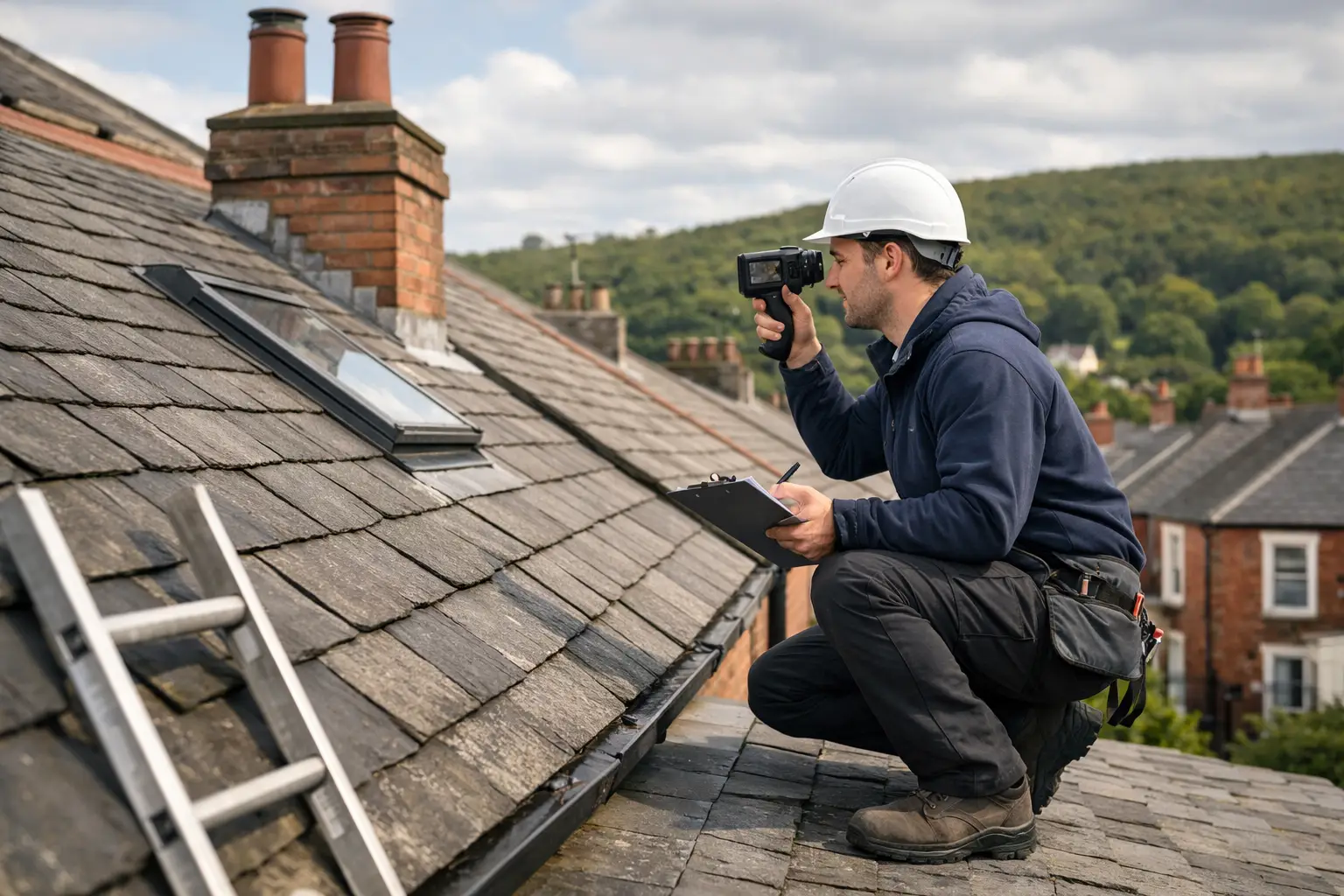
The right choice should be based on evidence from a roof survey, not guesswork from ground level. An experienced roofer will assess the roof covering, flashings, ridge and verge areas, gutters, roofline, loft space and any signs of moisture damage. They should explain what has failed, why it has failed and what each option would involve.
The extent of the damage
One broken tile is not the same as a roof with widespread tile failure. Likewise, a leak around a chimney can be caused by flashing that needs renewing, while a leak across a large area may point to a failing underlay or flat-roof membrane.
The more isolated the defect, the stronger the case for repair. The more widespread the defects, the more likely a reroof will offer better value and greater peace of mind.
The condition beneath the covering
Tiles and slates are only part of the roof. If the battens, membrane or timbers underneath are deteriorating, replacing visible tiles alone may not solve the problem for long. A survey should establish whether water has reached the structure and whether any repairs can be completed properly without lifting large sections of the roof.
Timber issues need careful assessment. Minor moisture staining is different from persistent damp, rot or structural movement. Where necessary, the work should address the cause of moisture before new materials are fitted.
The cost over the next few years
The cheapest quote today is not always the least expensive route overall. Ask whether a proposed repair is expected to provide a durable solution or whether it is simply buying time. There is nothing wrong with a temporary repair when a property needs to be made safe quickly, but it should be described honestly as temporary.
Compare the likely cost of repeated call-outs and patch repairs against a planned reroof. A replacement can require a higher upfront budget, but it may reduce the risk of future leak damage, emergency disruption and further repair bills. Itemised quotes make this comparison much easier, as you can see exactly what is included in each option.
Your plans for the property
If you intend to remain in the home for many years, a reroof may be a sensible investment where the existing roof is clearly approaching the end of its life. If you are preparing to sell, a sound roof can also remove a common concern for buyers, although unnecessary work should never be recommended simply for appearance.
For landlords, reliability is often the deciding factor. Repeated roof problems can inconvenience tenants, cause internal damage and lead to avoidable management costs. Where repairs are becoming frequent, a planned replacement may be easier to budget for and schedule.
Flat roofs need their own assessment
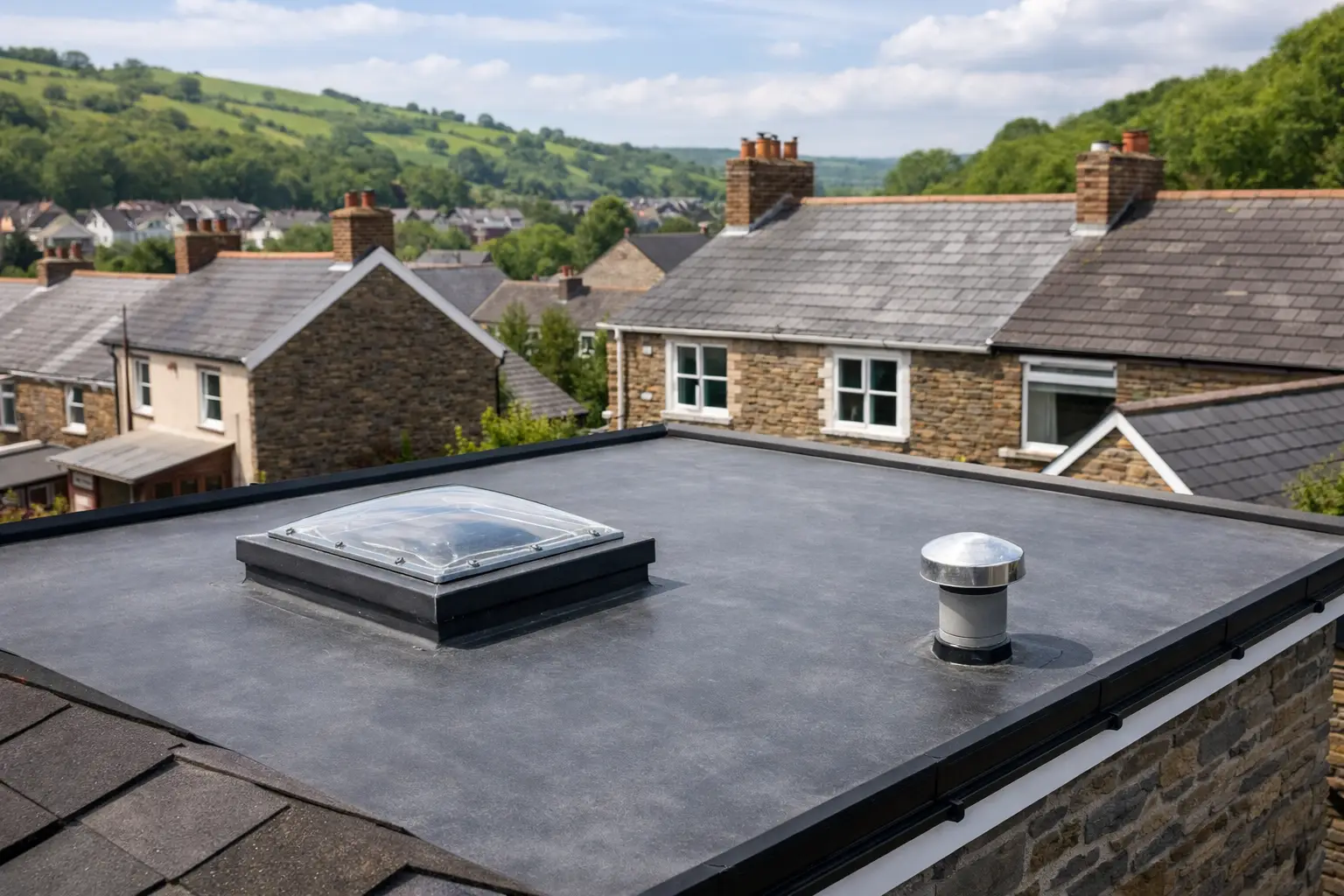
Flat roofs on garages, extensions, porches and dormers should not be judged in exactly the same way as tiled pitched roofs. Ponding water, splits, lifted edges, blistering, cracks around outlets and failed joints can all cause leaks. In some cases, a local repair or new coating is suitable. In others, especially where the covering has become brittle or water is trapped within the layers, replacement is more dependable.
The condition of the deck and drainage is particularly important. A new surface fitted over an unresolved fall or drainage problem may not perform as it should. The right flat-roof solution needs to deal with water movement as well as the visible leak.
Questions to ask before agreeing to work
A clear contractor will not pressure you into the biggest job. They should be able to answer a few straightforward questions: Is the damage isolated or widespread? What is causing the problem? Can it be repaired properly? How long should the repair last? What additional work could be uncovered once the roof is opened up? And what does the quote include for materials, access, waste removal and making good?
It is also reasonable to ask how the property will be protected during the work, particularly if the roof is being stripped. Reliable planning, punctual attendance and a tidy site matter just as much as the materials being fitted. Roofing work affects your home, not just the roof itself.
At Roof Renovations Ltd, surveys are approached with this practical mindset: identify the fault, explain the options plainly and recommend work that suits the condition of the roof rather than forcing a one-size-fits-all answer.
Avoid decisions based on the weather forecast alone
Wet weather often reveals a roofing problem, but it should not force a rushed decision on a full replacement. If water is entering the property, the priority is to make the roof safe and limit damage. Once the immediate risk is controlled, there is time to inspect the roof and decide whether a durable repair or a reroof is the sensible next step.
South Wales roofs contend with driving rain, strong winds and changing temperatures, so small defects can worsen quickly. Acting early gives you more options. It may allow a simple repair before moisture reaches the roof structure, or it may give you time to plan a reroof properly rather than facing an unexpected emergency.
The best outcome is not always the smallest job or the largest one. It is the work that leaves your property dry, safe and properly protected, with a clear understanding of what has been done and why.
Other Articles