Blog
How to Check Storm Damage on Your Roof Safely
A night of high winds and driving rain can leave more behind than a few branches in the garden. Knowing how to check storm damage gives you a chance to spot problems early, protect the inside of your home and avoid a minor repair turning into a larger roofing job.
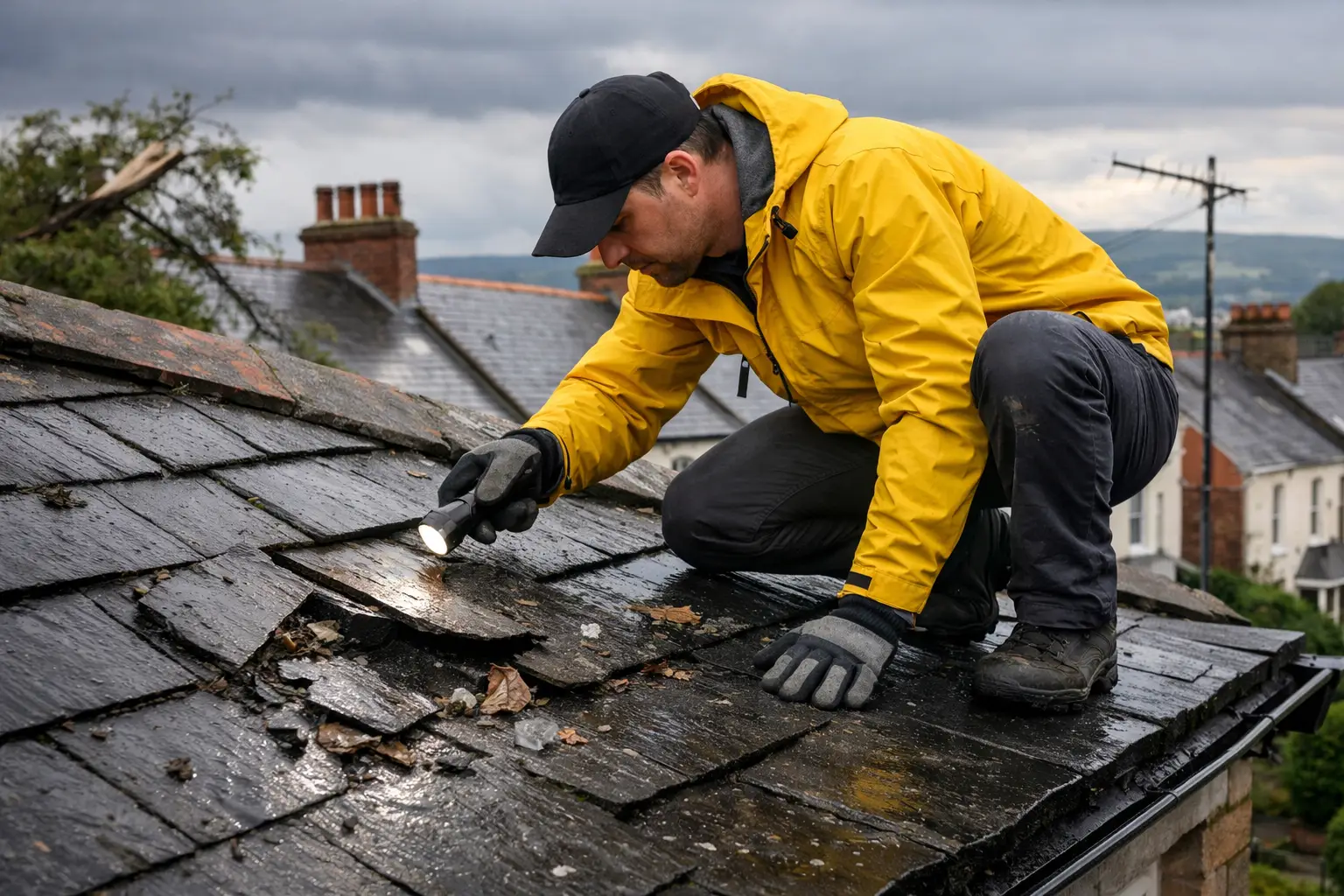
The first rule is simple: do not climb onto the roof yourself. Wet tiles, loose slates, damaged gutters and strong gusts make roofs unsafe, even for confident DIY homeowners. A careful inspection from ground level, followed by checks inside the property, is usually enough to identify whether you need a professional roof survey.
Start by making the area safe
Before inspecting anything, look for immediate hazards. Keep children and pets away from fallen branches, loose fence panels, broken glass and any cables that may have come down in the storm. If a power line appears damaged or is close to your home, stay well clear and contact the relevant emergency service or electricity network operator.
Do not stand beneath an overhanging roof edge if tiles, slates, guttering or fascia boards look loose. Storm damage can continue to worsen after the rain has stopped, particularly where fixings have failed or water has got behind roof coverings.
If water is entering the house, move valuables away from the affected area and place buckets beneath drips where safe to do so. Avoid using lights or electrical sockets near a significant leak. A roofer can install a temporary weatherproof covering where necessary, then assess the permanent repair once conditions allow.
How to check storm damage from the ground
Choose daylight and stand far enough back to see the roof slope clearly. Binoculars can help, but do not rely on them to make a final judgement about the condition of a tile or slate. You are looking for obvious changes compared with how the roof normally appears.
Check the ridge line first. Ridge tiles sit along the top of a pitched roof and are exposed to the strongest winds. If they look uneven, displaced or missing, arrange an inspection promptly. Loose ridge tiles can fall and can also allow rain to work into the roof structure.
Then look across the main roof covering. Missing, slipped, cracked or lifted tiles and slates are common after severe weather. A single missing tile may not look serious from the pavement, but it can expose the felt beneath and allow water to travel into the loft. Look out for patches that appear darker than the surrounding roof, irregular rows, or a visible gap where a tile should be.
Pay close attention to roof edges, valleys, chimneys and the areas around skylights. These are places where wind can get underneath materials or where rain naturally collects. Flashing around a chimney or roof window should lie flat and secure. If it is lifted, buckled or visibly detached, water may already be finding a route inside.
Check guttering, downpipes, fascias and soffits as well. Gutters pulled away from the roofline, overflowing joints or sections hanging at an angle can indicate failed brackets or storm debris. While guttering is not the roof covering itself, poor drainage can send water back towards the building and cause damp problems around eaves, walls and foundations.
Inspect the loft and ceilings carefully
A roof can be damaged without any tiles appearing to be missing from the ground. Once it is safe, inspect the loft using a torch. Do not step between ceiling joists or disturb insulation unnecessarily. Look for fresh water marks, damp insulation, drips, wet timber or daylight showing through the roof covering.
A musty smell can also be an early sign of moisture. Check around chimney breasts, roof valleys and beneath skylights, as these areas are more likely to show the first signs of a leak. Take clear photographs of anything you find, including the date where possible. This helps a roofer understand the issue before attending and may be useful if you need to speak with your insurer.
Inside the living areas, look at ceilings and upper-floor walls. New brown staining, bubbling paint, peeling wallpaper or a damp patch that grows after rainfall should not be ignored. Water does not always appear directly below the point of entry. It can run along timbers, felt or pipes before becoming visible elsewhere in the home.
Signs that need urgent roofing attention
Some storm damage can wait for a booked inspection, but certain signs call for prompt action. Contact an emergency roofer if you notice any of the following:
- Water actively entering the property or spreading across a ceiling.
- Loose or fallen tiles, slates, ridge tiles or chimney materials.
- A roof section that appears to be sagging, lifting or moving in the wind.
- Damage around a chimney, skylight or flat roof that has exposed the structure beneath.
- Guttering, fascias or other roofline materials hanging loose above an entrance, path or driveway.
If the problem is confined to a small damp patch and there is no active leak, it may be possible to arrange a survey during normal working hours. That said, do not leave it for weeks. South Wales weather can quickly turn a small opening in the roof into saturated insulation, damaged plasterboard and timber decay.
Be especially careful with flat roofs
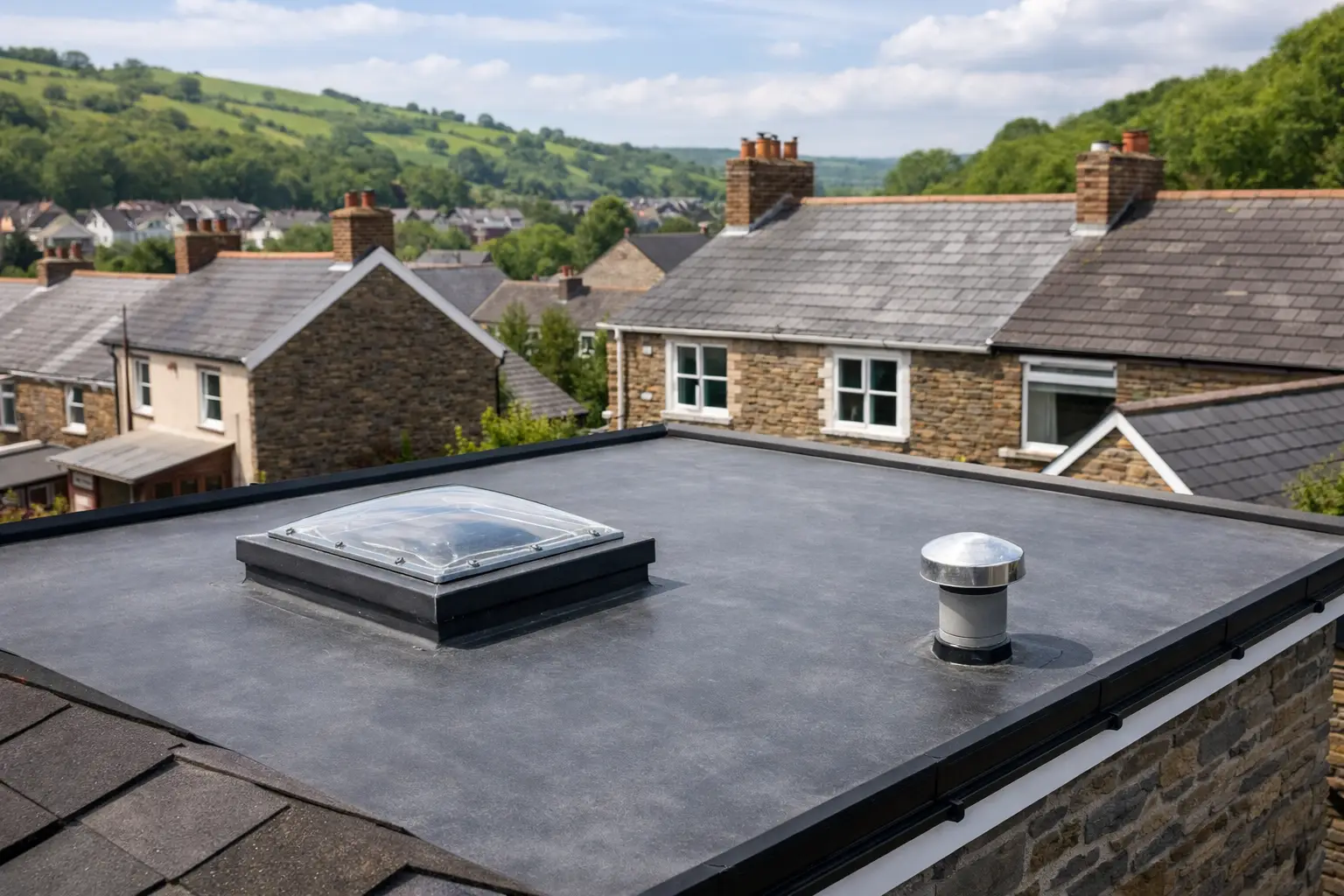
Flat roofs on extensions, garages, porches and dormers need a slightly different inspection. From a safe ground-level viewpoint or an upstairs window, look for pooling water that remains more than a day or two after rainfall. Standing water does not always mean the roof has failed, but persistent ponding can place extra strain on ageing materials and expose weak points around outlets and seams.
Check for tears, lifted edges, blisters or splits in visible flat-roof coverings. Damage around leadwork, upstands, parapet walls and drainage outlets deserves particular attention. Never walk on a flat roof to investigate, especially after a storm. The surface may be slippery, weakened or hiding soft areas beneath the covering.
Record the damage without making it worse
Photographs taken from the ground, inside the loft and around affected ceilings are usually enough for an initial assessment. Take wide shots to show the location and close shots to show the detail. If debris has fallen onto the garden or drive, photograph it before clearing it away, provided it is safe to do so.
Do not pull off loose materials, push tiles back into place or apply sealant from a ladder. These temporary attempts often create more damage, invalidate a repair assessment or put you at risk of a fall. A proper repair should identify why the material moved in the first place, whether that is worn fixings, storm-force winds, deteriorated mortar, blocked drainage or an underlying issue with the roof structure.
For insurance purposes, keep notes of when the storm occurred, when you first saw the damage and what action you took to prevent further loss. Most policies expect homeowners to take reasonable steps to limit additional damage, but that does not mean carrying out unsafe work yourself.
Arrange a professional roof survey
A roofer can inspect areas that are not visible from the ground and check whether damage is limited to a few components or is part of a wider problem. This matters with older roofs, where a storm may reveal existing wear rather than being the sole cause of failure. An honest assessment should explain what is urgent, what can be monitored and what the repair is likely to involve.
For homeowners across South Wales, Roof Renovations Ltd provides roof surveys and emergency repair support for storm-damaged pitched and flat roofs. The aim is to secure the property, explain the findings plainly and provide a clear itemised quote before permanent work begins.
After a storm, acting early is usually the most cost-effective choice. A safe ground-level check today can give you the information needed to protect your home before the next spell of rain arrives.
Other Articles