Blog
Why Does a Flat Roof Leak? Causes and Fixes
A brown patch on a ceiling rarely means the water entered directly above it. Moisture can travel along roof timbers, insulation or a ceiling void before becoming visible indoors. So, why does a flat roof leak? Usually, it is because water has found a weak point in an ageing surface, seam, edge detail or drainage route - then repeated rain has turned a small defect into a bigger problem.
Flat roof leaks are common, but they should not be dismissed as an unavoidable part of owning an extension, garage or porch. A well-installed flat roof with suitable materials and proper drainage should protect the property for many years. The key is identifying the true source early and choosing a repair that addresses the cause, not just the stain it has left behind.
Why Does a Flat Roof Leak? The Main Causes
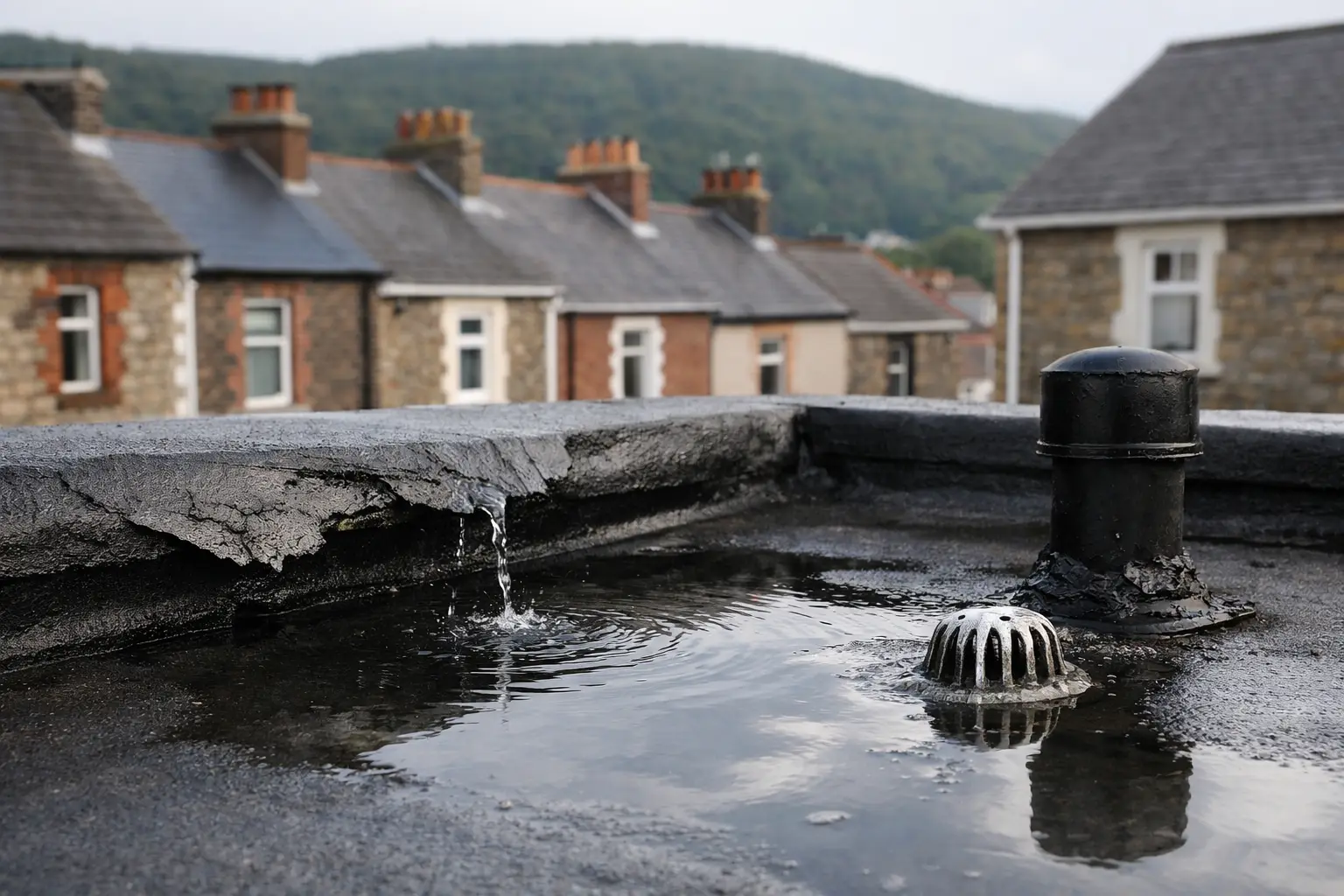
Despite the name, a flat roof should not be completely level. It needs a slight fall so rainwater can run towards a gutter, outlet or drainage channel. When that fall is insufficient, or drainage becomes blocked, water sits on the roof for longer than it should. This is known as ponding water.
A small amount of water after heavy rain is not always an immediate failure. However, water that remains for days puts extra pressure on the roof covering and exposes weak seams, cracks and blisters. Over time, it can speed up wear and allow water through.
Ageing or damaged roof coverings
Many older flat roofs were finished with felt. Felt systems can give good service when installed and maintained correctly, but prolonged sun, frost, standing water and movement in the building can make the surface brittle. Cracks may appear, the mineral finish can wear away, or layers can lift at the edges.
Modern systems such as EPDM rubber, GRP fibreglass and high-performance felt can be very durable, but they are not immune to damage. A puncture from foot traffic, a dropped tool, sharp debris or a poorly placed satellite cable can create a route for water. The opening may be small, yet rain will find it.
Failed joints, seams and edge details
The joins in a flat roof deserve close attention. Where sheets meet, where the roof turns up against a wall, and where it meets fascias, parapets or rooflights, the covering must be sealed properly. If a joint has lifted or the adhesive has failed, wind-driven rain can get beneath it.
Flashing is another common source of trouble. This is the weatherproof detail that protects the point where the flat roof meets a wall or chimney. Cracked mortar, loose leadwork or a failed seal around flashing can let water in behind the roof covering. From inside the property, it may look like the roof itself has failed when the real issue lies at the junction.
Blocked outlets and poor drainage
Leaves, moss, broken guttering and general debris can block an outlet quickly, particularly after autumn weather. A blocked gully or downpipe can force water to build up across the roof and overflow at vulnerable edges.
Drainage faults are often straightforward to correct if found early. However, if ponding has been happening for a long time, the roof may have developed dips in the deck or insulation beneath. In that case, simply clearing the outlet may not be enough. The roof may need local levelling work or a replacement system designed with the correct falls.
Cracks around rooflights, pipes and vents
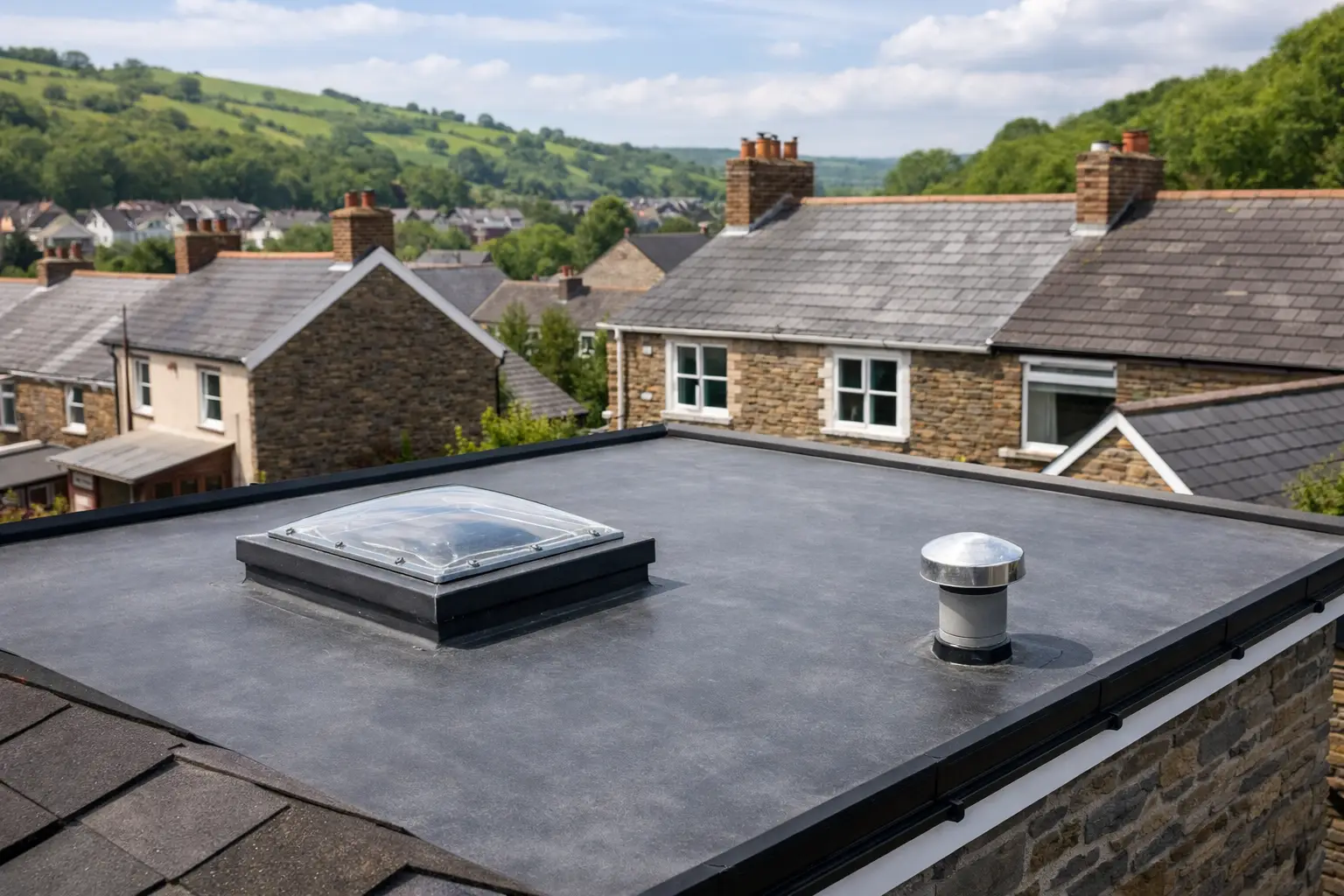
Any item that passes through a flat roof needs careful sealing. Soil pipes, extractor vents, skylights and rooflights all create a break in the main surface. Sealants around these details can shrink, split or pull away over time.
Rooflights can also leak at their frames, not just at the roof covering. Condensation inside a room can sometimes be mistaken for a roof leak, especially in kitchens, bathrooms and poorly ventilated extensions. A proper survey separates these issues before unnecessary repair work is recommended.
Movement beneath the roof
Buildings move slightly with changes in temperature and moisture. Timber decks can expand and contract, while older extensions may settle. If the roof covering does not have enough flexibility, or if it was fixed poorly, that movement can crack the surface or open seams.
This is why the right roofing system matters as much as the visible finish. The deck, insulation, vapour control layer, covering and edge trims must work together. A quick patch over a recurring movement problem may hold temporarily, but it will not provide a lasting repair.
Signs Your Flat Roof May Be Letting Water In
A leak is not always obvious during rainfall. It can take time for water to work its way through the roof build-up and ceiling. Watch for several signs rather than relying on one visible drip:
- damp marks, bubbling paint or peeling plaster on ceilings and upper walls;
- a musty smell in the room below, loft space or garage;
- soft, sagging or discoloured sections of ceiling;
- puddles, blisters, splits or lifted edges visible on the roof surface; and
- gutters overflowing or water sitting on the roof long after rain has stopped.
If a ceiling is bulging with water, keep clear of the area and avoid putting weight beneath it. Water can make plasterboard unstable, and the electrical supply may also need checking if fittings are nearby. Where active water is entering, an emergency roofer can make the area safe and apply temporary protection while a permanent repair is planned.
Finding the Source Without Guesswork
It is tempting to apply sealant wherever the indoor stain appears, but this often wastes time and money. The entry point may be several feet away. A professional inspection starts at the roof surface, checking outlets, seams, flashing, edges, penetrations and the condition of the deck beneath.
The timing of the leak can offer useful clues. A leak that appears only in heavy, wind-driven rain often points to flashing, raised edges or a wall junction. Water entering after long periods of rain may suggest ponding, blocked drainage or a defect in the main covering. A leak that appears during cold weather but not rainfall could be condensation instead.
Access also matters. Walking on a damaged flat roof without experience can turn a small weakness into a larger hole, especially if the deck has softened beneath the surface. From ground level, homeowners can check for overflowing gutters, visible debris and obvious damage, but close inspection and repairs are safer left to a competent roofer.
Can a Leaking Flat Roof Be Repaired?
It depends on the roof's age, condition and the extent of water damage. A local split, loose flashing or failed outlet can often be repaired effectively, provided the surrounding material remains sound. A targeted repair is usually the sensible option when the roof is otherwise in good condition.
Replacement becomes better value when there are repeated leaks, widespread cracking, large areas of ponding or signs that water has damaged the deck and insulation. Covering an old roof with another layer may be suitable in limited circumstances, but only after checking that the structure below is dry and stable. Adding material over trapped moisture simply hides the problem and can lead to more expensive work later.
A clear quote should explain whether the recommendation is for a repair or replacement, what material will be used, how drainage will be handled and whether any damaged timber needs replacing. That gives you a proper basis for deciding, rather than being pressured into a solution that does not match the roof's condition.
Preventing Further Flat Roof Leaks
Flat roofs benefit from a simple routine of inspection and maintenance. Clear leaves from gutters and outlets, especially after storms and in autumn. Check the roof visually from a safe position after severe weather, and act promptly if you see standing water, lifted edges or damaged flashing.
For South Wales properties, regular checks are particularly worthwhile. Persistent rain and strong winds can expose minor weaknesses quickly, especially on older garage roofs and extensions. Arranging an inspection before a small issue reaches the ceiling is usually cleaner, less disruptive and less costly than dealing with soaked insulation or damaged plaster.
At Roof Renovations Ltd, we approach leaks by finding the cause, explaining the options plainly and carrying out only the work the roof needs. If you have noticed a stain, drip or pooling water, arranging a roof survey now can protect the roof structure and keep a manageable repair from becoming a larger disruption to your home.
Other Articles