Blog
EPDM vs Felt Roofing for South Wales Homes
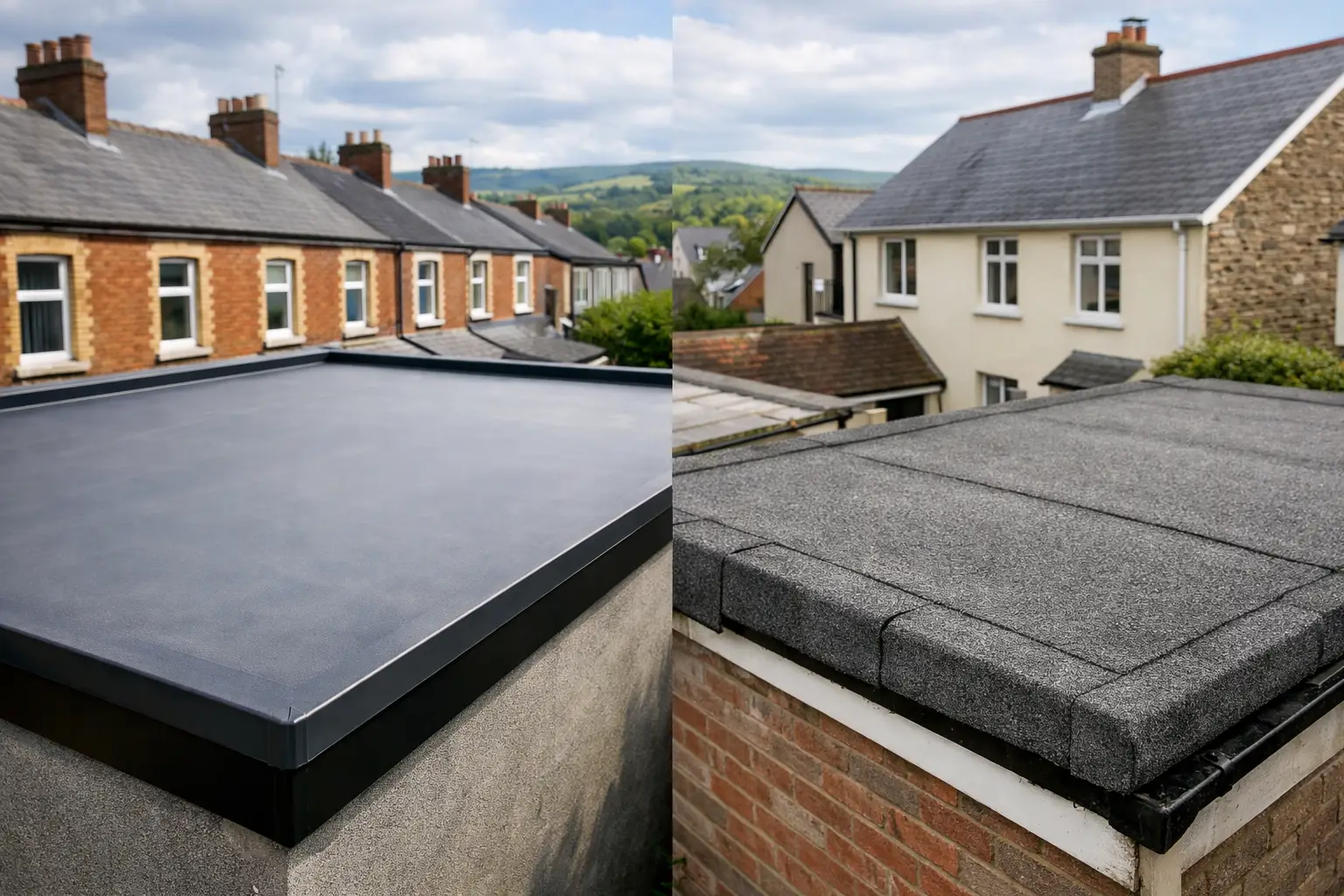
A flat roof over a garage or extension often looks simple from the ground, but the covering has a major effect on how well it handles rain, sun, frost and standing water. When comparing EPDM vs felt roofing, the right answer depends on the roof’s condition, size, access, budget and how long you expect the property to be in your ownership.
Both systems can provide a sound, weatherproof finish when they are specified correctly and fitted by an experienced roofer. The problems usually start when a roof is covered over without dealing with damp decking, poor falls, damaged edges or failed flashing underneath. A proper survey should come before a recommendation.
EPDM vs Felt Roofing: the Main Difference
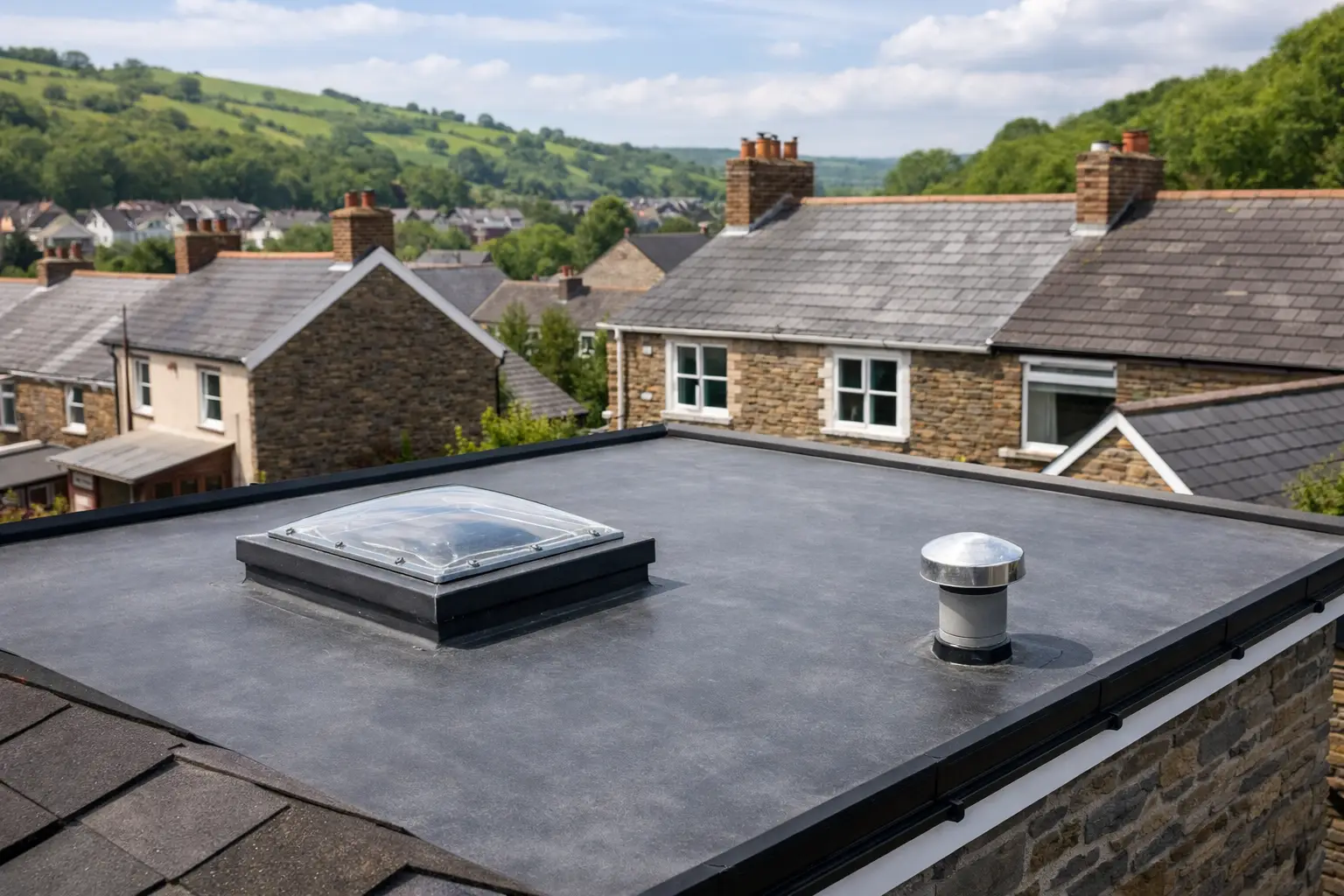
EPDM is a synthetic rubber membrane used for flat roofs. It is usually supplied in large sheets, which means there can be very few joins across a domestic roof. The membrane is adhered to a suitable deck, finished at the edges and sealed around details such as pipes, walls and rooflights.
Felt roofing is normally a built-up system. Modern felt roofs are not the thin, short-lived coverings many homeowners remember from older sheds and garages. A quality system often uses multiple reinforced layers, including a tough mineral-finished top layer, bonded or torched together to create a waterproof surface.
Put simply, EPDM is a flexible rubber sheet system, while felt is a layered bituminous system. Both are widely used on homes, garages, extensions and porches across South Wales.
Where EPDM Is Often the Better Choice
EPDM is a strong option where a homeowner wants a long-lasting, low-maintenance flat roof with a clean finish. Its flexibility helps it cope with normal movement in the roof structure and changes in temperature. It does not become brittle in the same way that older roof coverings can over time.
Because a small to medium flat roof can often be covered with one continuous membrane, there are fewer seams where water could eventually find a route through. That is particularly useful on straightforward garage roofs and single-storey extensions with uncomplicated shapes.
EPDM is also generally installed without the open-flame work associated with torch-on felt. This can be an advantage where access is tight or the roof sits close to timber details, conservatories or neighbouring property. It does not remove the need for careful workmanship - perimeter trims, outlets, upstands and wall flashings still need to be finished properly - but it gives installers a practical route to a durable result.
A good EPDM roof can have a long service life. The exact lifespan will depend on the quality of the membrane, preparation of the deck, drainage and the standard of fitting. It is not a fit-and-forget substitute for sensible maintenance, however. Gutters and outlets still need clearing, and any damage from trade work, falling branches or sharp objects should be inspected promptly.
When Felt Roofing Makes More Sense
Felt remains a practical and reliable choice, especially when it is installed as a modern multi-layer system rather than a quick single-layer repair. It can be particularly suitable for roofs with more complicated detailing, including changes in level, several penetrations or awkward junctions where a skilled roofer needs to form the waterproofing around the roof shape.
It also offers a familiar repair route. Localised damage to a felt roof can often be cut back and renewed without replacing the entire surface, provided the underlying structure remains dry and sound. That can make it useful for landlords or homeowners who need a sensible repair to an otherwise serviceable roof.
Felt can be more affordable at the outset, although prices vary greatly according to the specification. A cheap felt covering and a high-performance torch-on system are not the same product, so quotations should clearly state how many layers are being used, what insulation or decking work is included, and how edges and flashings will be finished.
The trade-off is that felt roofs contain more laps and joints than a single-sheet EPDM roof. When the roof gets older, those details may need more attention. Poor installation can also lead to blistering, splitting or premature failure, especially where moisture has been trapped beneath the new covering.
Lifespan, Repairs and Everyday Maintenance
For many homeowners, lifespan is the deciding factor. EPDM generally has the edge where long-term performance and a minimal-joint finish are the priority. A properly installed EPDM system can often provide several decades of service.
A high-quality felt system can also last many years, particularly where the roof has suitable drainage and is maintained. Its lifespan is more dependent on the quality of the layered installation and the condition of the roof beneath it. Neither material will perform well if water is allowed to sit permanently around a blocked outlet or if the roof deck has already started to rot.
Repairs are different rather than impossible. EPDM repairs typically involve cleaning and preparing the affected area before applying a compatible patch or tape system. Felt repairs may involve re-bonding a lifted section or fitting a new patch. In either case, the visible split or hole is not always the real issue. Water can travel beneath a covering, so the leak inside the property may be some distance from the point of entry.
Homeowners should keep outlets and gutters clear, avoid walking on a flat roof unless it has been designed for access, and arrange an inspection if they notice staining on ceilings, raised areas in the surface, cracked edges or loose flashing. Acting early is usually far less disruptive than waiting for damp to damage insulation, joists and internal finishes.
Cost: Look Beyond the Initial Quote
It is understandable to compare EPDM and felt on price, but the lowest figure does not always represent the best value. The cost of a flat roof is affected by more than the membrane itself. Safe access, removal of the old roof, replacement decking, insulation, drainage, fascia work and the complexity of the details can all change the final price.
EPDM may cost more than a basic felt option on some projects, but its expected longevity and low number of seams can make it worthwhile for a homeowner planning to stay in the property. Felt can be a sensible choice where the roof design suits it and a high-quality system is installed to the correct specification.
A clear quote should explain what is being removed, whether the roof deck will be inspected or replaced where necessary, the system being fitted, the finish to the perimeter, and how waste will be dealt with. Vague allowances create uncertainty later. A straightforward, itemised quote gives you a better basis for comparing work properly.
The Roof Structure Matters as Much as the Covering
Choosing a material without checking the roof beneath it is a common mistake. If the existing decking is soft, damp or uneven, simply applying a new covering may hide the problem for a short time rather than solve it. The same applies to inadequate falls. Water should drain towards an outlet or gutter, not sit in low spots after rainfall.
On an extension or conversion project, insulation also needs proper consideration. Current requirements, condensation risk and roof build-up all influence whether a warm roof or another construction is appropriate. This is where a site survey is valuable. The right answer for a detached garage may not be the right answer for a heated extension attached to the house.
Which Flat Roof Covering Should You Choose?
Choose EPDM when you want a durable rubber membrane, a neat appearance and as few seams as possible on a straightforward flat roof. It is often an excellent fit for garages, extensions and smaller domestic roofs where long-term value is the main concern.
Choose modern felt when the roof has complicated details, when repair flexibility matters, or when a properly specified layered system suits the available budget. It should not be dismissed as an outdated option, but it must be assessed against the quality of the product and installation rather than compared with EPDM on name alone.
For either option, the best result comes from correcting the underlying roof condition first, allowing for proper drainage and finishing every edge and junction carefully. If your flat roof is leaking, ageing or planned as part of an extension, a professional survey can identify whether repair, overlay or full replacement is the sensible next step - before a small weakness becomes water damage inside the home.
Other Articles