Blog
Storm Damaged Roof Cardiff - What to Do First

A storm damaged roof Cardiff homeowners are dealing with can go from a few slipped tiles to an internal leak far more quickly than expected. Strong winds can lift tiles, damage ridge mortar, loosen flashing and expose weak points that were not visible before the weather turned. The priority is not to diagnose the whole roof from the ground. It is to keep people safe, limit further damage and arrange a proper inspection.
Start with safety, not a ladder
Do not climb onto a roof during or immediately after high winds, heavy rain or icy conditions. Wet tiles, loose materials and unstable edges make even a small repair dangerous without the right equipment and experience. Keep children, pets and vehicles away from any area where tiles, slates, guttering or masonry could fall.
If a section of roof has collapsed, electrical fittings are wet, or water is coming close to wiring, turn off the electricity only if it is safe to do so and seek urgent professional advice. Where there is an immediate risk to people or the public, contact the emergency services.
From ground level, look for obvious signs such as missing tiles, displaced ridge tiles, broken guttering, a fallen branch or debris around the property. Take clear photographs if you can do so safely. They can help a roofer understand the urgency before attending and may be useful if you need to speak to your insurer.
Limit water damage inside the property
A roof leak does not always mean water is entering directly above the visible damp patch. Water can travel along battens, timbers, insulation and ceiling voids before it appears indoors. That is why a small stain should still be taken seriously after a storm.
Move furniture, rugs and valuables away from the affected area. Place a bucket or suitable container beneath an active drip and use towels to protect flooring. If the ceiling is bulging with trapped water, do not stand beneath it or attempt to puncture it yourself. A water-loaded ceiling can fail without much warning.
Open windows for ventilation where it is safe and dry to do so, but do not create a draught that could worsen a loose roof covering. For landlords, acting promptly also helps protect the condition of the property and reduces disruption for tenants.
What storm damage can look like
Not all wind damage is dramatic. A roof can appear broadly intact from the driveway while still allowing rain beneath the covering. Common problems following severe weather include lifted or missing tiles and slates, cracked or dislodged ridge tiles, damaged lead flashing around chimneys and valleys, and torn or lifted felt on flat roofs.
Guttering and fascias can also be affected. If brackets have pulled loose or downpipes are blocked with debris, rainwater may overflow against the building rather than draining away properly. This can contribute to damp at roof level, on external walls and around window openings.
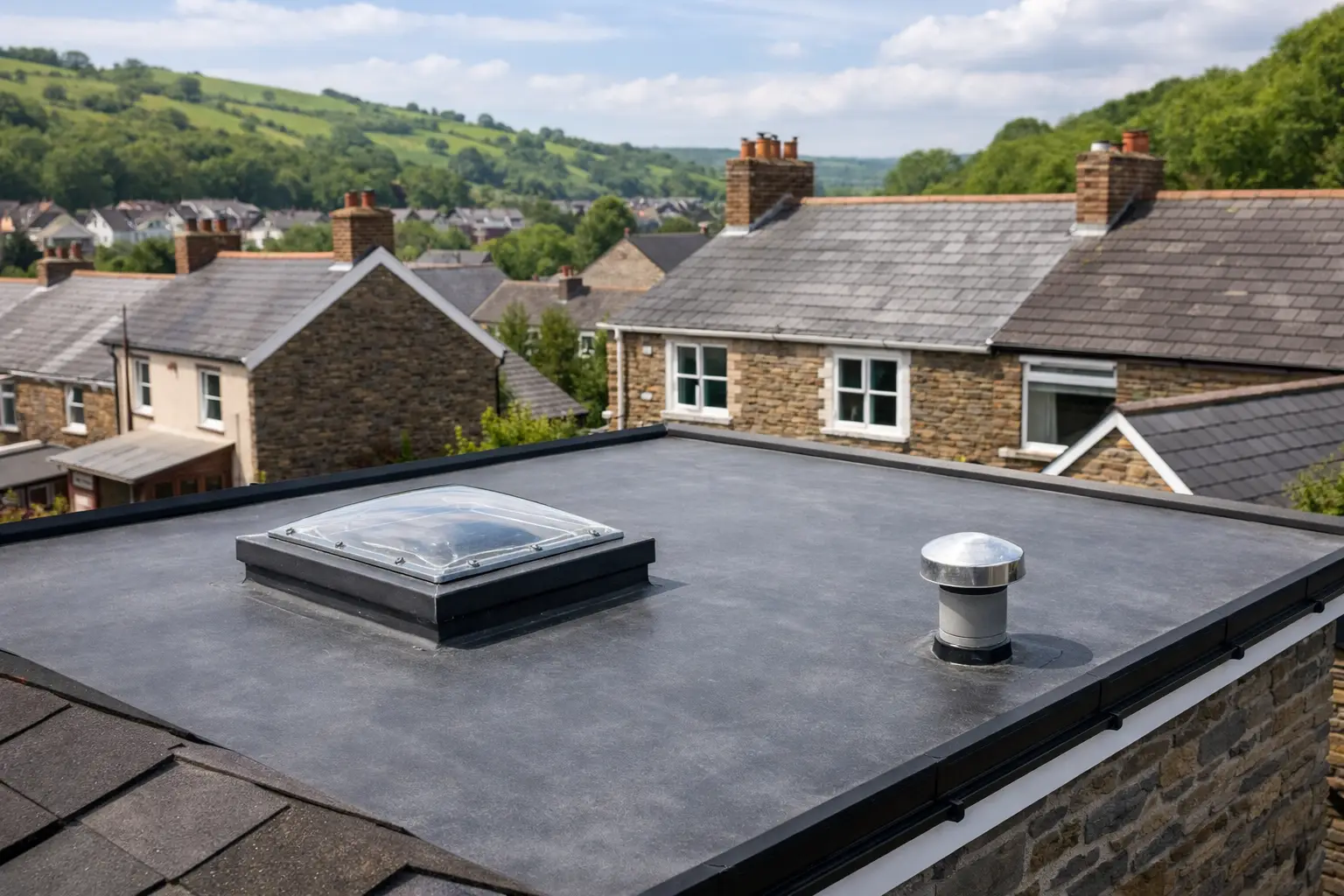
Flat roofs need particular attention after persistent rain. Ponding water, splits in a felt covering, damaged edges and failed joints can all allow water into an extension, garage or loft space. A professional survey identifies whether a local repair is sensible or whether the roof covering is nearing the end of its useful life.
When a temporary repair is the right option
Emergency roofing work is often about making the property safe and weatherproof first. That may mean securing loose tiles, covering an exposed area, clearing a blocked outlet or fitting a temporary weatherproof protection while materials are arranged.
A temporary repair is not a shortcut when it is used for the right reason. During ongoing bad weather, or where the roof needs time to dry before permanent work, it can prevent a manageable issue becoming a much larger internal repair bill. The important thing is to have a clear plan for the permanent work and an honest explanation of what has been done.
In some cases, replacing a handful of tiles and renewing a section of flashing is all that is required. In others, repeated storm damage reveals an underlying issue, such as failing underfelt, worn mortar, deteriorated battens or a roof covering that has reached the point where patch repairs no longer offer good value. It depends on the roof’s age, condition and the extent of the damage beneath the surface.
Why a proper roof survey matters
A reliable inspection should look beyond the tile or slate that has fallen. The roofer needs to assess the surrounding area, the fixing condition, roofline components, valleys, chimneys and any signs of water ingress in the loft. Repairing the visible defect without checking the cause can leave the next weak point waiting for the next storm.
For a storm damaged roof in Cardiff, local weather exposure matters too. Driving rain and gusty conditions can affect one elevation of a property more than another, particularly on exposed homes, older terraces and properties near open ground. A practical survey considers how water and wind are reaching the roof, not just what has broken.
Before work begins, ask for the recommended repair to be explained in plain English. You should understand what has failed, what work is proposed, whether it is temporary or permanent, and what the quote includes. An itemised estimate helps you compare like for like and avoids uncertainty once the work is under way.
Choosing a roofer after storm damage
Storms can bring pressure to make a quick decision, especially when water is coming through the ceiling. Speed matters, but so does choosing a contractor who will assess the work properly and keep you informed.
Look for a local roofing team that can attend promptly, explain the immediate risks clearly and provide a written scope for any follow-up work. Be cautious of anyone who insists on cash-only payment, pressures you to agree on the doorstep or cannot clearly explain the repair required. A trustworthy contractor will not object to reasonable questions about materials, timing or the condition of the wider roof.
Roof Renovations Ltd provides emergency roof repairs and planned roofing work across South Wales, with a focus on punctual attendance, tidy working practices and clear, itemised quotes. Whether the problem is a slipped tile, a damaged flat roof or a more substantial section of storm damage, the first job is to make the property secure and give you a straightforward view of the next steps.
Do not wait for the next rainfall
It is tempting to wait and see whether a leak returns. However, even a brief dry spell can hide an opening in the roof while moisture remains in the structure. Damp insulation loses effectiveness, timber can deteriorate over time and ceiling finishes may continue to stain after the initial event.
Arrange an inspection as soon as practical if you have noticed missing roof materials, damp patches, dripping, loose guttering or debris after severe weather. Early repairs are usually less disruptive than dealing with water damage that has spread through a loft, ceiling or wall.
A sound roof should give you confidence when the forecast worsens. Acting early, staying off an unsafe roof and getting clear advice from an experienced roofer is the most sensible way to protect your home and avoid turning storm damage into a larger repair.
Other Articles