Blog
How to Spot Roof Leaks Before Damage Spreads

A roof leak rarely announces itself with water pouring through the ceiling. More often, it starts with a faint brown mark, a musty smell in the spare room or a patch of damp insulation in the loft. Knowing how to spot roof leaks at this early stage can prevent damaged ceilings, rotten timbers and a much larger repair bill.
For homeowners and landlords, the key is not to wait for a heavy drip. Check the areas where moisture first shows itself, particularly after prolonged rain, strong winds or a spell of freezing weather. South Wales roofs deal with plenty of all three, and small faults can quickly become bigger problems when they are repeatedly exposed to the elements.
Start inside: where roof leaks often show first
The source of a leak is not always directly above the damp patch. Water can run along roof timbers, felt, pipes or cables before it reaches a ceiling, so a stain may appear some distance from the actual defect. That said, the room below usually gives useful clues about where to investigate.
Look for yellow, brown or grey staining on ceilings and high walls, especially around chimney breasts, external walls and the edges of upstairs rooms. Paint that bubbles, flakes or feels soft can also point to moisture behind it. In severe cases, plasterboard may begin to sag. Treat this as urgent, as a weakened ceiling can become unsafe.
A damp smell matters too. If a bedroom, loft room or landing smells musty after rain but clears when the weather improves, moisture may be getting into the roof space. Do not cover the smell with air freshener and assume the issue has passed. Persistent damp creates the right conditions for mould and timber decay.
Check the loft after rain
If it is safe to access your loft, inspect it in daylight soon after rainfall. Take a torch, use a stable loft ladder and step only on boarded areas or joists. Never put weight on plasterboard ceilings.
Look at the underside of the roof covering, felt or membrane, and the timber rafters. Fresh water marks, darkened timber, wet insulation and visible drips all need attention. A small amount of condensation can occur in poorly ventilated lofts, particularly in colder months, but it normally presents as widespread surface moisture rather than one clearly localised wet area.
It is useful to distinguish between condensation and a roof leak because the solution is different. Condensation may require improved loft ventilation or insulation adjustments. A leak usually requires repair to the roof covering, flashing, valleys, chimney work or a flat roof detail. A professional survey can confirm which is causing the problem before money is spent on the wrong work.
How to spot roof leaks from outside
You can often see warning signs from ground level, without climbing onto the roof. Use binoculars if needed, or take photographs from a safe position. Avoid ladders unless you are trained, equipped and confident to use them properly. Wet roofs, loose tiles and unstable gutters make roof access a job for experienced roofers.
Pay attention to changes rather than trying to diagnose every detail. A roof that has looked settled for years but now has a visible dip, a line of uneven tiles or a section with missing material is worth checking promptly.
The most common external signs include:
- Missing, cracked, slipped or lifted roof tiles and slates
- Damaged ridge tiles or mortar that has broken away along the roof peak
- Loose lead flashing around chimneys, walls, roof windows or soil pipes
- Sagging, split or overflowing gutters that send water back towards the roof edge
- Cracks, blisters, open seams or standing water on a flat roof
Each of these faults can let water into the structure, although the urgency depends on the extent of the damage and the weather forecast. One slipped tile may be a straightforward repair. Missing tiles after a storm, damaged flashing around a chimney or a visibly sagging roof should be dealt with quickly to stop further water ingress.
Do not overlook chimneys, valleys and roof junctions
Roof leaks often occur at junctions rather than in the main field of tiles. These are the areas where two materials meet or where water is channelled in greater volume. Chimney flashing, valleys, dormers, skylights, abutments and soil pipe flashings all need to be watertight.
For example, a leak around a chimney may be caused by lifted lead flashing, damaged pointing, cracked mortar or an issue with the chimney stack itself. The stain may show up on the chimney breast downstairs, but the repair must address the actual entry point on the roof.
Roof valleys deserve particular attention. They carry a large amount of rainwater down the roof, so leaves, moss and debris can cause blockages. A blocked valley can force water beneath tiles, while cracked valley lining or worn mortar can allow water through over time. If you can see vegetation collecting in a valley, arrange for it to be inspected and cleared safely.
Flat roof leaks can be less obvious
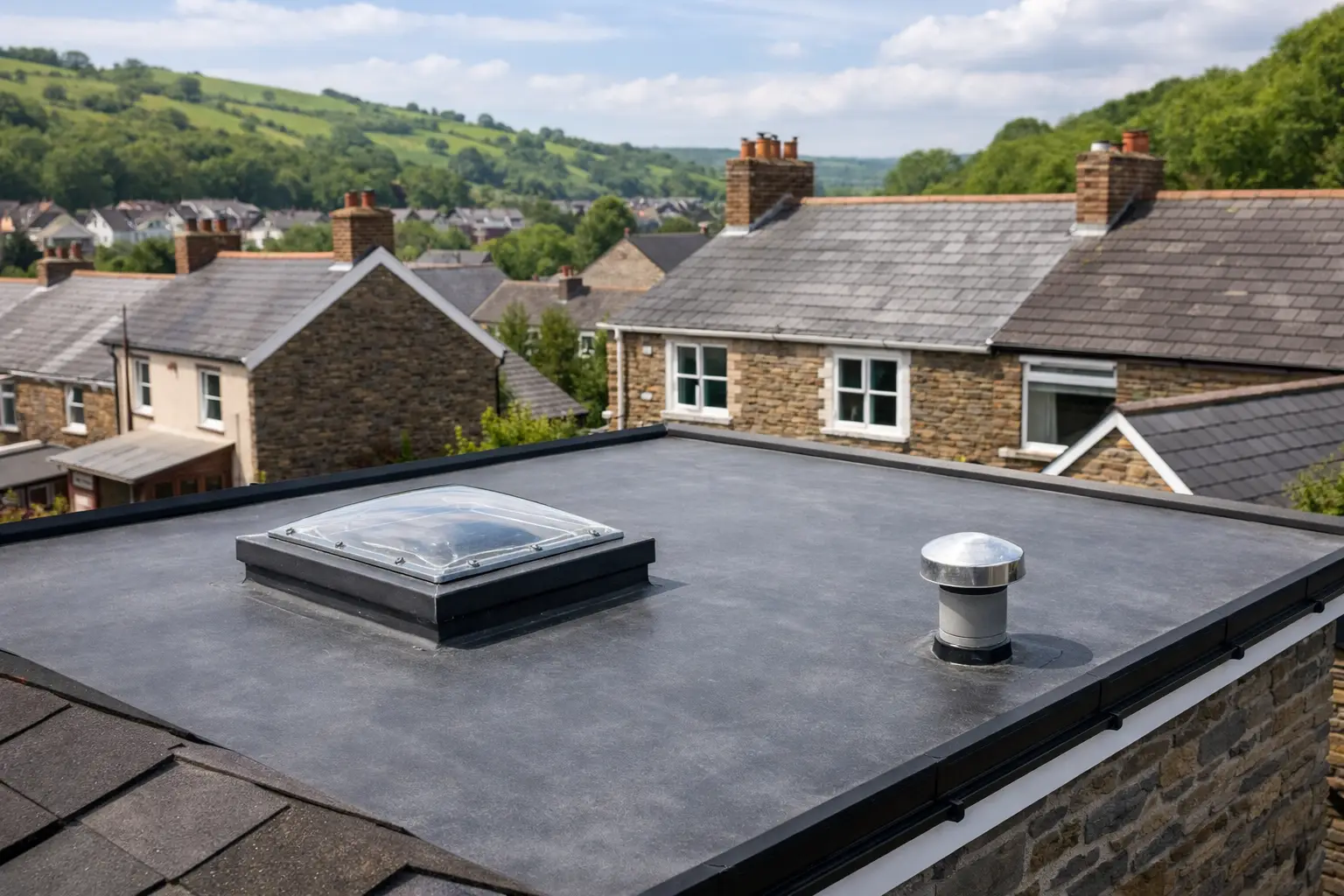
Flat roofs on garages, extensions, porches and dormers need regular checks because water does not run off them as quickly as it does from a pitched roof. Ponding water that remains for more than a day or two after rain may indicate inadequate falls, blocked outlets or surface deterioration.
Look for cracking, bubbling, splits at seams, lifted edges and worn areas around roof outlets. On felt roofs, blisters can eventually split. On single-ply or membrane systems, open joins and damaged edges can allow water below the surface. The visible fault may be small, but trapped moisture can travel beneath the roof covering before it becomes visible indoors.
If a flat roof is nearing the end of its serviceable life, patch repairs may only offer a short-term answer. A roofer should explain honestly whether a local repair is sensible or whether renewal will provide better value and a more reliable weatherproof finish.
Watch what happens during and after bad weather
Storms give useful information about the condition of a roof. After high winds, check for tiles or slates on the ground, pieces of mortar, fallen gutter brackets and visible changes to roof lines. Keep clear of any fallen material and do not attempt to secure loose tiles from a ladder.
During heavy rain, look at your gutters from ground level. Water should flow to the downpipes, not spill over the front or back edge. Overflowing gutters do not always mean the roof itself is leaking, but they can soak fascias, brickwork and roof edges. Left unresolved, this can lead to rot in timber components and damp around upper walls.
If water is entering the property during a storm, place a container beneath the drip where safe, move furniture and electrical items away from the area, and avoid using light fittings affected by water. If the ceiling is bulging, keep out of the room and seek urgent help. Water can collect above plasterboard and cause it to fail without much warning.
When a small leak needs immediate attention
Some signs can wait for a booked survey in dry weather. Others should be treated as an emergency. Active water coming through the ceiling, a large or spreading ceiling stain, loose roof materials after high winds, a damaged chimney stack or a roof that appears to be sagging all need a rapid professional assessment.
Temporary measures can limit internal damage, but they are not a repair. A bucket under a drip does nothing to stop water reaching insulation, timbers and wiring. Similarly, sealant applied from inside a loft may hide the symptom while trapping moisture where it can continue to cause damage.
A proper repair starts with finding the entry point, assessing the surrounding roof area and checking whether water has affected the underlying structure. This is why a clear survey matters. The right contractor should explain what has failed, show you the affected area where practical and provide an itemised quote for the work required.
Arrange a roof survey before the problem grows
Roofs usually give warning signs before a major failure, but those signs are easy to miss when they are small. A periodic inspection is especially worthwhile if your roof is ageing, you have recently bought a property, a storm has passed through, or you are planning a loft conversion, extension or other work that relies on a sound roof.
Roof Renovations Ltd carries out practical roof surveys and repairs for homeowners across South Wales, with clear advice on the condition of pitched and flat roofs. Whether the answer is a replacement tile, new flashing, a flat roof repair or more extensive work, early action gives you more options and more control over the cost.
If you have noticed a new stain, a damp loft or changes to tiles after bad weather, arrange an inspection while the evidence is still visible. A prompt, straightforward repair is often the best way to keep a minor leak from becoming a disruption to the whole property.
Other Articles