Blog
When Is Roof Replacement Newport Needed?
A roof rarely fails without giving some warning. A slipped tile, damp patch in an upstairs room or water running behind the gutter can all point to a problem that is getting worse. For homeowners considering a roof replacement Newport, the key question is whether repairs will still provide a reliable answer or whether the roof has reached the point where replacement is the sensible investment.
Newport properties face their share of driving rain, high winds and changing temperatures. A roof that looks acceptable from ground level can still have worn underfelt, weakened battens or failing flashings beneath the outer covering. A proper survey gives you a clear picture of the roof's condition before water damage spreads into the structure of the home.
When a Roof Replacement Is the Right Choice
Repairs are often the right place to start when damage is localised. Replacing a small area of broken tiles, renewing lead flashing around a chimney or repairing a section of flat roof can protect the property without the cost of a full project. A dependable roofer should explain this clearly rather than recommend more work than the roof needs.
However, replacement becomes more cost-effective when faults keep returning or when several parts of the roof are nearing the end of their serviceable life. Repeated leak repairs can become disruptive and expensive, particularly if each period of bad weather reveals a new weak point.
Signs that a full replacement may be worth discussing include widespread cracked, loose or missing tiles, a sagging roof line, persistent leaks in more than one area, deteriorating mortar around ridge tiles, and visible damage to the roof timbers or underlay. Inside the house, look for recurring damp, mould, peeling paint around ceilings, or daylight visible in the loft. These problems do not always mean a full roof is required, but they do justify a professional inspection.
Age matters too, although it is not the only factor. Some older roofs remain in good condition because they have been maintained properly. Others need major work earlier due to poor installation, storm damage or long-term water ingress. The condition of the whole roof should guide the decision, not age alone.
What a Roof Survey Should Tell You
A roof survey should replace guesswork with straightforward answers. Before any work begins, you should know what is failing, why it has failed and what is needed to put it right. For a replacement project, this normally includes checking the roof covering, ridge and hip tiles, flashing, valleys, gutters, roofline components, underfelt, battens and accessible structural timbers.
The survey is also the time to identify work that may affect the schedule or budget. A chimney that needs repointing, damaged fascia boards, poor ventilation or rotten timber should not be ignored simply because it sits outside the main roofing task. Dealing with connected issues at the right time avoids having to disturb a newly completed roof later.
A clear, itemised quote is equally important. It should set out the agreed work, materials, waste removal and any associated repairs, so there is no confusion about what is and is not included. If a contractor finds an unforeseen issue once the old roof covering is removed, they should explain it, show you where practical and agree the next step before progressing.
Choosing Materials for Roof Replacement in Newport
The best material depends on the style of the property, the roof pitch, planning considerations where relevant, your budget and the look you want to achieve. The aim is not simply to fit a new covering. It is to create a roof that suits the home and stands up to local weather for years to come.
Concrete tiles are a common choice for many homes because they are durable, widely available and available in different profiles and colours. Clay tiles can offer a more traditional finish and may be suitable for period properties, although they can cost more and the roof structure must be appropriate for the selected product. Slate remains a strong option where a classic appearance and long working life are priorities, provided the installation is carried out correctly.
The supporting materials matter just as much as the visible tiles or slates. Quality breathable membrane, correctly spaced battens, secure fixings and properly formed flashings all play a part in keeping wind-driven rain outside. Cutting corners beneath the covering can reduce the life of even the best-looking roof.
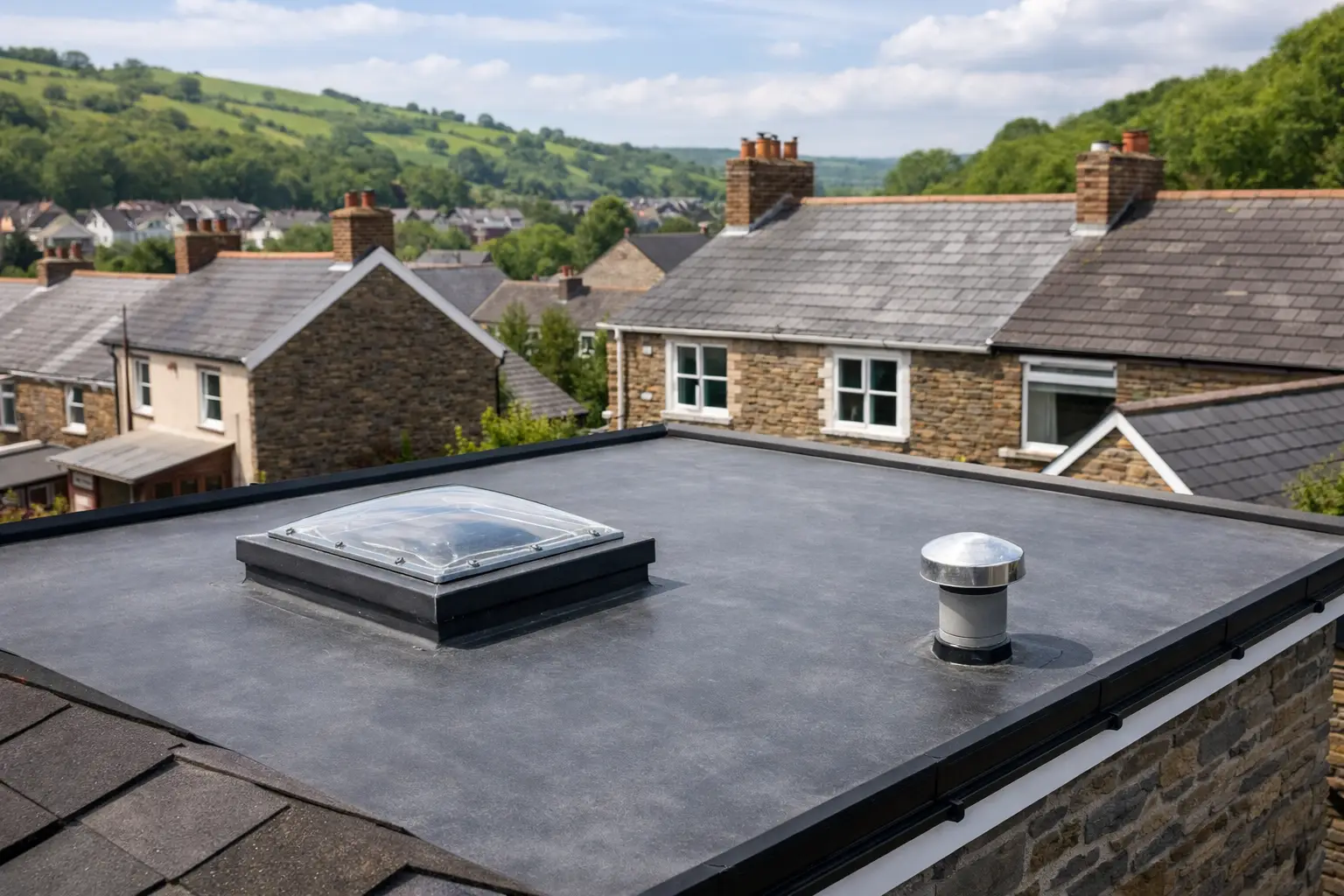
For flat roofs on extensions, garages and dormers, modern systems can provide a durable, low-maintenance surface when installed over a sound deck with the correct falls for drainage. The right system depends on the roof's condition, its use and the detail around edges, outlets and adjoining walls. Water should never be left to sit where it can find a route into the building.
What Happens During a Full Roof Replacement?
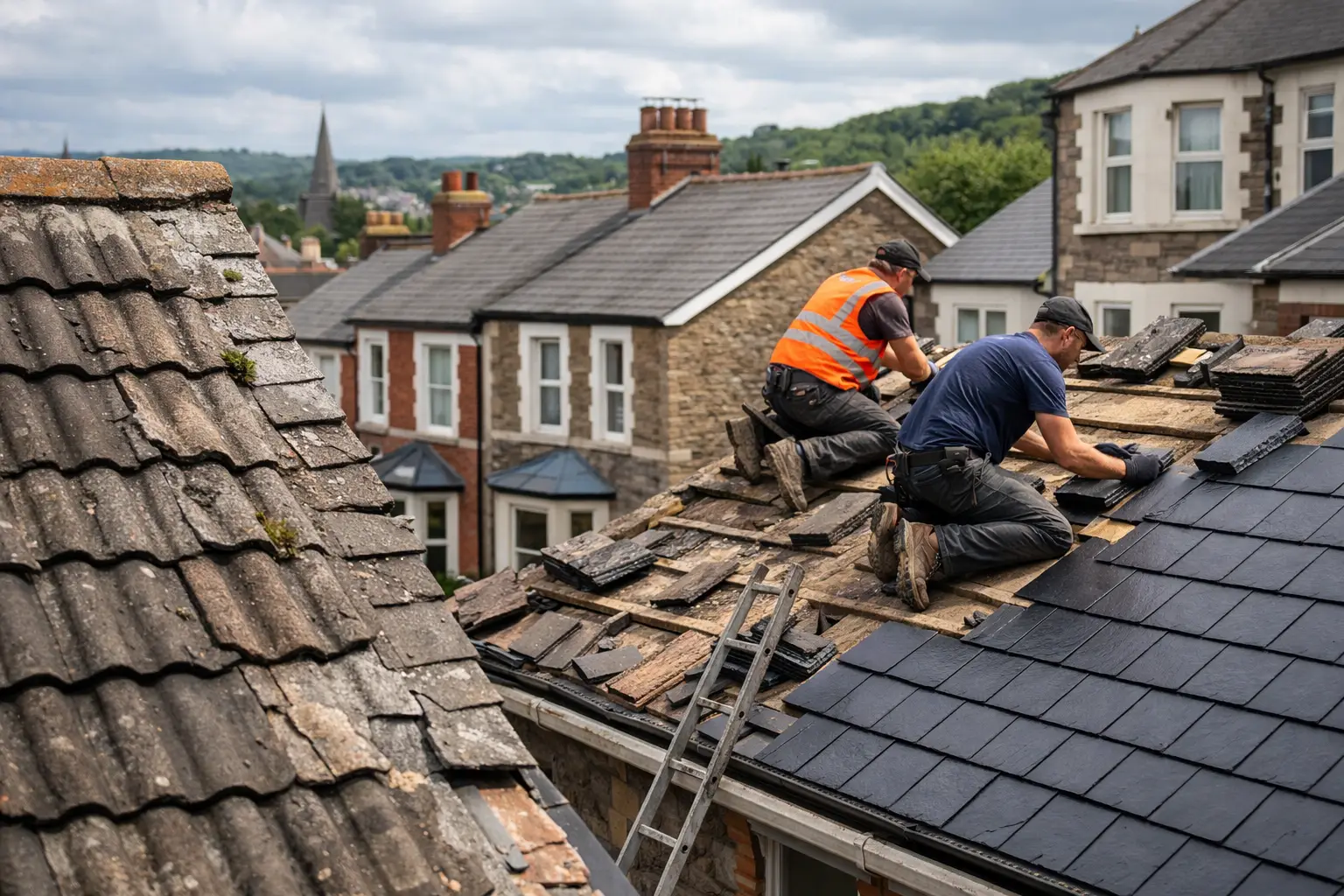
A well-managed project should feel organised from the first day. The team will arrange access and scaffolding where needed, protect the working area and remove the old roof covering in controlled sections. This is when the underlying structure can be checked properly, with any necessary timber repairs addressed before the new system is installed.
New membrane and battens are fitted before the new tiles or slates are laid. Ridge, hip and verge details are completed, while flashings around chimneys, abutments and roof windows are renewed or repaired as required. Gutters, fascias and soffits may also be replaced if they are damaged or no longer performing as they should.
The exact duration depends on the size and complexity of the roof, the type of materials used and the weather. Rain and high winds can affect safe working conditions, so a professional contractor will not rush unsafe work simply to meet a date. Good planning and clear communication are more valuable than promises that ignore the reality of working at height in British weather.
Tidiness is not a minor detail. Roofing creates unavoidable waste, but your driveway, garden and surrounding areas should be treated with respect. Materials should be managed carefully, debris cleared as work progresses and the site left clean once the job is complete.
How to Prepare Your Home and Budget
Before work starts, move vehicles away from the property if access is needed and clear fragile items from loft spaces. Roof work can cause vibration, and dust may occasionally fall through small gaps around older loft boards or stored belongings. It is also sensible to tell nearby neighbours about the expected start date, particularly if scaffolding or deliveries could affect shared access.
Costs vary because no two roofs are exactly alike. Roof size, pitch, material choice, access, chimney work, timber repairs and the condition of the existing roof all affect the final price. The cheapest quote is not always the best value if it leaves out essential preparation, disposal, safety measures or key finishing details.
Instead, compare like for like. Check what materials are proposed, whether rotten timber is covered as a possible extra, how waste will be removed and whether roofline work is included. A realistic quote, backed by an inspection and clear scope of work, gives you a far better basis for deciding than a vague price given without seeing the roof.
Getting a Reliable Result From Your New Roof
A replacement roof is a major piece of work, but it should bring reassurance rather than ongoing uncertainty. The best results come from honest advice at the survey stage, suitable materials, careful installation and a team that turns up when promised and keeps you informed throughout.
Roof Renovations Ltd provides practical roof surveys and straightforward quotations for homeowners and property owners across Newport and South Wales. If your roof is leaking, showing its age or has suffered storm damage, arranging an inspection early can prevent a manageable issue becoming a larger repair inside the property.
A sound roof gives you the confidence to get on with life below it. If there are signs of trouble, a clear survey and a properly planned replacement will help keep your home dry, safe and ready for the next spell of bad weather.
Other Articles