Blog
How to Fix a Leaking Conservatory Roof Properly
A damp patch at the top of a conservatory wall can quickly become peeling paint, mould and damaged plasterboard. Searches for how to fix leaking conservatory roof problems often assume the roof panels are at fault, but water can travel a surprising distance before it appears indoors. Finding the entry point first is what separates a sound repair from repeated sealant jobs.
A conservatory is exposed to driving rain, changing temperatures and strong winds. In South Wales, that can put older seals, flashings and roof joints under real pressure. The right fix depends on the roof type, the age of the conservatory and whether the problem is a small local defect or a sign that the whole roof system has reached the end of its working life.
Start by finding where the water enters
Do not rely solely on the position of the drip or stain inside. Water may run along glazing bars, timber battens or the underside of a panel before reaching the ceiling. Check the conservatory during or shortly after rainfall if it is safe to do so, then inspect the outside from ground level.
Look closely at the joints where the conservatory roof meets the house wall, around ridge caps, glazing bars, guttering and roof vents. On a lean-to conservatory, the wall flashing is a common source of trouble. On Victorian, Edwardian and gable-end designs, leaks often develop around ridge connections, valley sections or failed end caps.
Also check whether gutters are overflowing. A blocked gutter or downpipe can force water back towards roof edges and wall junctions, making it look as though the conservatory roof itself has failed. Clear visible debris only where it can be done safely from the ground. Do not climb onto a conservatory roof or lean a ladder against its frame. Most panels are not designed to carry a person's weight.
How to fix a leaking conservatory roof safely
The first priority is to limit further damage inside. Move furniture away from the affected area, place a container beneath active drips and dry wet surfaces as soon as possible. If water is close to lights, sockets or electrical fittings, turn off the relevant circuit if it is safe to do so and arrange for an electrician or roofing professional to assess the situation.
A temporary external cover may help in an emergency, but it must be secured without puncturing roof panels or damaging the frame. In many cases, a professional temporary repair is the safer option, particularly during high winds or persistent rain.
Once the roof is dry enough to inspect, the repair should match the defect. Applying more silicone over every joint can seem like the quick answer, but it rarely lasts if the original issue is loose flashing, a cracked panel, poor drainage or a failed glazing bar seal.
Failed seals around glazing bars and caps
Polycarbonate and glass conservatory roofs use seals to keep water out at the joints between panels and glazing bars. Over time, rubber gaskets can shrink, harden or slip out of place. Plastic end caps may crack or work loose, allowing water to enter the panel channels.
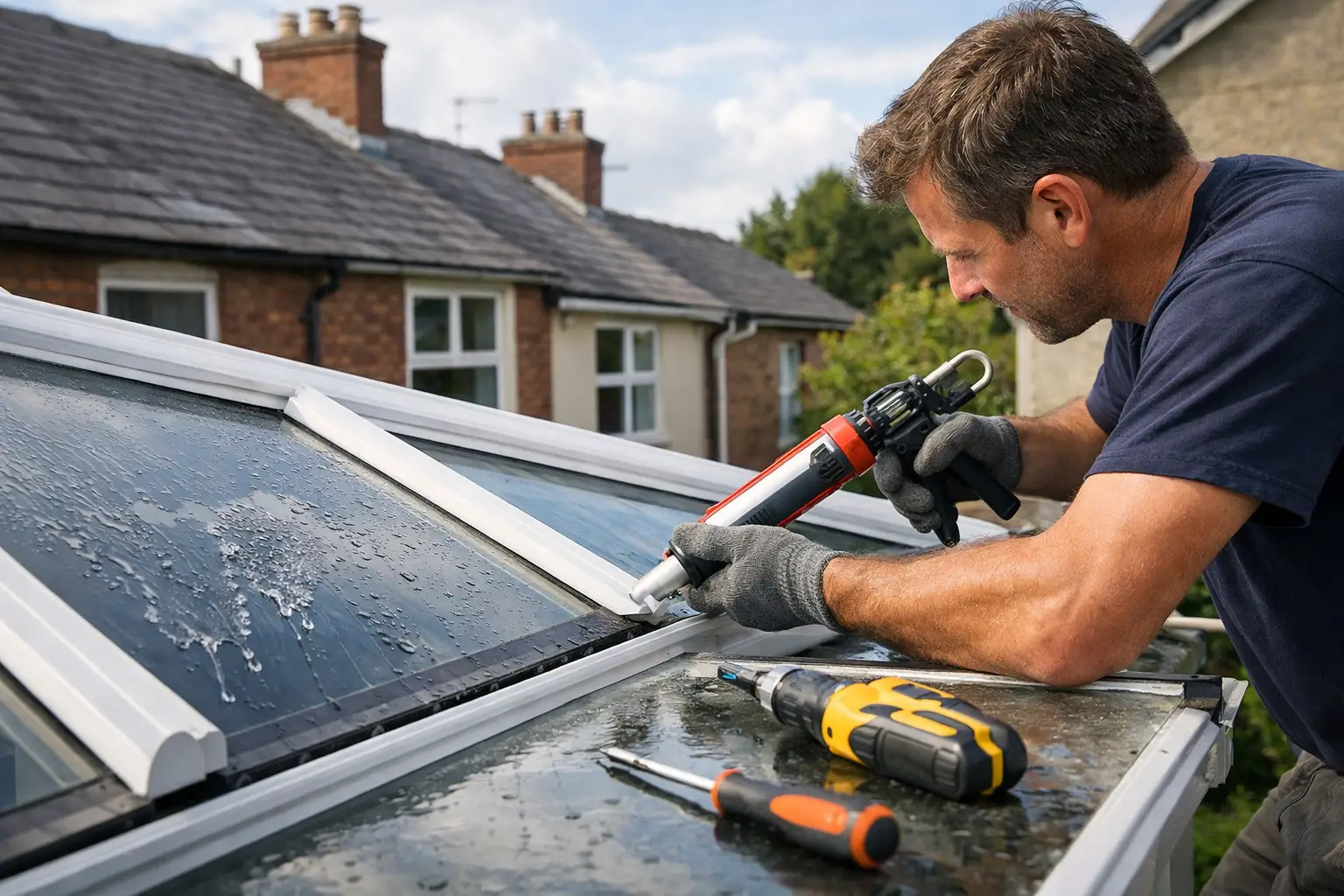
A proper repair involves removing damaged caps or seals, cleaning away old debris and fitting compatible replacement components. The panels must sit correctly and the bars need to be properly secured before new seals are installed. If a seal is only patched while the panel has moved or the bar is loose, the leak is likely to return.
Damaged or slipped roof panels
Polycarbonate panels can crack from impact, become brittle with age or shift after stormy weather. Glass panels can also leak where edge seals fail, although the glass itself is less likely to be the issue unless it is damaged.
A cracked panel should normally be replaced rather than sealed over. Sealant can provide a short-term weather barrier on a very small crack, but it does not restore the panel's strength or stop further movement. Replacement panels must be the correct thickness, fit the existing glazing system and be installed with the right closures and ventilation details.
Leaks where the conservatory meets the house
This is one of the most common faults on older conservatories. The lead flashing, soakers or wall abutment trim may have deteriorated, lifted or been installed poorly. Water can then get behind the conservatory roof edge and run into the room.
The lasting solution is to repair or replace the flashing correctly. This may involve lifting sections of the roof connection, preparing the wall surface and fitting new leadwork or a suitable flashing system. Surface sealant alone is seldom enough where the wall junction has failed, especially on a property exposed to wind-driven rain.
Blocked drainage and overflowing gutters
Water should leave the roof freely through clear gutters, outlets and downpipes. Moss, leaves and roof debris can cause standing water and overflow, while a badly aligned gutter may send water back over the fascia rather than into the downpipe.
Cleaning and realigning guttering can solve a straightforward drainage issue. However, if the gutter has pulled away because the fascia board, brackets or conservatory frame is damaged, those underlying parts need attention too. A tidy-looking gutter repair is no good if it cannot withstand the next period of heavy rain.
When sealant is useful, and when it is not
A high-quality exterior sealant has a place in conservatory roof repairs. It can finish a properly prepared joint, seal a minor gap around trim or provide a temporary defence while permanent works are arranged. It should be applied only to a clean, dry and stable surface.
It is not a substitute for replacement flashing, cracked panels, failed roof bars or worn-out seals. Excess sealant can also trap water, hide the true defect and make later repairs more difficult. If previous repairs have left thick lines of old mastic around the roof, it is worth having the area inspected rather than adding another layer.
Signs the roof needs more than a local repair
One leak after a storm may be a contained repair. Repeated leaks in different places are a different matter. If panels are discoloured, roof bars are loose, condensation is persistent, seals are perished throughout or the conservatory is uncomfortable in both summer and winter, the roof may be due for wider refurbishment or replacement.
A replacement conservatory roof can address more than water ingress. Modern tiled, insulated or upgraded glass systems can improve thermal comfort, reduce rain noise and give an ageing conservatory a more solid finish. That said, replacement is not automatically necessary. A sound frame with one failed panel or damaged flashing may only need a focused repair. A proper survey should explain the condition clearly and set out the sensible options without pressure.
Why professional inspection can save money
Conservatory roofs contain lightweight frames, glazing systems and junctions that need careful handling. A repair that appears simple from below may require safe access, compatible parts and experience of how the roof drains and moves in changing weather.
A professional roofer can trace the water path, check flashings and guttering, identify damaged components and provide an itemised recommendation. This avoids paying for repeated small fixes that do not deal with the source. It also means the work can be completed safely, with the surrounding area protected and left tidy afterwards.
For homeowners dealing with an active leak, Roof Renovations Ltd can assess conservatory roof defects alongside the wider roofline, guttering and wall junctions that may be contributing to the problem. Prompt action is particularly worthwhile before a small leak reaches insulation, electrics or internal finishes.
Do not wait for the next heavy downpour
A conservatory roof leak rarely improves on its own. Keep the area dry, avoid unsafe access and arrange an inspection if water is getting in more than once or the cause is unclear. A straightforward repair carried out at the right time can protect the room, prevent unnecessary interior damage and give you confidence when the weather turns.
Other Articles