Blog
Best Flat Roof Materials for Homes in South Wales
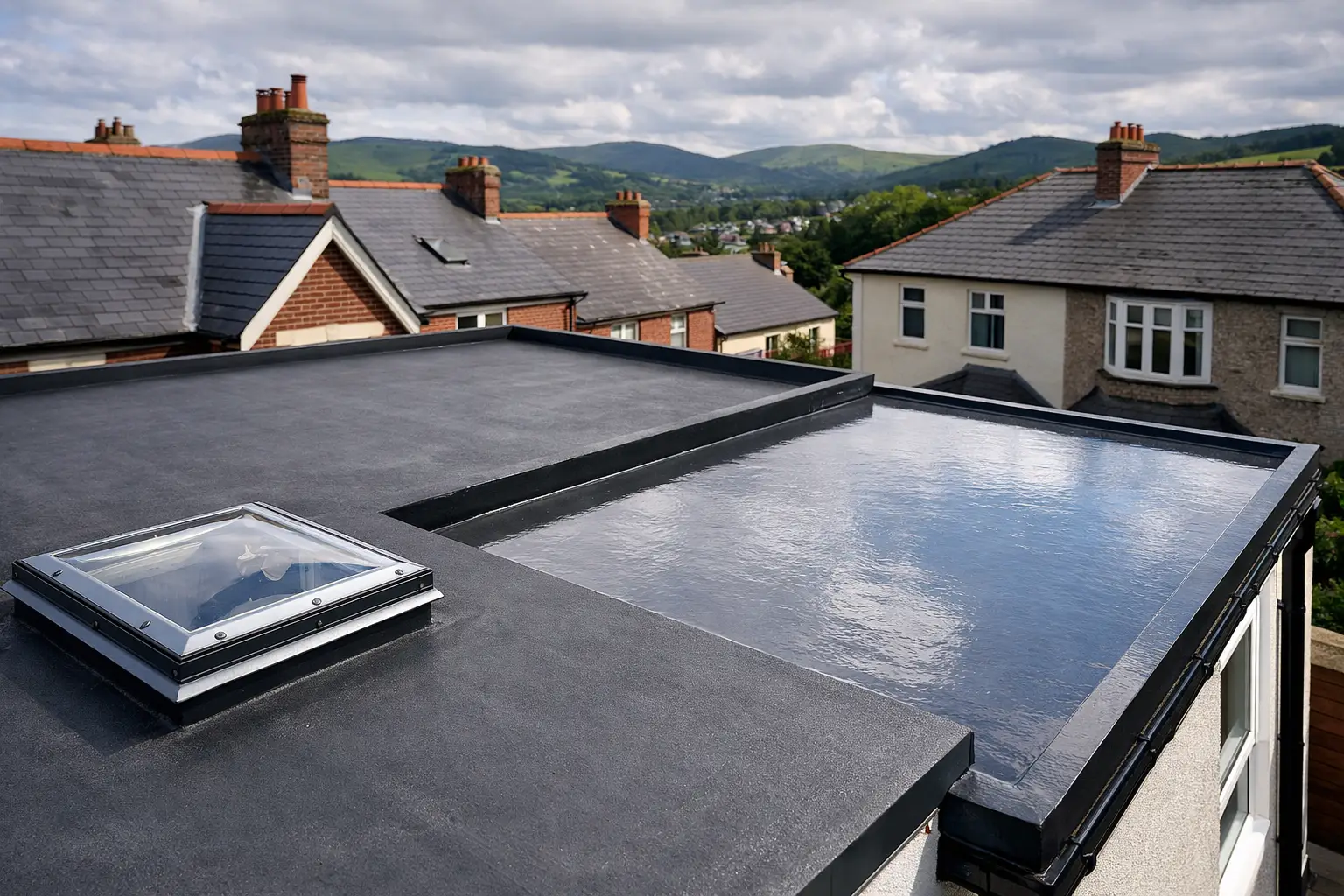
A flat roof over an extension, garage or dormer has a hard job to do. It must shed heavy rain, cope with changing temperatures and remain watertight around every edge, outlet and roof detail. The best flat roof materials for homes are not always the most expensive option - they are the ones properly suited to the roof, installed correctly and finished with care.
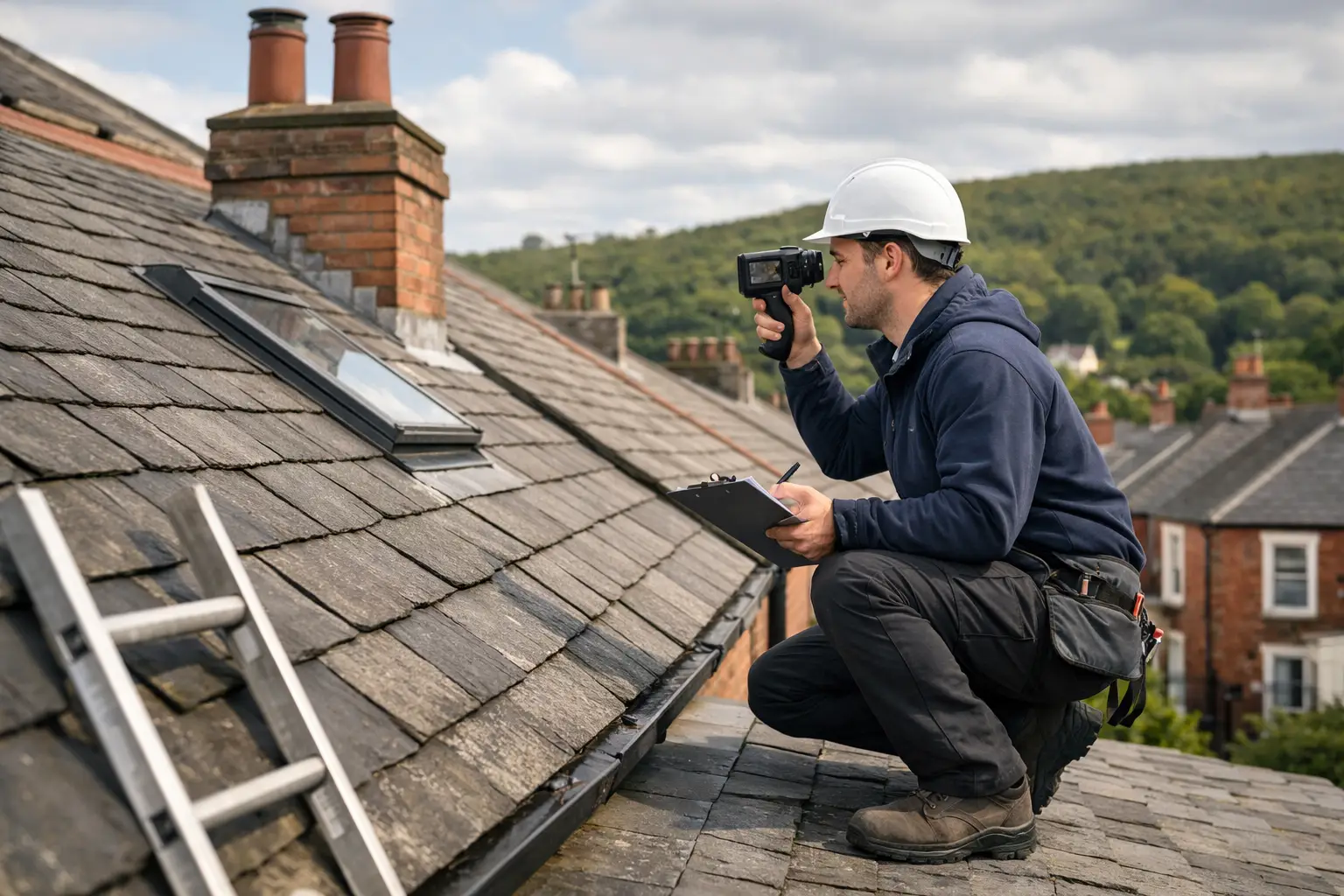
For homeowners in South Wales, weather resistance matters. Persistent rain, wind-driven water and damp conditions can quickly expose poor workmanship or ageing materials. A clear roof survey should establish the roof’s condition, drainage, structure and intended use before anyone recommends a system.
What makes a good flat roof material?
Despite the name, a flat roof should never be completely level. It needs a slight fall so water runs towards the correct outlet or gutter. Even a high-quality covering can fail early if water is allowed to sit on it, joints are poorly detailed or the deck beneath has deteriorated.
The right material depends on the size and shape of the roof, whether it will be walked on, the condition of the existing roof, and how long you expect it to last. Budget is naturally part of the decision, but the lowest initial quote can become poor value if the roof needs repeated repairs within a few years.
A professional installation should also account for insulation, ventilation where required, edge trims, flashings and the connection between the flat roof and adjacent walls or pitched roofs. These details are often where leaks begin.
Best flat roof materials for homes compared
EPDM rubber roofing
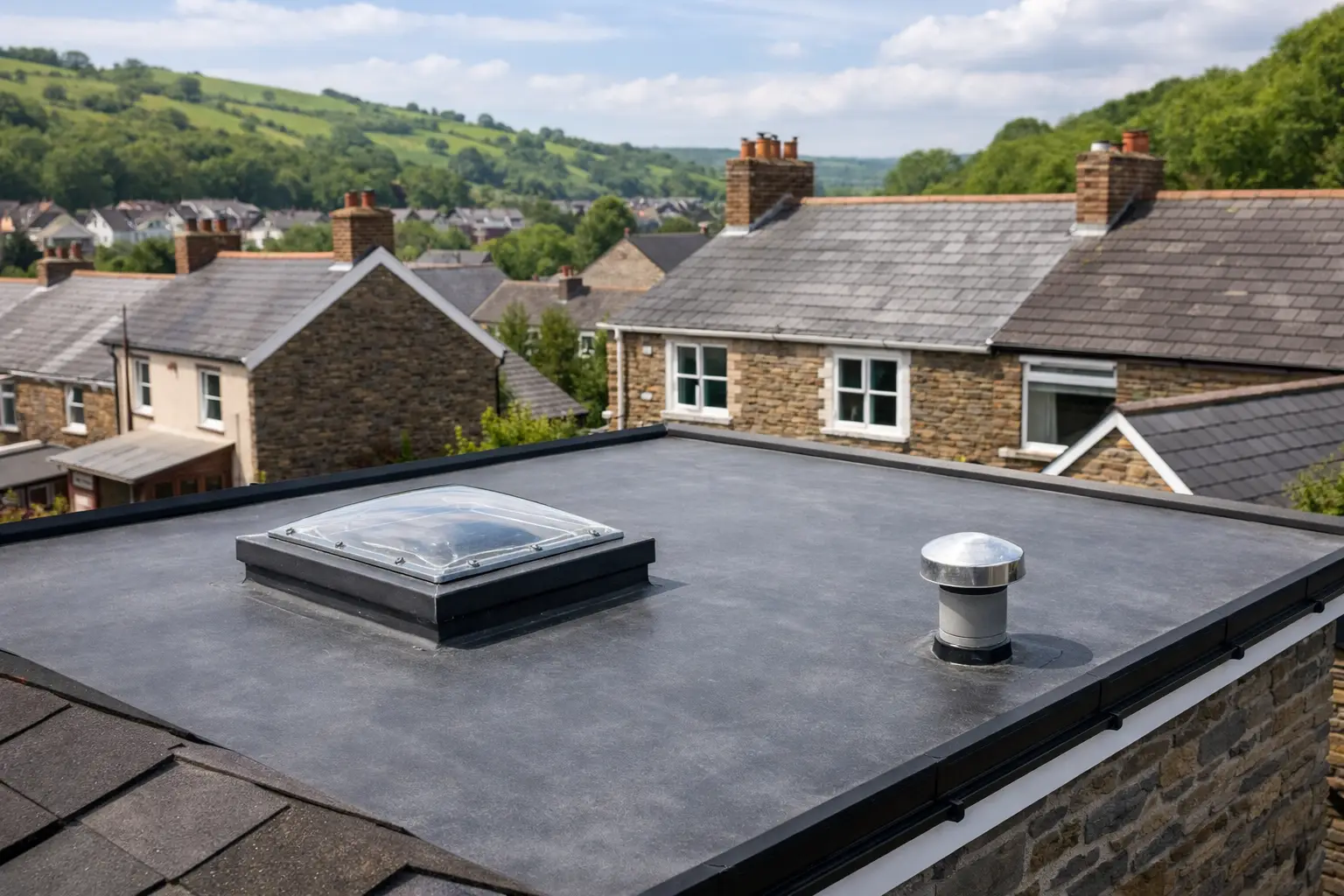
EPDM is a synthetic rubber membrane that has become a popular choice for domestic flat roofs. It is particularly well suited to garages, extensions, porches and smaller residential roofs. Where practical, it can often be fitted in one large sheet, reducing the number of seams that may eventually need attention.
Its main strengths are flexibility, strong weather resistance and a clean, simple finish. EPDM copes well with movement caused by temperature changes and is generally low maintenance once installed. It is also a sensible option for roofs with straightforward shapes and reliable drainage.
The limitation is that detailing still matters greatly. Corners, upstands, outlets and edges must be prepared and sealed properly. EPDM can also be less suitable where a roof will receive frequent foot traffic unless a suitable protection layer or walkway is included. It is an excellent long-term domestic material, but only when laid over a sound, properly prepared deck.
GRP fibreglass roofing
GRP, often called fibreglass roofing, creates a tough, seamless surface. It is made by applying fibreglass matting and resin over the roof deck, then finishing it with a protective topcoat. The result is a hard-wearing roof covering that is especially useful for extensions, balconies, bay windows and roofs with more complicated shapes.
A major advantage of GRP is its seamless finish. With no laps across the main roof area, there are fewer traditional joints for water to find. It can also provide a neat appearance and is suitable for areas that may need occasional access.
However, GRP installation is more sensitive to weather and preparation than some alternatives. The deck must be stable and dry, and the work needs to be completed in suitable conditions. Poor mixing, rushed application or movement in the substrate can lead to cracking or other defects. A correctly installed GRP roof is durable, but this is not a material to choose on price alone.
High-performance felt roofing
Modern felt roofing is a long way from the thin, short-lived coverings many homeowners remember. High-performance modified bitumen felt systems use multiple layers, usually bonded together and finished with a protective cap sheet. They remain a practical, cost-effective choice for garages, sheds, extensions and replacement flat roofs.
Felt is versatile and can work well on roofs with awkward details or where a layered system is preferred. It is also familiar to many roofing teams and can be repaired more easily in some circumstances than a complete single-ply membrane.
Its service life will depend heavily on the grade of felt used and the standard of installation. Cheaper systems may be tempting for a temporary solution, but they are less likely to offer the same long-term performance as a quality EPDM or GRP installation. For a landlord managing several properties or a homeowner working to a firm budget, a high-performance felt system can still be the right answer when specified honestly.
Liquid-applied roofing systems
Liquid roofing is applied as a coating that cures to form a waterproof membrane. It can be useful for complex roofs, awkward junctions and certain refurbishment projects where removing every existing layer would be disruptive or unnecessary.
The material is applied around penetrations, corners and changes in level, so it can provide a continuous finish where sheet materials might require numerous cuts and joins. It may also be appropriate for local repairs when a survey confirms the existing roof is otherwise sound.
The trade-off is that surface preparation is critical. The roof must be clean, dry and stable, and the system must be applied to the required thickness. Liquid systems are not a shortcut for covering a failing roof deck or hiding trapped moisture. Their suitability should be decided after inspection rather than assumed from the appearance of the roof.
Which material suits your roof?
For a standard garage or single-storey extension with a simple layout, EPDM is often a strong all-round option. It offers dependable weather protection, low maintenance and good value over its working life. GRP may be better where a seamless, hard finish is needed, particularly on a more detailed roof or an area with occasional foot traffic.
High-performance felt remains a sensible material for many homes, especially where the roof design, budget or repair requirements make a layered system the practical choice. Liquid-applied systems can solve particular detailing and refurbishment problems, but they should be selected for a clear reason rather than treated as a universal fix.
There is no single material that is right for every flat roof. A roof that is shaded by trees, receives a lot of runoff from a higher pitched roof, or has poor existing drainage may need additional work before the new covering is installed. Similarly, if the roof supports equipment, has skylights or forms part of a loft conversion, the details deserve closer planning.
Do not overlook insulation and drainage
A replacement flat roof is often the right time to assess insulation. Improving thermal performance can make an extension or converted garage more comfortable, while helping to reduce heat loss. The correct build-up depends on the existing structure and the type of roof being installed, so it should be designed rather than guessed.
Drainage deserves equal attention. Blocked outlets, inadequate falls and undersized gutters cause standing water, staining and premature wear. Before fitting a new covering, a good contractor checks where water goes during heavy rain and whether the roof needs adjusted falls, new outlets or improved guttering.
Why installation matters as much as material
A quality material will not compensate for rushed preparation. Old coverings may need to be removed, rotten timber replaced and the deck checked for movement before the new system goes down. Edges, wall flashings and roof penetrations should be finished neatly, because these areas are often the first places a leak shows itself.
Ask for an itemised quote that explains the proposed material, preparation work, insulation if included, drainage work and waste removal. It should be clear whether the price covers stripping the existing roof or overlaying it, and why that approach is suitable. Clear communication at this stage prevents surprises once work has started.
For homeowners across South Wales, Roof Renovations Ltd provides straightforward surveys and practical advice on domestic flat roof systems. The aim should be a tidy, properly planned job that protects the property through the next spell of heavy weather, not a quick covering that stores up another repair.
If your flat roof is leaking, blistering, ponding water or nearing the end of its life, arrange a survey before the damage spreads into ceilings, insulation or timber. The best choice usually becomes much clearer once someone has assessed the roof in person and explained the options in plain English.
Other Articles