Blog
Top Signs a Roof Needs Replacing at Home
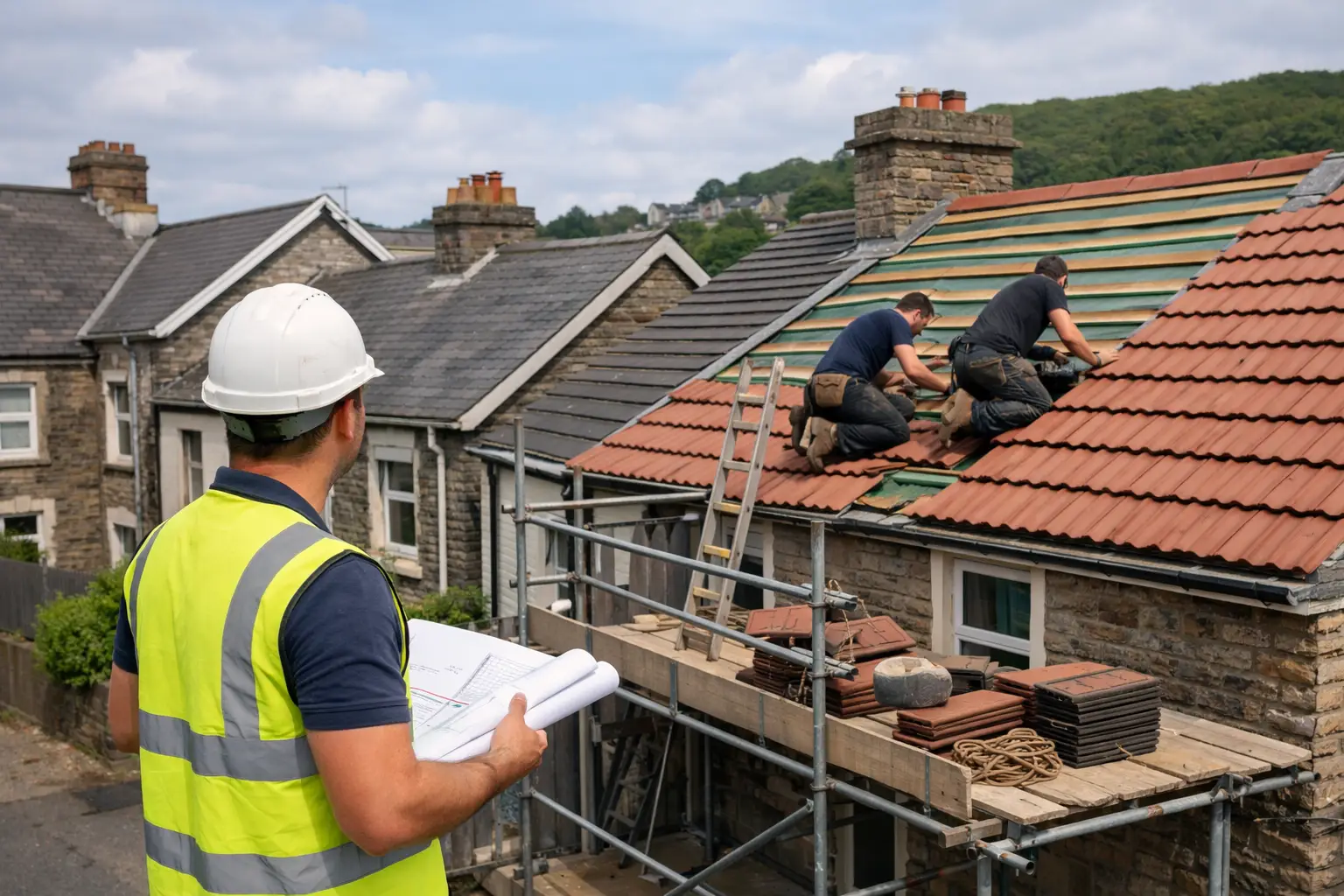
A small stain on an upstairs ceiling can be the first visible warning that water has been getting in for months. By the time a leak reaches the room below, insulation, timbers and plasterboard may already have been affected. Knowing the top signs a roof needs replacing helps you act before a manageable roofing project becomes a disruptive repair.
Not every damaged roof needs to be stripped and renewed. A slipped tile, failed flashing or isolated flat-roof split can often be repaired properly. The key is understanding whether the problem is localised or whether the roof covering, structure or waterproofing system is reaching the end of its working life.
Top signs a roof needs replacing
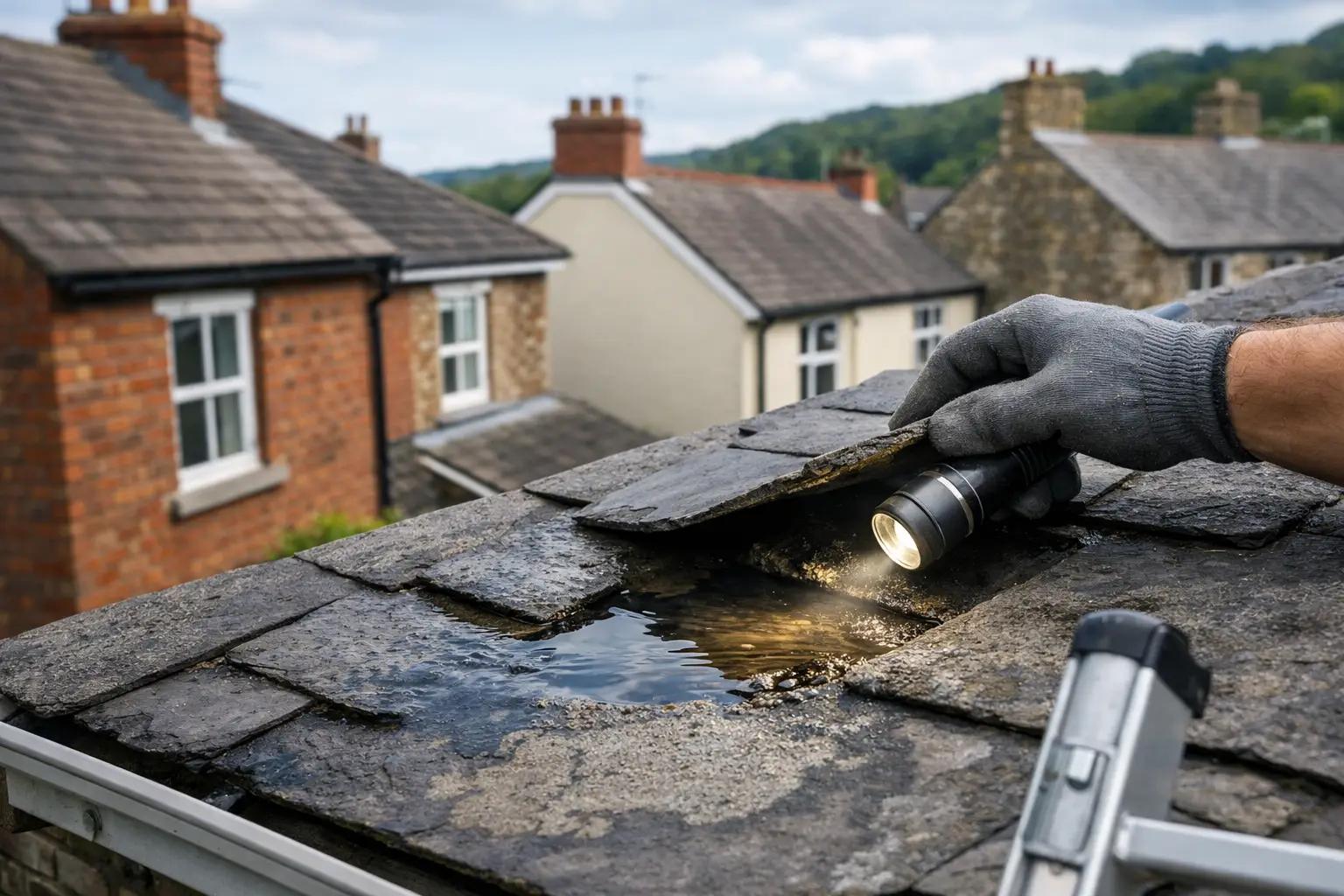
Leaks that return after repair
One leak does not automatically mean a new roof is required. Wind-driven rain can find its way through a damaged tile, cracked lead flashing or a blocked valley, and a targeted repair may solve it.
Repeated leaks in different areas are more concerning. If repairs have been carried out but damp patches keep appearing, the roof may have widespread failures rather than one clear defect. Water can also travel along battens, felt and timbers before becoming visible indoors, so the stain is not always directly below the entry point. A professional survey can trace the cause and give a clear view of whether repair remains sensible.
Missing, cracked or slipping tiles and slates
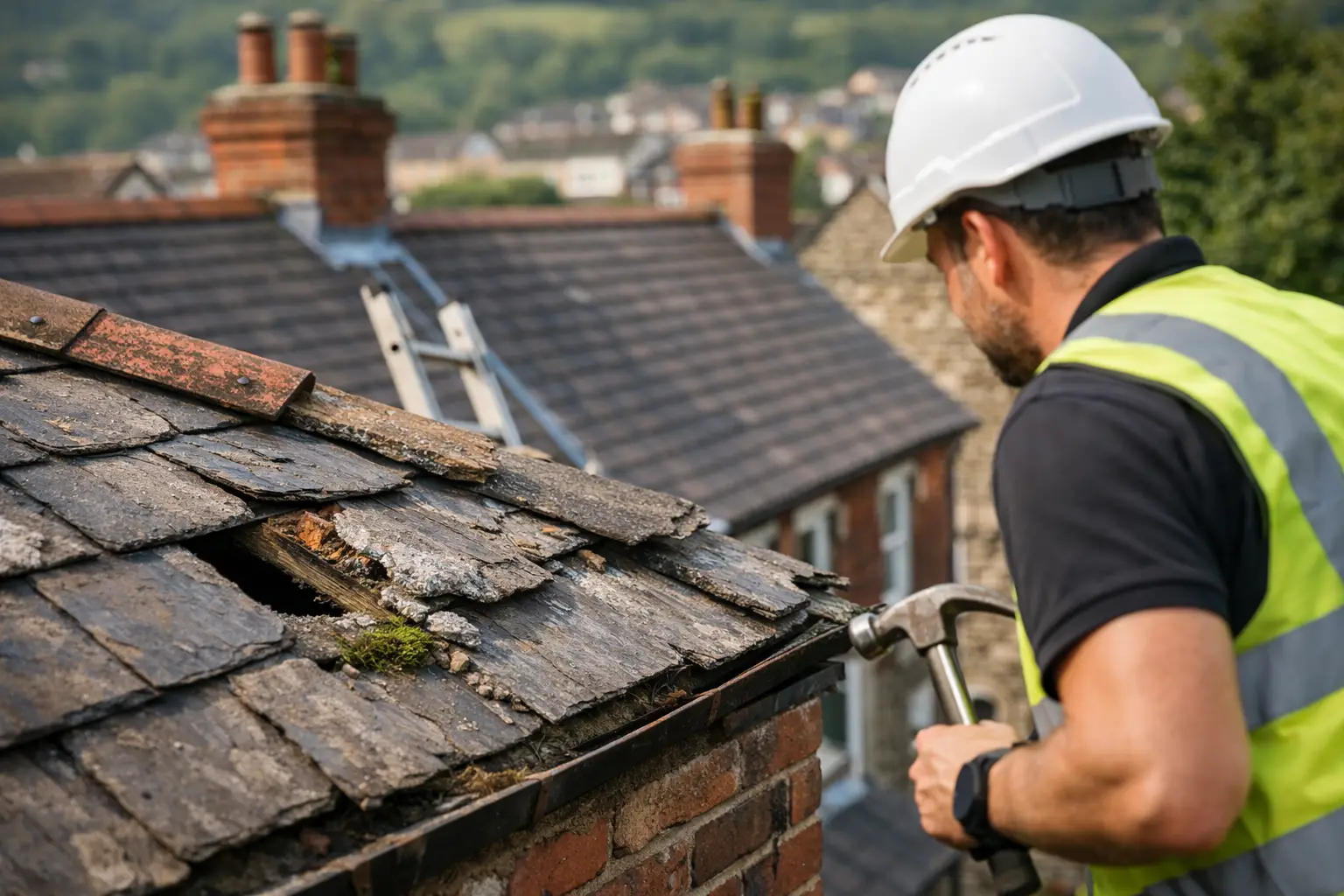
A handful of storm-damaged tiles can usually be replaced. However, numerous cracked, loose or slipping tiles suggest the roof is becoming unreliable as a whole. This is especially common on older roofs where fixings have deteriorated, frost has weakened tiles, or the underlay beneath is no longer providing a dependable second line of defence.
Look from ground level for uneven rows, gaps, exposed felt or tiles that appear to sit lower than those around them. Do not climb onto the roof to inspect it. Apart from the safety risk, walking on aged tiles can cause further damage.
A sagging or uneven roof line
A roof should follow a straight, consistent line. Any dip along the ridge, slope or eaves needs prompt attention, particularly if it has become more noticeable over time. Sagging can point to weakened rafters, decayed battens, prolonged water ingress or an issue with the roof structure.
This is not a problem to watch and wait on. A roofer should assess the roof as soon as possible to establish whether the issue is confined to the covering or whether structural work is needed. Early action can prevent a much larger and more expensive project.
Daylight or damp in the loft
Your loft often reveals roof problems before the rooms below do. On a dry day, look for pinpricks of daylight around the roof covering, chimney breast, valleys and roof windows. Then check for damp insulation, water marks on timbers, mould, a musty smell or drips after rainfall.
Some ventilation is expected in a healthy roof space, so a cold loft alone is not a sign of failure. The concern is evidence of water getting through. Wet insulation loses effectiveness, while consistently damp timber can lead to rot and further deterioration.
A roof that has reached the end of its serviceable life
Age matters, but it is not the only factor. A well-installed roof that has been maintained may last longer than expected, while a poorly fitted or frequently storm-damaged roof may fail earlier. The material, pitch, exposure to weather and quality of past repairs all make a difference.
As a practical rule, if an older roof is needing regular attention, has several areas of deterioration and no longer gives confidence during heavy rain, replacement may offer better value than another series of temporary repairs. A straightforward, itemised quote should compare the work needed now with the likely cost of keeping an ageing roof going.
Failing underlay, flashing and roof details
Tiles and slates are only part of the weatherproof system. The underlay beneath them, along with leadwork, valleys, verge mortar, ridge tiles and flashings around chimneys, all have a job to do. When several of these details are failing at once, water can enter even if much of the roof covering still looks acceptable from the ground.
Warning signs include crumbling mortar, loose ridge tiles, split leadwork, deteriorated valleys and visible felt at the eaves. Repointing or replacing individual components can be worthwhile where the main roof remains sound. Where the underlay is brittle and failing across the roof, a full replacement is often the more durable answer.
Moss, algae and blocked gutters causing repeat problems
Moss does not always mean a roof needs replacing. It is common in shaded or damp locations and can often be managed safely. The issue is when heavy growth holds moisture against the roof covering, lifts tiles, blocks gutters or hides defects that need attention.
Overflowing gutters, vegetation in valleys and water running down external walls should not be ignored. Regular clearing can prevent avoidable damage, but if water has repeatedly backed up beneath tiles or into the roof edge, a closer inspection is sensible. The same applies to rotting fascias and soffits, which may show that rainwater is not being directed away properly.
Trouble with a flat roof
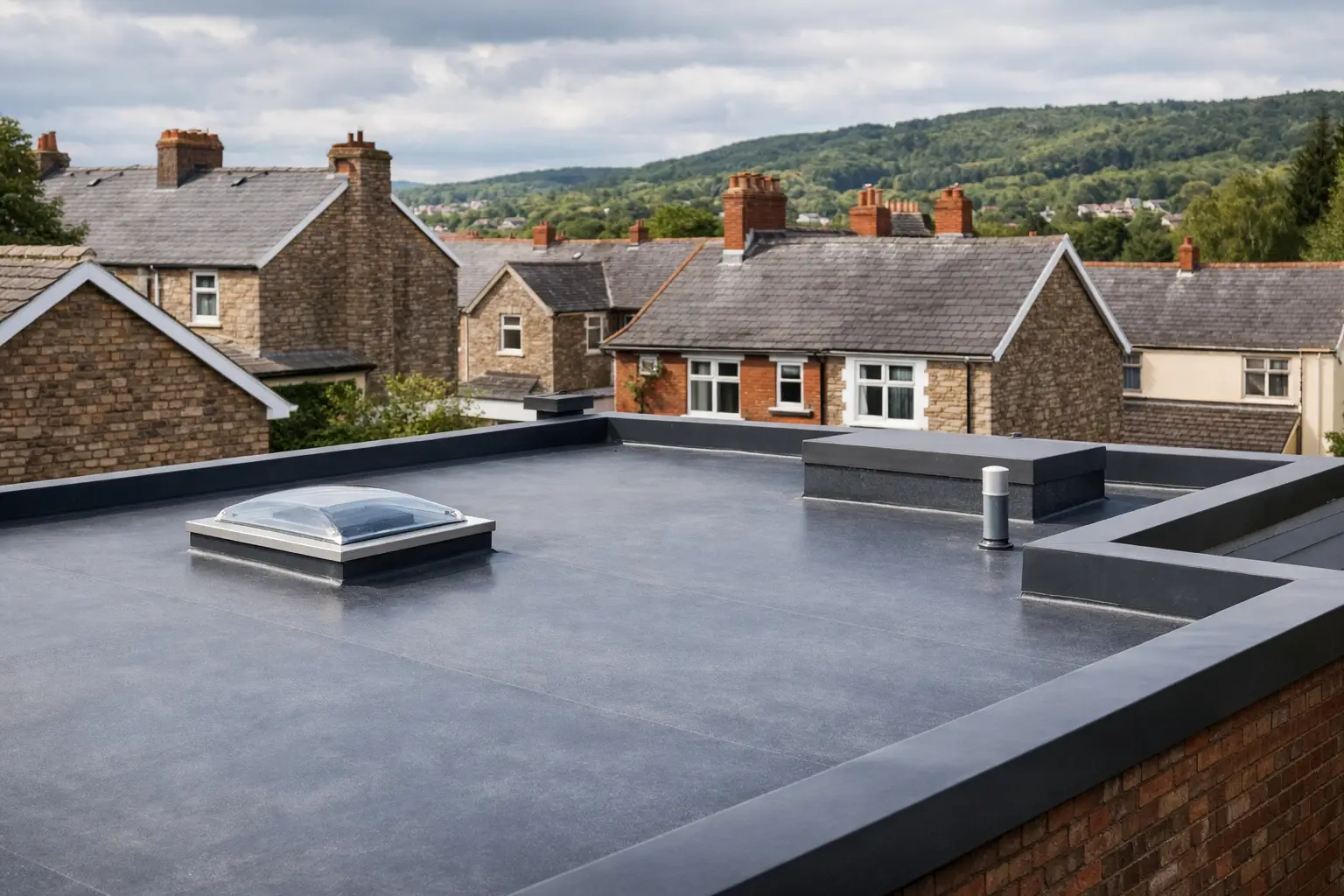
Flat roofs on extensions, garages and dormers need a different assessment from pitched roofs. Ponding water that remains long after rain, blistering, cracks, split seams and lifting edges are common signs that the waterproof layer is failing. A ceiling stain below a flat roof should be dealt with quickly, as water can spread widely beneath the surface before it is noticed.
A small split may be repairable if the rest of the system is in good condition. If there are multiple repairs, widespread bubbling or an aged covering that has become brittle, a replacement flat roof system is normally the safer long-term choice. The condition of the deck beneath also needs checking before any work is specified.
When repair is still the right option
Replacing a roof is a major investment, so it should be recommended for a clear reason, not simply because the roof looks old. Repair can be the sensible route where damage is confined to a small area, the roof structure is sound and the surrounding tiles, slates or flat-roof membrane remain in good condition.
For example, a few tiles lost in a storm, a damaged section of flashing or a localised leak around a roof window may be resolved without renewing the entire roof. The right contractor will explain what has failed, show where possible and set out the repair options clearly. If a repair is likely to be short-lived because the wider roof is deteriorating, that should be explained just as plainly.
Why a roof survey is worth arranging
A roof can look reasonable from the pavement while problems develop beneath the covering. Equally, a roof that appears tired may only need planned maintenance. A proper survey removes guesswork by checking the roof covering, rainwater goods, flashings, ridge, valleys, loft space and visible structural condition.
For homeowners and landlords, this is particularly useful before buying a property, starting a loft conversion, fitting solar panels or planning an extension. Resolving roofing issues before other work begins protects the schedule and avoids reopening finished areas later.
At Roof Renovations Ltd, the focus is on explaining the condition of the roof in straightforward terms, with itemised recommendations for the work that is genuinely needed. Whether the answer is a targeted repair, a new pitched roof or a replacement flat roof, the job should be planned around weather protection, tidy working and a clear timetable.
If your roof has recurring leaks, visible deterioration or has become a concern after severe weather, arrange a professional inspection rather than waiting for the next downpour. A clear assessment now gives you the chance to protect the property on your terms, rather than dealing with an emergency later.
Other Articles