Blog
Roof Repairs Bridgend Homeowners Should Not Delay
A damp patch spreading across a bedroom ceiling after heavy rain is not usually a problem that can wait for a convenient date. Roof repairs Bridgend homeowners arrange promptly can stop a small failed tile, split flashing or worn flat roof seam becoming damaged plaster, soaked insulation and timber deterioration.
South Wales weather puts roofs under regular pressure. Wind can lift slates and ridge tiles, prolonged rain finds weak points around chimneys and valleys, and repeated freezing and thawing can open up small cracks. The sensible approach is not to assume the whole roof needs replacing, nor to ignore the signs. A proper survey identifies the cause, explains the options clearly and sets out the work needed to make the property weatherproof again.
When roof repairs in Bridgend should be a priority
Some roof faults are obvious from ground level, but many first show themselves indoors. A new water mark, peeling paint near the ceiling line or a musty smell in the loft deserves attention, especially if it appears after rain. Water does not always enter directly above the visible stain. It can travel along roofing felt, battens or timber before reaching the ceiling below.
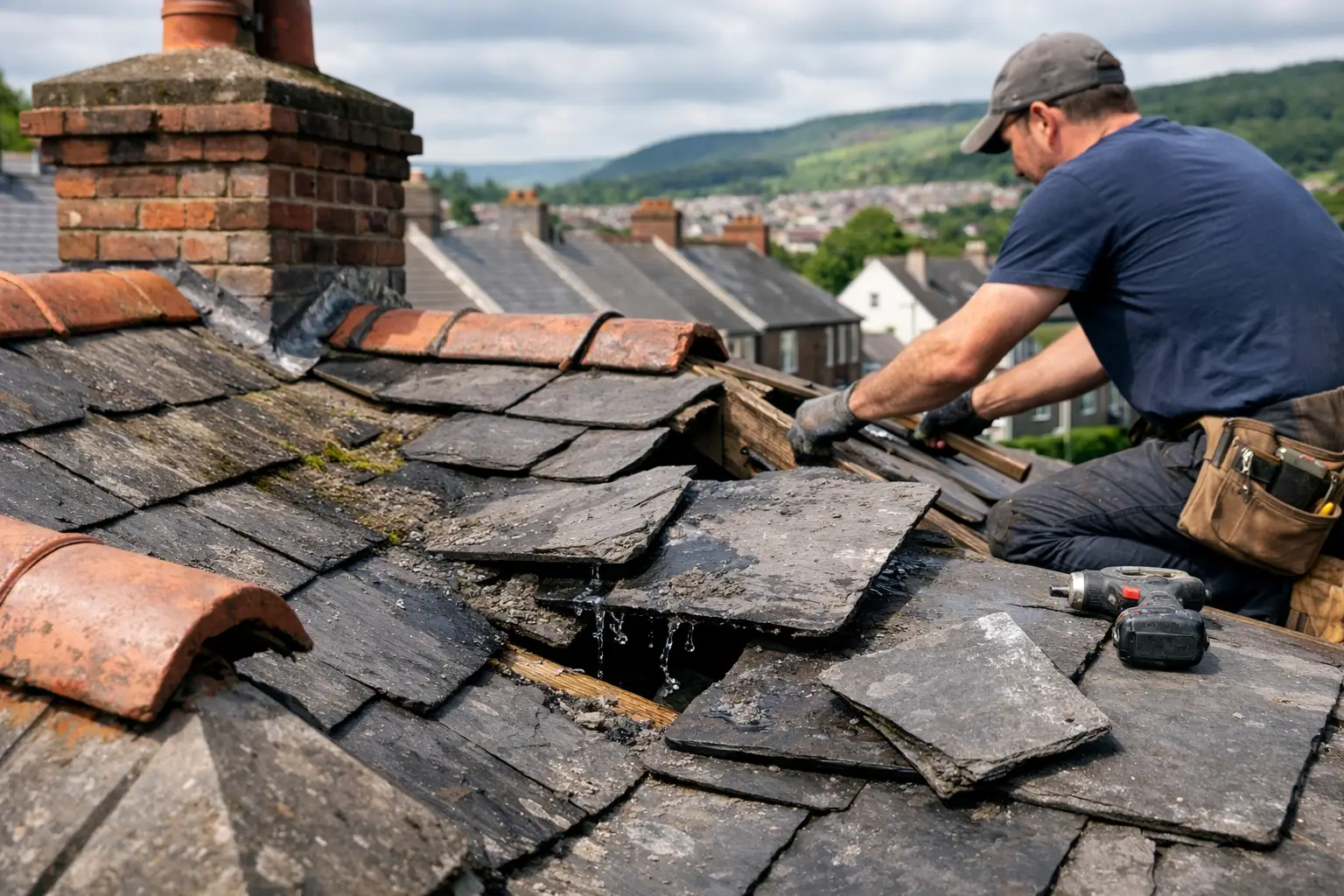
Missing or slipped tiles and slates are another clear warning. One displaced tile may look minor, yet it can expose the underlay and allow wind-driven rain into the roof space. Loose ridge tiles, damaged verge mortar, cracked leadwork and blocked valleys can cause similar trouble.
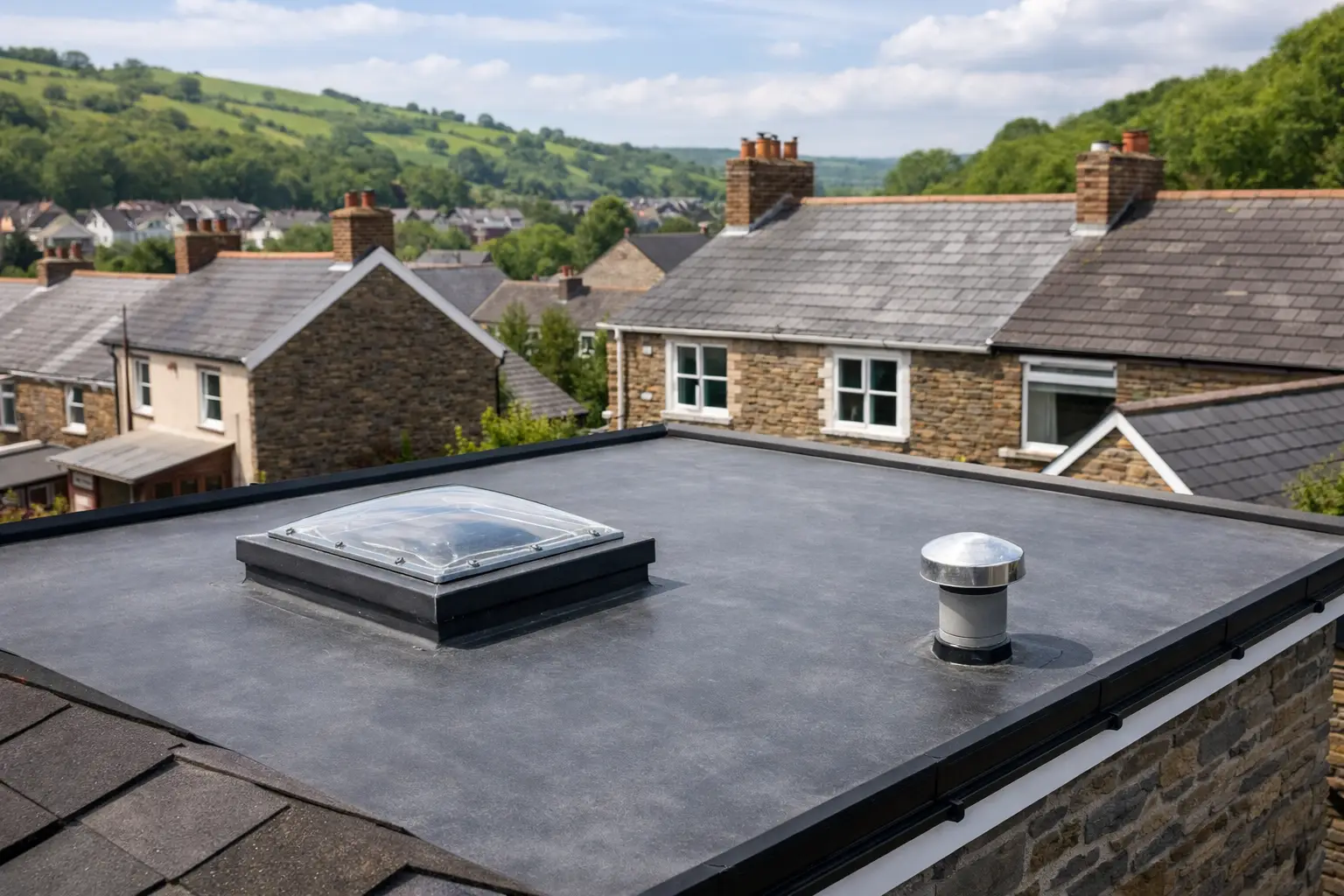
Flat roofs need the same attention. Ponding water that remains long after rainfall, blistering on the surface, lifting edges or cracked joints can all indicate that the covering is losing its ability to keep water out. A garage, porch or extension roof may be smaller than the main roof, but leaks from it can still damage ceilings, electrics and adjoining walls.
Storm damage should be treated as urgent where there are loose materials, a visible opening in the roof or water entering the house. Keep people away from the affected area and avoid climbing on the roof yourself. Wet surfaces, broken tiles and hidden weak areas make this a job for an experienced roofing team with the right access equipment.
What a reliable roof repair survey should cover
Good roofing work starts with finding the actual source of the issue. Applying sealant to the visible symptom might offer a short-lived fix, but it will not resolve defective flashing, perished felt or a failed valley beneath it.
A thorough inspection should look at the roof covering, ridges, verges, valleys, chimney details, leadwork, gutters and the condition of the roofline. Where access permits, the roof space should also be checked for damp insulation, water staining, daylight through the covering and signs of timber damage. The aim is to distinguish a local repair from a wider problem before work is priced.
For homeowners, the most useful outcome is a straightforward explanation. You should know what has failed, why it has failed, what work is proposed and whether there are sensible alternatives. An itemised quote helps make the decision clearer, particularly where repairs can be carried out now but a larger renewal may be worth planning for in the future.
There is no one answer for every roof. A few damaged slates on an otherwise sound pitched roof may only require a targeted repair. If the underlay is failing across large areas, the battens are deteriorated or the roof has been repaired repeatedly over many years, a more extensive renovation may provide better value and fewer disruptions over time.
Repairing a pitched roof
Pitched roof repairs often involve replacing cracked, missing or loose tiles and slates, renewing damaged battens, repairing mortar work, or replacing lead flashing around chimneys and abutments. The right replacement materials matter. A repair should match the existing roof as closely as practical while providing a secure, weatherproof finish.
It is also worth checking the details that protect the edges of the roof. Fascias, soffits and gutters do not cause every roof leak, but overflowing gutters and deteriorated roofline materials can send water onto areas that are not designed to take it. Dealing with connected faults at the same time can avoid another call-out a few months later.
Repairing a flat roof
Flat roof repairs depend on the existing system and the extent of the damage. A local split or failed joint can sometimes be repaired effectively. Where the covering has become brittle, holds water or has failed in several places, patching may only postpone the inevitable.
In that situation, replacing the covering with a suitable modern flat roof system can be the more dependable choice. The condition of the deck, insulation, upstands and drainage should all be considered, not just the surface material. A flat roof needs a properly formed fall so rainwater can drain away rather than sit on the roof after every shower.
What to do while waiting for emergency roof repairs
If water is entering the property, focus first on safety and limiting internal damage. Move furniture, electrical items and valuables away from the affected area. Use containers to catch drips where safe, and place towels around them to protect flooring.
If there is a ceiling bulge, do not stand beneath it or try to deal with it from a ladder. Water can be heavy, and a saturated ceiling may fail without much warning. If water is near light fittings or electrical wiring, switch off the relevant circuit if it is safe to do so and seek qualified advice.
Do not attempt a temporary repair from the outside during wind or rain. A sheet tied over a roof can come loose, cause further damage and put someone at serious risk. A professional emergency repair may involve securing loose materials, fitting a temporary weatherproof cover and then returning to complete permanent work once conditions are safe.
How to avoid repeat roofing problems
Roofs are easier and less costly to maintain when small faults are dealt with early. A visual check from ground level after strong winds is useful, particularly around ridges, chimneys and roof edges. Look for missing tiles, loose guttering and debris collecting in valleys or gutters, but leave close inspection and any work at height to professionals.
Keeping gutters clear is one of the simplest ways to protect a home. Overflowing water can soak brickwork, stain fascias and create damp problems around the eaves. Trees close to the property can also deposit leaves and branches, so properties beneath mature trees may need more frequent checks.
For landlords and homeowners planning an extension, garage conversion or loft conversion, roofing should be considered early in the project. A new roof section must meet neatly with the existing structure and direct water away correctly. Choosing a contractor who can assess both the roof covering and associated exterior work helps keep responsibility clear and the finished job orderly.
Choosing a contractor for roof repairs Bridgend homeowners can trust
Roofing is one of those jobs where the cheapest figure is not always the lowest cost. A vague estimate may leave room for unexpected extras, while rushed work can lead to another leak when the next spell of bad weather arrives. Look for a contractor who attends when promised, surveys the issue properly and gives a clear written breakdown of the proposed work.
The condition of the worksite matters too. Roofing can be disruptive, but it should not mean unnecessary mess around the property. Respectful teams protect the area where practical, keep materials organised and clear away once the work is complete. That is part of a professional service, not an optional extra.
Roof Renovations Ltd approaches repair work with that practical standard: identify the fault, explain the remedy and complete durable work without confusion. Whether the issue is a slipped slate after a storm or a tired flat roof that needs a longer-term solution, the right repair begins with an honest assessment rather than a guess.
A roof rarely gives much warning before a small weakness becomes an internal leak. If you have noticed a change after rain, wind or a recent storm, arranging a survey while the problem is still manageable is usually the calmest and most cost-effective next step.
Other Articles