Blog
Roof Installation Cardiff Homes Can Rely On
A new roof is not a cosmetic upgrade. It is the barrier that keeps rain, wind and heat loss out of your property for decades. The roof installation Cardiff homes need must suit the building, the exposure of the site and the unpredictable South Wales weather - not simply be the cheapest option on a quote.
Whether you are replacing an ageing pitched roof, building an extension, converting a garage or dealing with repeated leaks, the right installation starts with a proper survey. A clear plan, suitable materials and careful workmanship will do more for your home than a rushed job that looks tidy on day one but causes trouble a few winters later.
Start with a Proper Roof Survey
No two roofs are exactly alike. A Victorian terrace, a semi-detached home, a bungalow and a modern extension can all require very different approaches. Before work is priced, the roof should be inspected for its condition, structure, drainage and access.
A useful survey looks beyond cracked tiles. It considers the condition of the existing timbers, underfelt, battens, chimney flashings, valleys, gutters, fascias and soffits. It should also identify whether damp has already affected the loft space or insulation. If there is a problem underneath the covering, fitting new tiles alone will not solve it.
Access matters too. Scaffolding is often required to keep the work safe and to allow materials to be handled properly. It should be included clearly in the quote rather than appearing later as an unexpected extra.
For older Cardiff properties, it is worth checking how the roof connects to neighbouring homes and whether shared details, party walls or difficult access will affect the programme. A contractor should explain these points plainly before the work begins.
Choosing the Right Roof for Your Property
The best roofing material depends on the pitch, the look of the property, planning requirements, budget and expected lifespan. There is no single material that is right for every home.
Pitched roofs: slate, tile and modern alternatives
Natural slate remains a popular choice across South Wales. It suits many traditional homes, offers a long service life and handles wet conditions well when installed correctly. It does, however, cost more than many alternatives and needs a roof structure capable of carrying its weight.
Concrete and clay tiles are widely used for replacement roofs. Concrete can provide good value and comes in a range of profiles, while clay often gives a more traditional finish and retains its colour well. The important point is that the tile is suitable for the roof pitch and the local exposure. A tile that performs well on a sheltered site may not be the right choice for a more exposed location.
For some homes, particularly where weight is a concern, modern lightweight tiles can be worth discussing. They can reduce loading on the roof structure, but they should still be selected for appearance, fixing method and weather resistance rather than price alone.
Flat roofs for extensions, garages and dormers
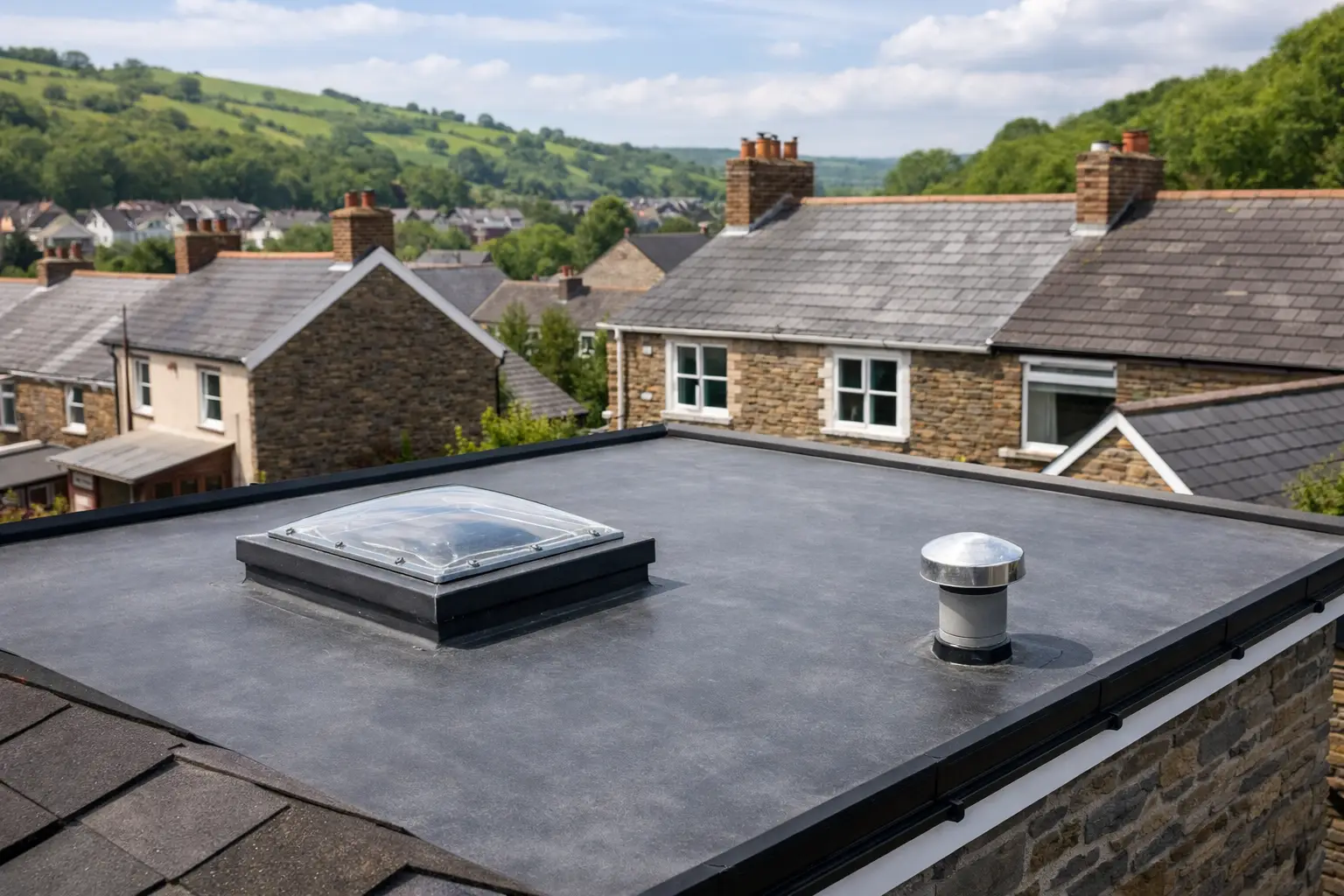
Flat roofing is common on home extensions, garages, porches and dormer roofs. Despite the name, a flat roof needs a designed fall so water can drain properly. Standing water, poorly finished edges and weak joints are common reasons flat roofs fail early.
Modern systems such as high-performance felt, EPDM rubber and GRP fibreglass can all provide reliable results. The right choice depends on the roof shape, detailing, foot traffic and how the roof joins the main house. A simple rectangular garage roof may suit one system well, while an extension with rooflights, upstands and several outlets may need a different approach.
What a Full Roof Installation Should Include
A full replacement is more than stripping off old coverings and fitting new ones. The work needs to deal with the roof as a complete system, from the supporting structure through to the drainage at the edge.
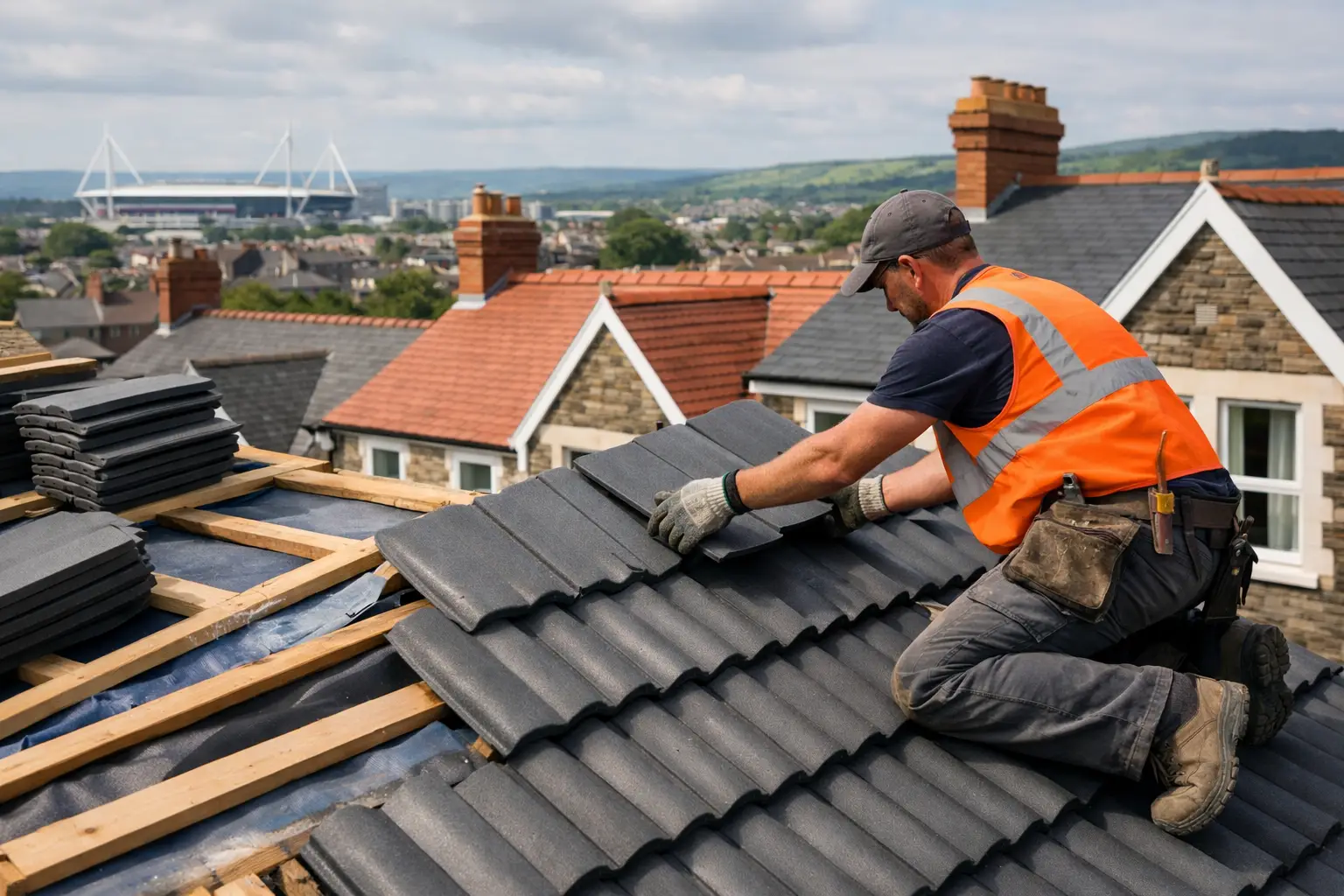
Once the existing roof covering is removed, the contractor can inspect the exposed deck or timbers. Any damaged or weakened sections should be discussed and priced clearly before repair. New breathable membrane and treated battens are then fitted where required, followed by the selected slate or tiles using the correct fixings.
Details deserve as much attention as the main roof area. Leadwork around chimneys, abutments and valleys must be properly formed. Verges and ridges need secure, weather-resistant finishing. Gutters and downpipes should carry water away effectively, while fascias and soffits should be in sound condition to support the roofline.
Ventilation and insulation should also be considered, especially on a reroofing project. Good ventilation helps control condensation in the loft, while suitable insulation can improve comfort and reduce heat loss. These elements need to work together. Adding insulation without considering airflow can create a moisture problem rather than prevent one.
Planning Roof Installation for Cardiff Homes
Cardiff receives plenty of rain and can experience strong winds, particularly during autumn and winter. That makes the quality of fixing, flashing and drainage especially important. A roof has to cope with driving rain, not just look complete in dry weather.
Timing can affect the programme, but good roofing teams plan around the forecast and protect the property as work progresses. Some weather delays are unavoidable, particularly in high winds or persistent rain, because safe installation and a dry, secure finish cannot be compromised. What matters is clear communication about the programme and how the roof will be kept protected.
Most straightforward replacement roofs do not need planning permission, but exceptions can apply. Listed buildings, conservation areas, major changes to the roof shape and certain material changes may require approval. Building Regulations may also apply where structural work, insulation upgrades or alterations are involved. A professional contractor should flag this early rather than leaving you to find out after the job is booked.
Understanding Quotes, Costs and Value
The lowest quote is not always the lowest final cost. Roofing prices vary because properties vary, and a responsible estimate should show what is included rather than relying on a single vague figure.
Ask whether the quote covers scaffolding, removal and disposal of old materials, timber repairs if required, membrane, battens, leadwork, guttering, waste clearance and making good around the roof. It should also state the materials proposed, the expected timescale and any assumptions made following the survey.
It is reasonable for a contractor to identify potential hidden defects, particularly on an old roof where the timbers are not visible until coverings are removed. The difference between a good contractor and a poor one is how this is handled. You should receive an explanation, photographs where useful and a clear price before additional work is carried out.
Pay attention to workmanship as well as the product guarantee. Even quality slate, tile or flat roofing membrane can fail if the preparation, falls, fixings or junctions are wrong. Durable results come from the system being installed properly from start to finish.
Keeping the Worksite Safe and Tidy
Roofing is disruptive work, but it should not leave your home or garden in a mess. Before the first day, agree where scaffolding, materials and waste will be placed and how access will be managed. If you have children, pets, shared driveways or limited parking, raise this at the outset.
A well-managed project protects vulnerable areas, removes waste regularly and keeps the site as orderly as conditions allow. You should know who to contact during the work and when the team expects to arrive. Punctuality and clear updates are not extras - they are part of a properly run job.
At Roof Renovations Ltd, the aim is to make the process straightforward: inspect the roof properly, provide an itemised quote, turn up when agreed and leave the property weatherproof, tidy and ready for the years ahead.
When Replacement Makes More Sense Than Repair
Repairs are often the sensible choice for a localised leak, slipped tiles or storm damage. However, repeated patching can become poor value when the roof covering is near the end of its life, the underfelt has failed widely or several areas are allowing water in.
Signs that a replacement may be worth considering include widespread cracked or loose tiles, recurring leaks, sagging areas, deteriorated mortar, daylight visible in the loft or persistent damp despite previous repairs. A survey will establish whether the problem is local or whether the roof is failing as a whole.
Do not wait for water to reach ceilings or electrics before arranging an inspection. A small concern is usually easier to assess and less costly to address than a major leak after a storm. A clear survey and an honest explanation give you the information needed to decide with confidence.
Other Articles