Blog
Temporary Fix or Full Repair? Choosing the Right Emergency Roof Repair
Temporary fix or full repair? How to decide after roof damage
When a roof is leaking or visibly damaged, the first decision is not always whether the repair should be permanent. The more important question is what the roof can safely support right now, and what needs to happen before a lasting repair can be planned.
At Roof Renovations Ltd, we treat temporary stabilisation and permanent repair as two different stages with different purposes. Our Emergency Roof Repairs service covers both, but the correct route depends on the condition of your roof, the source of the failure and the risk of leaving it exposed.
When temporary stabilisation is the right first step
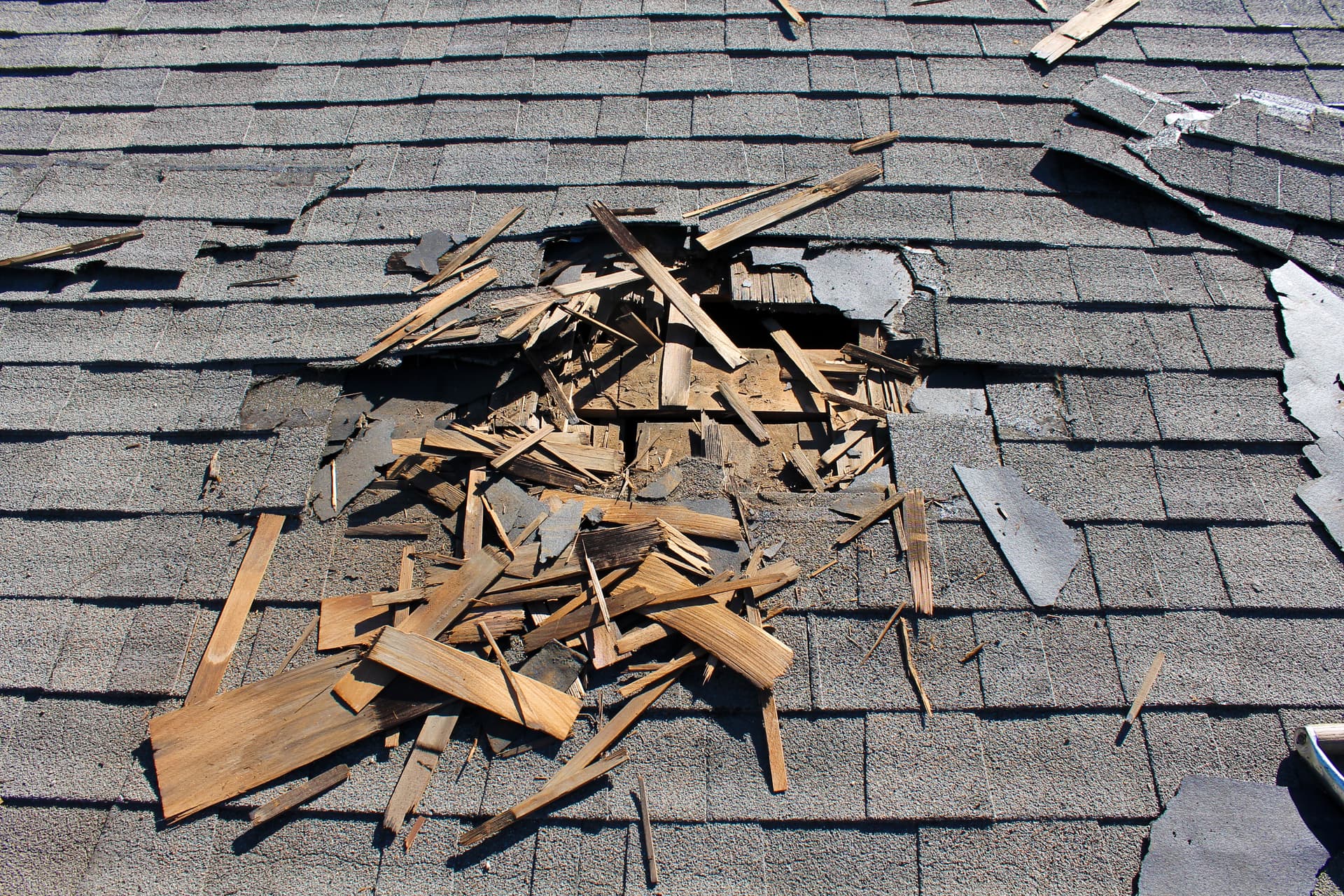
A temporary repair is appropriate when the immediate priority is to reduce danger or stop water entering the property. It may be needed where tiles or slates have moved, a section of covering has lifted, flashing has failed or a flat roof membrane has been punctured.
The key point is that temporary work buys control over the situation. It can limit water reaching ceilings, insulation, roof timbers and electrical areas while the roof is assessed properly. It can also make the site safer where loose materials or exposed edges create a hazard.
Temporary work is often the sensible choice when:
- The damaged area cannot be safely repaired in its final form during the first visit.
- The roof covering is unstable and needs securing before anyone can inspect the underlying structure.
- Water is entering through a point that can be sealed, but the full extent of the damage is not yet visible.
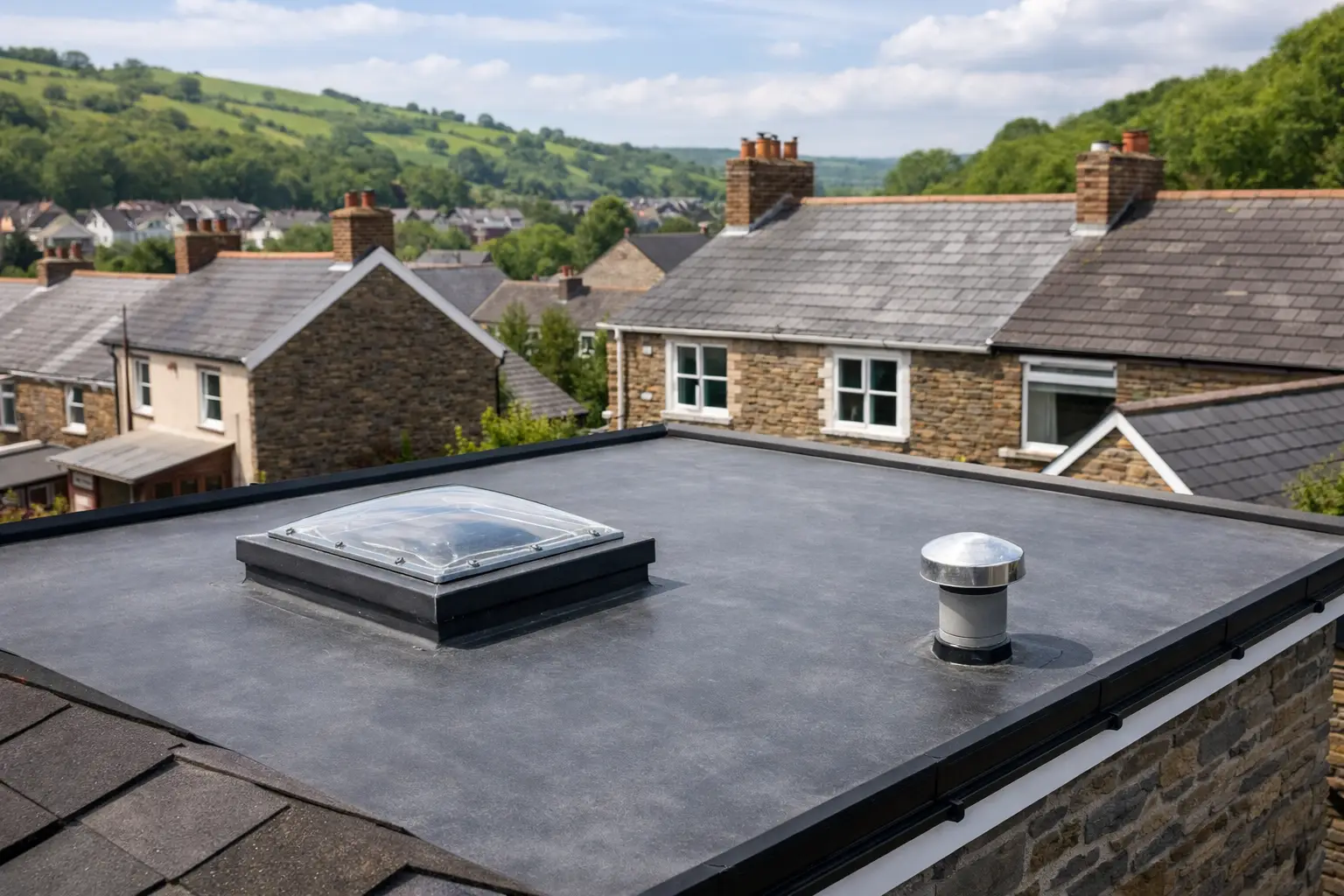
- A flat roof has a damaged membrane and the deck or insulation beneath it needs further assessment.
- Matching tiles, slates, roof-edge seals or waterproofing materials need to be identified before a permanent repair is started.
Temporary stabilisation should not be mistaken for a complete repair. A covering that appears watertight from inside the loft may still allow moisture into concealed layers. The temporary measure must therefore be treated as protection while the permanent scope is established, not as permission to ignore the underlying fault.
When a permanent repair should follow
A full repair becomes the better option when the cause of the failure is clear, the affected area can be reached safely and the surrounding roof is sound enough to accept the new work.
For a pitched roof, this may involve replacing broken or displaced tiles or slates, correcting ridge details or renewing faulty seals around roof edges and joins. For a flat roof, the decision may depend on whether the damage is limited to a small area or whether the waterproof layer, edges, joins or layers beneath it have failed more widely.
The visible leak is not always the full repair area. Water can travel along roof timbers before appearing on a ceiling, so repairing the point where it emerges inside the property may leave the actual entry point untouched. We look at the roof materials, joins, places where the roof meets a wall and nearby details rather than treating the indoor stain as a precise map of the damage.
A permanent repair is also more appropriate when the damaged material is no longer in usable condition, when repeated patching has created several weak points or when the original design is allowing water to bypass the covering. In those situations, another small patch may restore the appearance without resolving the failure mechanism.
The property can change the decision
The same type of damage does not always call for the same response. A roof over a loft conversion, garage or conservatory may have different junctions and drainage arrangements from the main roof. Older properties in Bridgend, Cardiff and other parts of South Wales may also contain roof details that have been altered over time, making the visible damage only one part of the problem.
Access matters too. A roof that can be inspected clearly may allow a more accurate permanent repair decision. Limited access, hidden spaces or damage close to a fragile roof edge may mean that securing the area first is the responsible option.
The construction beneath the covering matters just as much. If timbers, decking or insulation have been exposed to water, the roof covering may not be the only component requiring attention. Covering everything over too quickly can trap moisture and make later investigation more disruptive.
What to ask before accepting a repair plan
A useful repair recommendation should explain three things clearly:
- What failed, such as a displaced tile or slate, damaged seals around roof edges, waterproofing damage or movement where roof sections meet.
- What has been done immediately to control the risk and prevent more water entering.
- What remains necessary for a permanent repair, including any areas that need closer inspection once the roof is secure.
Ask whether the proposed work addresses the cause or only the visible symptom. You should also ask whether the temporary measure has any limitations, particularly if concealed damage, wet materials or unstable roof components remain.
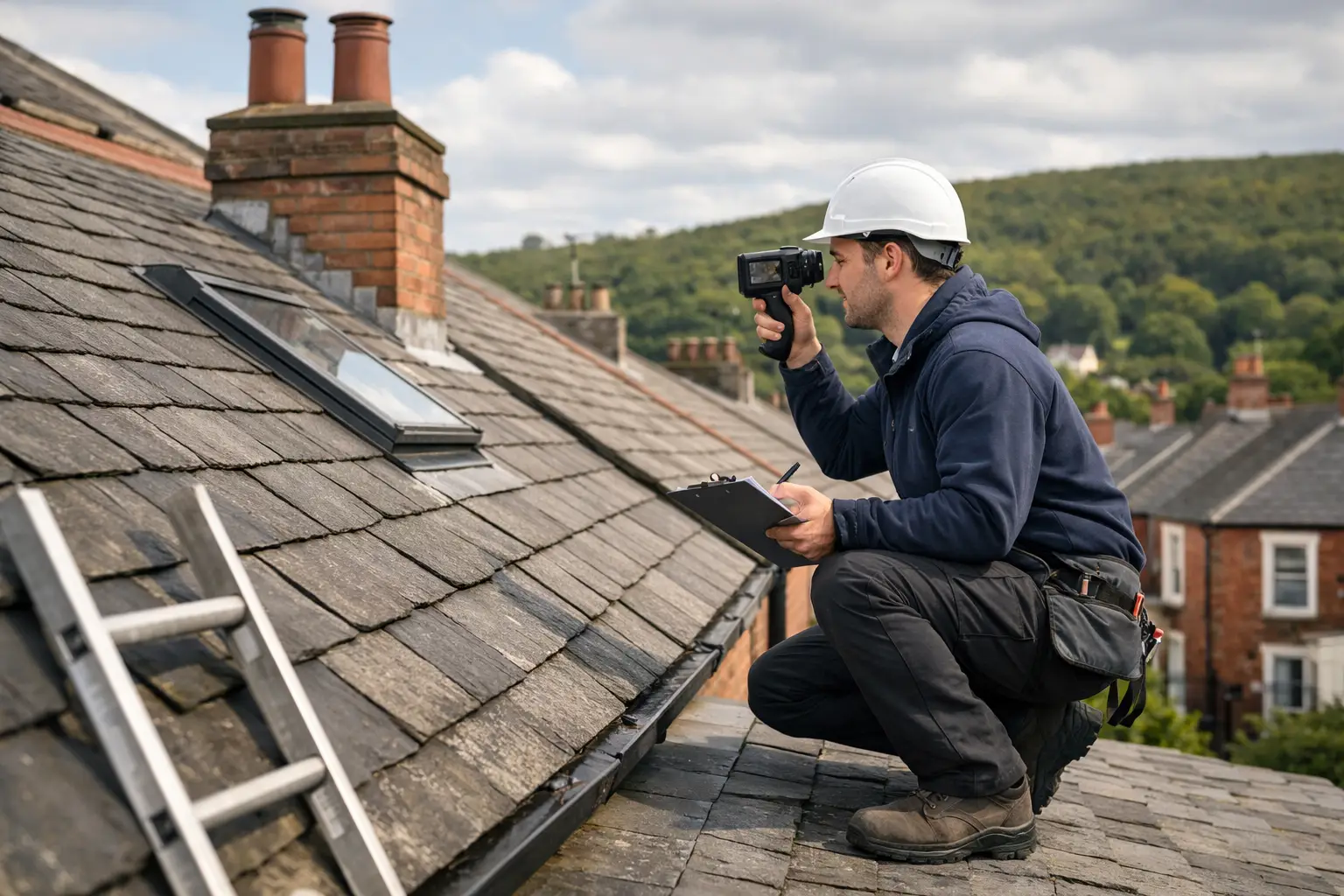
Photographs can help you understand the decision, especially when the damaged area is not visible from the ground. They also provide a useful record of what was found before permanent work begins.
Making the right call
The right choice is not determined by the size of the leak alone. It depends on safety, access, the condition of the surrounding roof and whether the failed detail can be properly repaired at the time of inspection.
We carry out emergency roof repairs across South Wales, including Bridgend, Cardiff, Rhondda, Neath, Merthyr and Newport. If your roof has suffered sudden damage, contact Roof Renovations Ltd for an assessment that separates immediate protection from the permanent work your property actually needs. Materials and access can affect the final scope, so request a clear quotation before follow-up repairs proceed.
Other Articles