Blog
Residential Roof Replacement Guide for Homes
A roof rarely fails all at once. More often, the warning signs build over time: a slipped tile after high winds, a stain spreading across a bedroom ceiling, damp in the loft or repairs becoming more frequent. This residential roof replacement guide explains when replacement makes sense, what the work involves and how to plan the job without unnecessary surprises.
For homeowners and landlords, a replacement roof is a major piece of property maintenance. Done properly, it protects the structure beneath it, improves the appearance of the home and gives you confidence when South Wales weather brings heavy rain and strong winds. The key is understanding the condition of the existing roof before deciding whether a repair or full replacement is the right investment.
When does a roof need replacing?
A single broken tile or a small localised leak does not automatically mean the whole roof needs to come off. Targeted repairs are often the sensible option where the roof is otherwise sound and the issue has a clear cause. However, repeated repairs can become poor value when the covering, battens or underlay are reaching the end of their working life.
Signs that a replacement may be needed include widespread cracked, slipped or missing tiles, recurring leaks in different areas, sagging along the roofline, damaged flashing, persistent damp in the loft and deteriorating felt or membrane beneath the tiles. Heavy moss growth can also reveal an underlying issue, particularly if it is holding moisture against ageing materials, although moss alone is not always a reason to replace a roof.
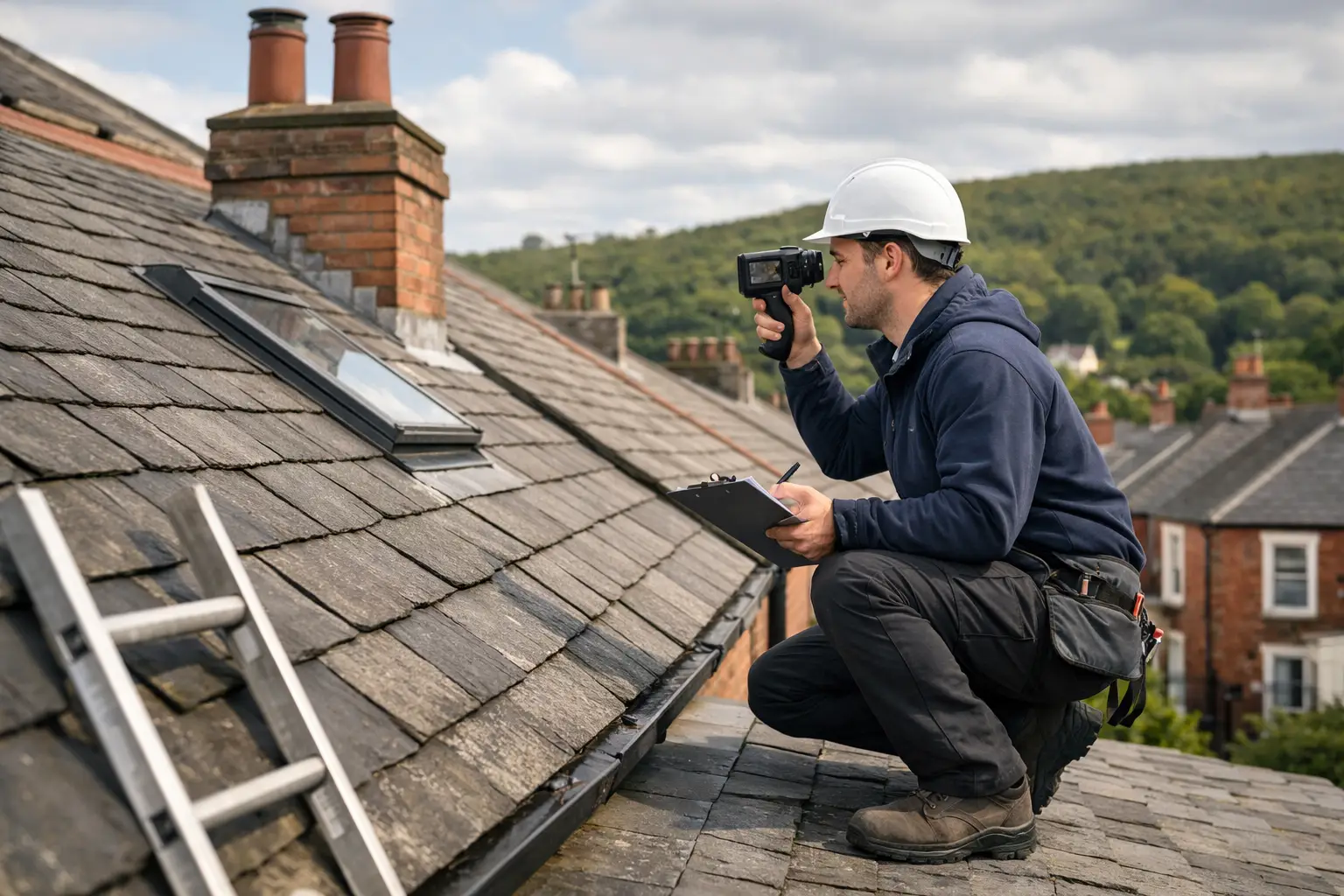
The age of the roof matters, but condition matters more. Some older roofs remain structurally sound with routine maintenance, while a newer roof can suffer early problems if previous work was poorly completed. A proper survey should look beyond the visible tiles to assess the timber structure, ventilation, underlay, leadwork and rainwater goods.
Repair or replacement: making a practical decision
The best decision usually comes down to the scale of the fault, the expected life left in the roof and the cost of keeping it going. If a leak is caused by damaged flashing around a chimney or a small section of storm-damaged tiles, a repair may restore the roof effectively. If water is getting through in several places and the felt, battens and tiles are all worn, a replacement is usually the more reliable route.
Think about your wider plans for the property too. If you are converting the loft, adding insulation, replacing fascias or improving a tired exterior, it can be sensible to coordinate the work while access equipment is already in place. On the other hand, there is no benefit in replacing a sound roof simply because one isolated problem needs attention.
A clear, itemised quotation should explain what has been found, which work is essential and which recommendations are optional. This gives you a fair basis for comparing proposals and avoids the uncertainty of a vague price for a "new roof".
Residential roof replacement guide: what the work includes
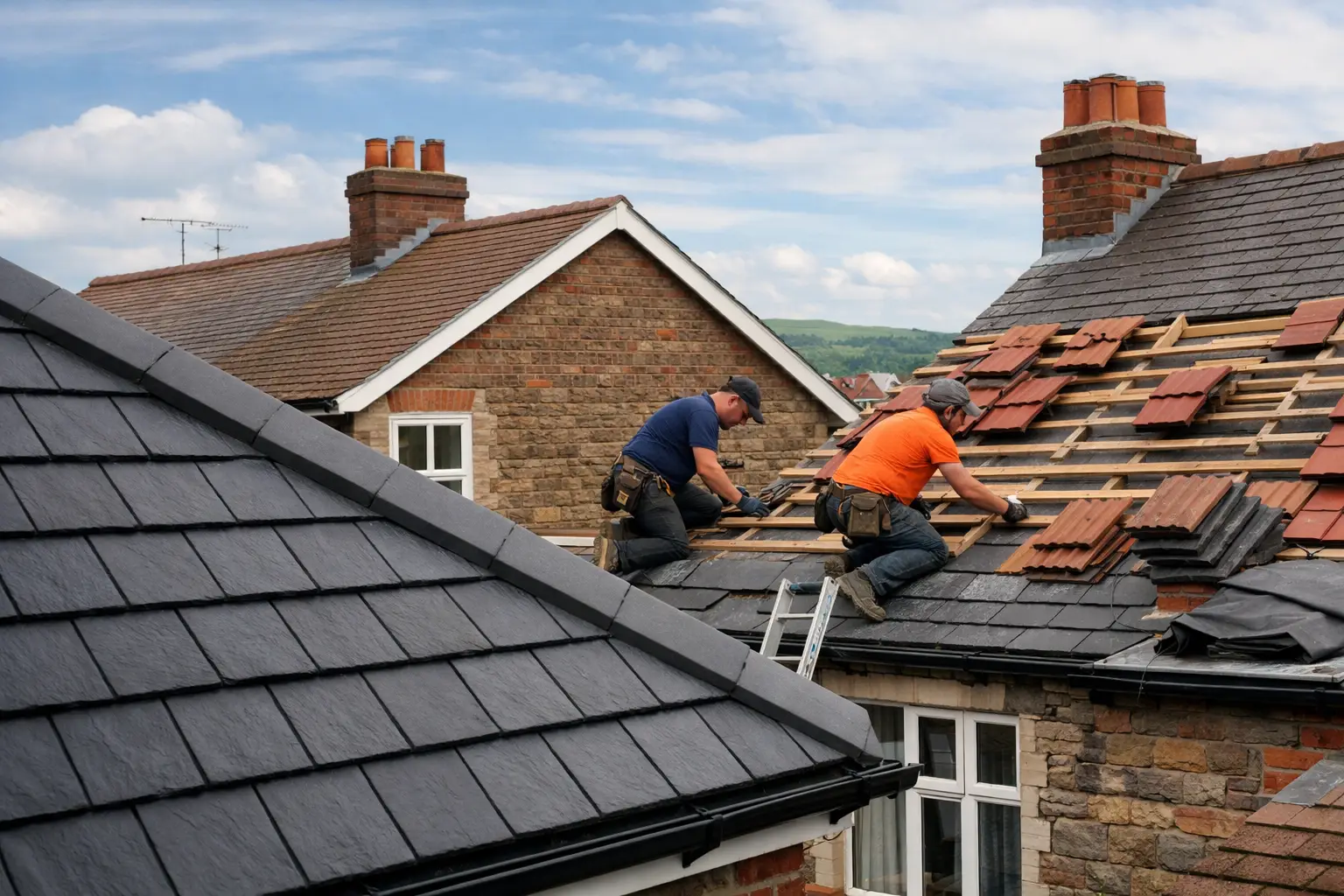
A full pitched roof replacement normally begins with safe access and protection for the property. Scaffolding provides a secure working platform, while coverings and careful handling help protect gardens, paths, windows and neighbouring areas. A professional team should explain access requirements before work begins, including where materials will be stored and how waste will be removed.
The existing tiles or slates are stripped back, allowing the condition of the roof structure to be checked properly. Sound rafters can generally remain in place, while any rotten or damaged timber should be repaired before the new covering goes on. New breathable membrane and treated battens are then installed to create a weather-resistant base for the roof finish.
The new tiles or slates are fixed in line with the roof design and current requirements. Details matter here: valleys, verges, ridge tiles, abutments, chimneys and roof windows all need careful finishing because these are common points for water ingress when work is rushed. Flashings may be renewed or upgraded, and ventilation should be considered to help prevent condensation building up within the roof space.
The final stage includes clearing the site, removing waste and checking that gutters, downpipes and surrounding areas are left tidy. A replacement roof is disruptive work by nature, but it does not need to leave your property in a mess.
Choosing the right roofing material
Most homes have a roof material that suits the property style, neighbouring buildings and roof pitch. Concrete tiles are widely used because they are durable, readily available and available in a range of colours and profiles. Clay tiles can offer a traditional appearance and long service life, although they may cost more and place different demands on the roof structure.
Slate is a strong choice for many period properties and areas where a classic finish is important. Natural slate can last for decades when properly installed, while man-made alternatives may provide a similar appearance at a different price point. The right option depends on budget, planning considerations, the building's character and the condition of the structure beneath.
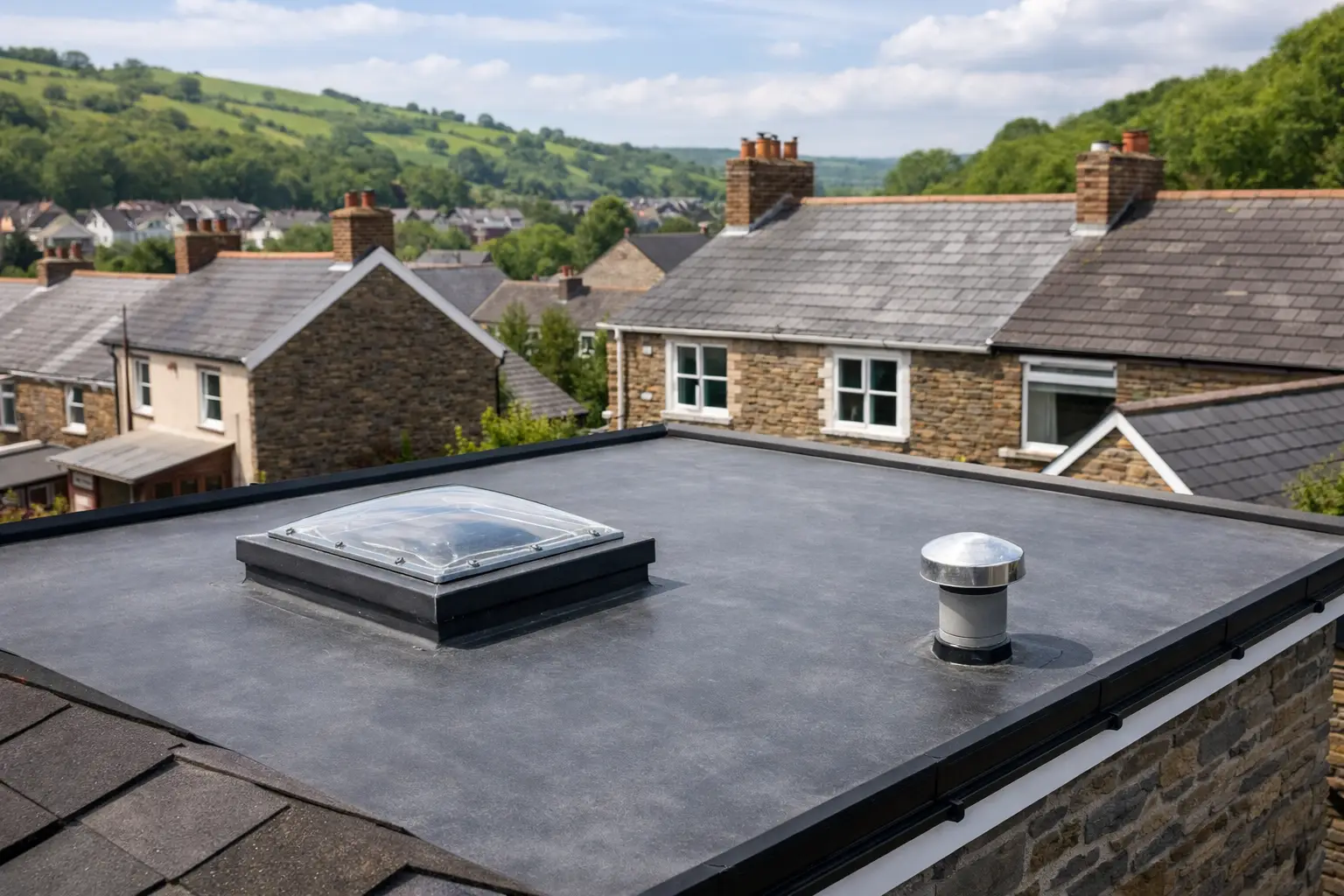
For extensions, garages and lower-pitched sections, a flat roof system may be more appropriate. Modern flat roofing materials can provide durable, clean finishes when installed with correct falls, drainage and edge details. A flat roof should never be treated as an afterthought - standing water and poorly finished joints are early signs that workmanship has fallen short.
What affects the cost of a replacement roof?
There is no useful one-price answer because roofs vary significantly. The size and pitch of the roof are obvious factors, but access, the chosen material, chimney work, valleys, skylights, timber repairs and disposal requirements all influence the final cost. A simple roof on a straightforward semi-detached property will be very different from a complex roof with multiple elevations and difficult access.
It is also worth asking what is included. A lower figure may not allow for scaffolding, membrane, battens, leadwork, ridge work, guttering or waste removal. Comparing like for like is more useful than choosing the cheapest number at the bottom of a quote.
Good contractors will identify likely additional work during the survey where possible. Occasionally, hidden problems only become visible once the old roof covering is removed. If that happens, you should be shown the issue, given a clear explanation and told what the additional work will cost before it is carried out.
Preparing your home for roofing work
Roof replacement creates noise, movement and dust, particularly during the stripping stage. Move vehicles away from the work area, keep pets safely indoors and let neighbours know the dates if access or parking may be affected. Inside the home, remove fragile items from loft spaces and rooms directly below the roof where practical.
You should also make sure the contractor has clear access to the property and knows about any concerns such as shared driveways, restricted parking, vulnerable planting or overhead cables. These details are easier to manage before the team arrives than halfway through the job.
Weather can affect the programme, especially in exposed parts of South Wales. Reliable roofers plan the work carefully, protect open areas as the job progresses and communicate promptly if conditions make it unsafe to continue. A short delay is preferable to taking risks with the property or the people working on it.
Questions to ask before appointing a roofer
Before agreeing to a replacement, ask whether the contractor has inspected the roof in person, what materials are proposed and whether the quote includes all labour, access equipment and removal of old materials. You should also ask how long the work is expected to take, how the property will be protected and what guarantee applies to the workmanship and materials.
Look for clear communication rather than pressure. A dependable contractor will explain the options in plain English, turn up when promised and keep you informed if the scope changes. Roof Renovations Ltd approaches replacement projects with that practical focus: a proper survey, transparent pricing, tidy work and durable results.
A roof replacement should leave you with more than new tiles. It should leave your home properly protected, your site cleared and your next steps clear. If you are seeing warning signs or facing repeated repairs, arrange a professional roof survey before a small problem becomes damage inside the property.
Other Articles