Blog
Emergency Roof Repairs: a complete guide for South Wales homeowners
Emergency roof repairs South Wales: what every homeowner should know
A damaged roof in South Wales is not the time for guesswork. Whether a storm has lifted slates, a chimney lead has split, or an old flat roof has blistered through, quick, sensible action limits water damage and saves on repair bills. This guide gives clear, trade-tested steps you can take immediately, plus what to expect from a professional roofer.
First priority: safety
- Keep people and pets away from areas beneath the leak — falling mortar, tiles or debris are common after storm damage.
- Don’t climb onto a wet or wind‑damaged roof. Slates and tiles are slippery; nails and broken battens are hazardous.
- If water is pooling in the loft, move boxes, electrical items and irreplaceables out of the way. Switch off electrics in the affected area at the fuse box if water is reaching wiring — call an electrician if you’re unsure.
Immediate, temporary fixes you can do safely
These actions limit damage until a qualified roofer can attend:
- Catch drips with buckets or tins and place plastic under them to protect flooring.
- Create a drip diversion. Tie a length of guttering or a clean plastic channel to direct water into a bucket, or use a tarpaulin to funnel water away from vulnerable spots.
- Protect possessions: move furniture, cushions and electronics out of the wet area and dry timber out as soon as possible to prevent staining and rot.
- Clear gutters and downpipes if safe to do so from ground level — a blocked gutter often makes leaks worse.
If you have a ladder and feel competent, you can secure a tarpaulin over a small damaged area. Lay the tarpaulin across the ridge and weight it with wooden battens nailed through at the eaves only; avoid nailing through slates. If in doubt, leave it to a professional — an unsafe ladder or a slip on the roof will make the problem much worse.
How to document the damage for insurance
- Take clear photos from the ground and from inside the loft showing water ingress, staining and any buckled insulation.
- Note the date and time of the incident and any weather conditions.
- Keep receipts for any temporary repairs or materials; insurers generally accept reasonable emergency measures to prevent further loss.
What your roofer will check on arrival
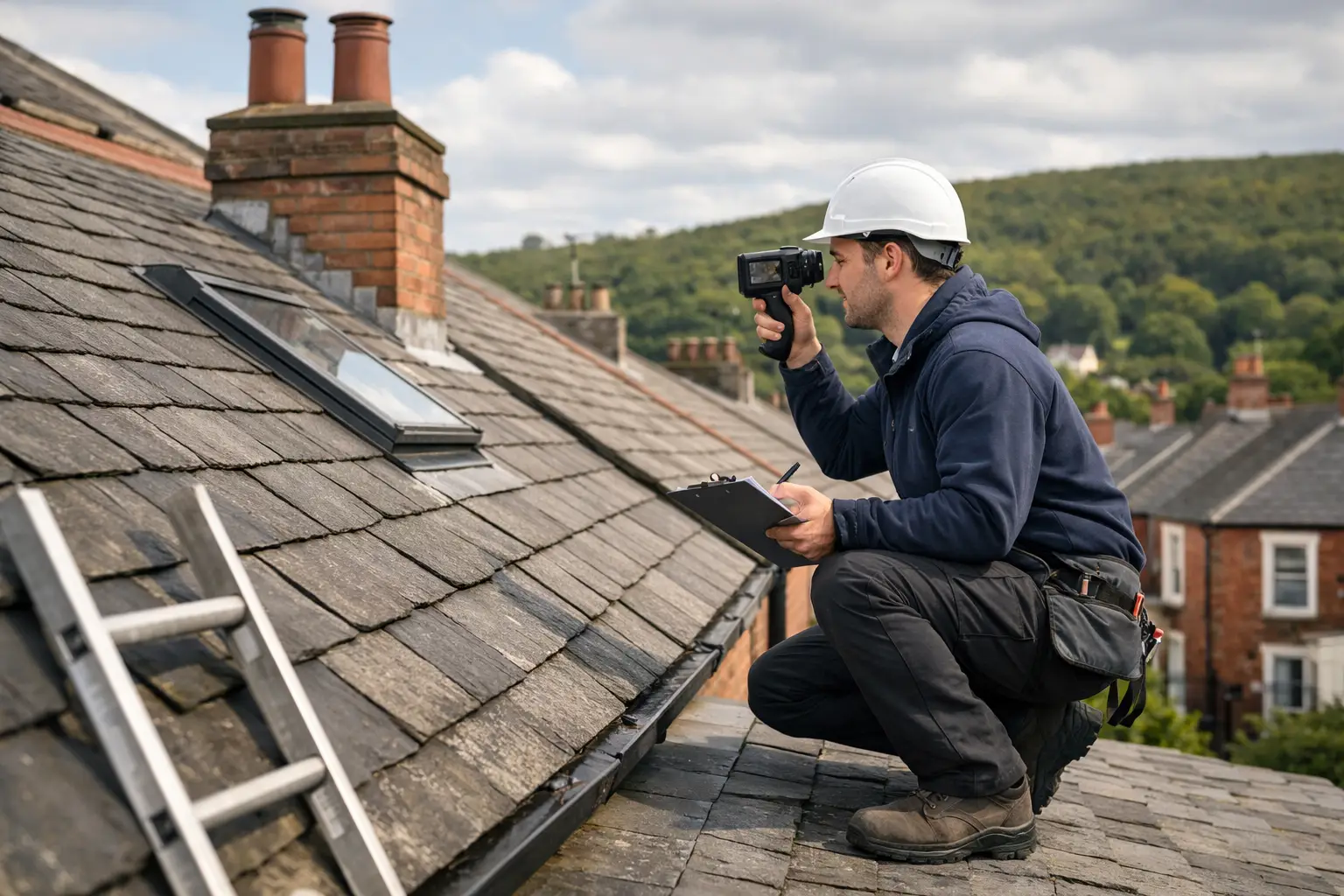
A competent roofer from South Wales will inspect:
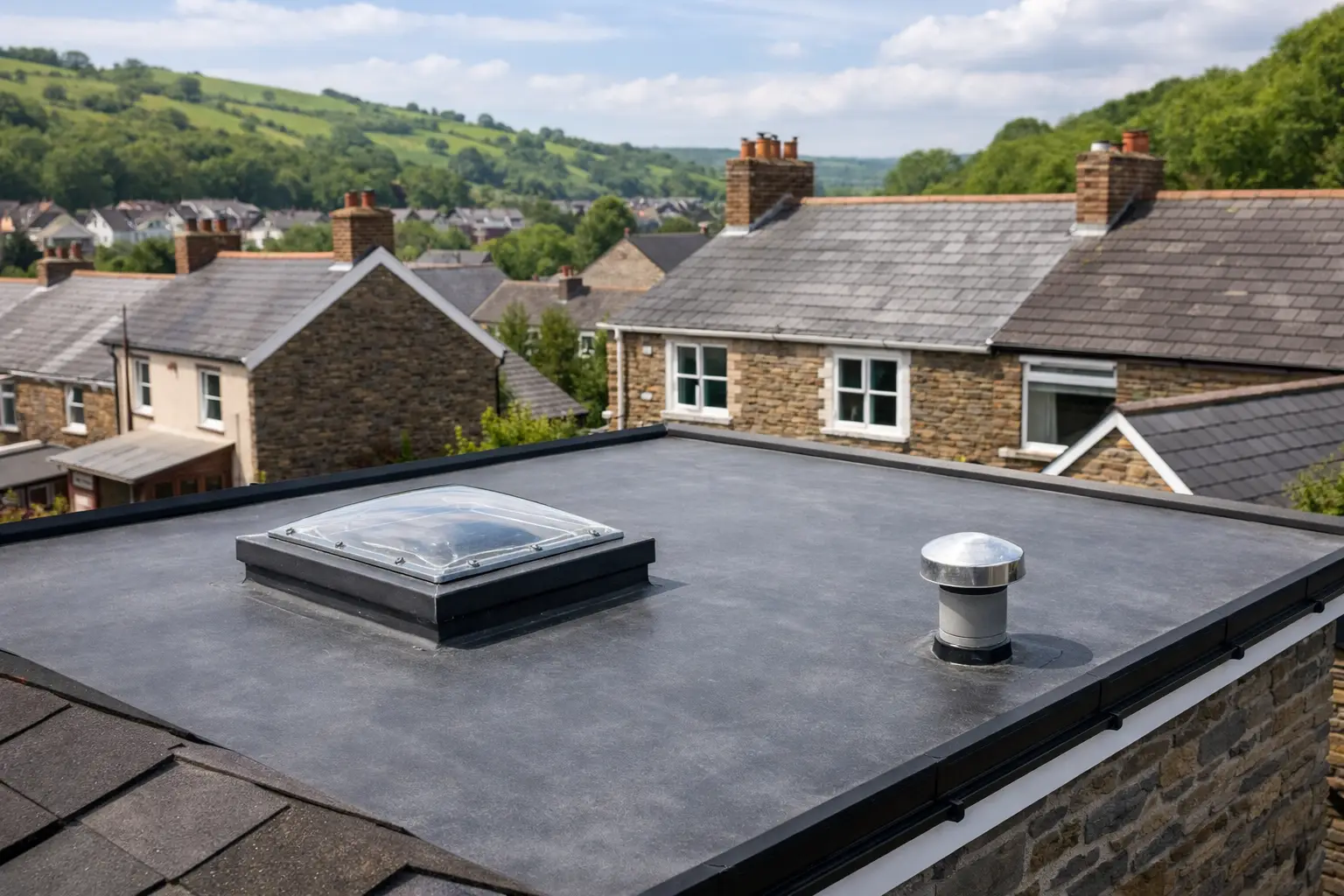
- Roof covering type (slate, tile, concrete tile, EPDM, GRP, torch‑on).
- Flashings around chimneys, valleys and rooflights — lead flashings commonly fail on older properties in Cardiff and coastal towns.
- Ridge and hip integrity, battens and underlay condition.
- The loft for evidence of prolonged leaks or structural timber damage.
Expect a professional assessment, a clear quote for a temporary repair (if needed) and a plan for permanent work.
Typical emergency repairs and trade terms to know
- Tarp and batten: temporary covering secured with timber battens.
- Replace slipped slate/tile: repositioning and fixing slipped tiles to battens and renewing nails where necessary.
- Flashing repair: re‑forming or replacing lead or aluminium flashings around chimneys and hips.
- Flat roof patch: temporary resin or single‑ply repair to stop ponding or splits in EPDM/GRP.
Costs and timing (what to expect)
Emergency call‑outs usually carry a higher rate than planned work and may include a call‑out fee. In South Wales, expect a rapid-response team to prioritise stabilising the leak and preventing internal damage; permanent repairs are scheduled once a full survey is complete. Always get an itemised quote and a completion timescale.
Choosing the right emergency roofer in South Wales
Look for:
- Federation certification and trade credentials — proof of competence and insurance.
- Proven experience with local building types: slate roofs, terraced housing in Cardiff, coastal exposure in Vale and Bridgeend properties.
- Clear, written estimates and a tidy site policy — trade finish matters whether it’s urgent or scheduled.
- Local availability and reliable arrival windows — punctuality reduces disruption.
Roof Renovations LTD has been serving South Wales for 28 years with Federation certification, punctual attendance and tidy‑site standards.
Preventing future emergencies
- Annual roof checks: inspect slates, ridge, flashings and gutters. After winter storms is a good time.
- Schedule re‑bedding of ridge mortar and repointing where mortar is loose.
- Keep gutters clear and trimmed back overhanging trees that drop branches or loosen tiles.
- For flat roofs, arrange yearly inspections of ponding, seams and laminate integrity.
Final checks and next steps
If you have an active leak, act now to protect people and possessions, document the damage for your insurer, and arrange a professional inspection. Temporary measures help, but a properly executed permanent repair is the only way to be sure the job lasts.
For rapid, professional emergency roof repairs across South Wales, contact Roof Renovations LTD — 28 years’ experience, Federation‑certified and known for punctual, tidy, long‑lasting workmanship. We’re specialists in roof installation, flat roofs and emergency repairs and can guide you through temporary measures, full repairs and insurance claims.
Other Articles